
TL;DR:
- A proper home renovation workflow involves sequencing phases correctly, securing permits beforehand, and maintaining detailed documentation. Proper planning and upfront permit approval prevent costly rework, delays, and budget overruns in South Florida renovations. Effective project management and early material ordering ensure a smooth process and successful completion.
A workflow for full home renovation is a structured sequence of phases covering planning, permitting, execution, and closeout that determines whether your project finishes on time and on budget. Most South Florida homeowners underestimate how much the order of operations matters. Skip a step or reverse two phases, and you pay for it twice. This guide walks you through every stage of the home renovation process in the correct sequence, with specific attention to South Florida permitting realities, contractor coordination, and the finishing details that protect your investment.
How do you plan and budget effectively for a full home renovation?

Every successful full house remodel plan starts with a brutally honest assessment of what you actually need versus what you want. Walk every room and document structural issues, outdated systems, and cosmetic problems separately. Structural and systems work always takes priority over aesthetics because fixing a roof or replacing old wiring after new drywall is installed costs two to three times more.
Once you know your scope, set a realistic budget with room to absorb surprises. Industry guidance for 2026 recommends a contingency fund of 15 to 20 percent of your total project budget to cover hidden wiring, rotted framing, or plumbing issues discovered after demolition. That number is not conservative padding. It reflects what contractors actually encounter once walls come down in older South Florida homes.
Material selection belongs in the planning phase, not the construction phase. Selecting all materials before construction and avoiding mid-project changes prevents thousands in extra costs and schedule delays. Choose your tile, flooring, fixtures, and cabinetry before the first nail is pulled. Lock in lead times for anything custom or imported, since South Florida suppliers can run four to eight weeks out on specialty items.
Useful planning steps before breaking ground:
- Prioritize work by structural need, then systems, then finishes
- Get three contractor bids and compare scope line by line, not just total price
- Open a dedicated renovation account to track spending against budget
- Use a spreadsheet or project management app like Buildertrend or Houzz Pro to log every expense and decision
- Confirm material availability and delivery windows before signing contracts
Pro Tip: Lock in your flooring and tile selections at least six weeks before those phases begin. South Florida's high renovation volume means popular products sell out fast, and substituting mid-project forces redesign decisions under pressure.
What permits and legal requirements must South Florida renovators consider?
Permits are not optional bureaucracy. They are the legal record that your renovation meets current building codes, which matters enormously when you sell or file an insurance claim. Almost every major structural or systems renovation requires a permit from your local building department, and South Florida counties enforce this aggressively.
Here is the standard permit sequence for a full home renovation in South Florida:
- Determine scope. Identify every trade involved: structural, electrical, plumbing, HVAC, windows, doors, and any additions or decks. Each trade may require a separate permit.
- Hire a licensed contractor. In Miami-Dade, Broward, and Palm Beach counties, only licensed contractors can pull permits for most structural and systems work. Verify licenses through the Florida Department of Business and Professional Regulation.
- Submit permit applications. Most South Florida municipalities now accept digital submissions through portals like ePermits or their county-specific systems. Prepare architectural drawings for structural work and MEP (mechanical, electrical, plumbing) plans for systems.
- Wait for approval. Permit review timelines in South Florida range from two weeks for straightforward projects to eight weeks or more for complex additions. Build this into your project timeline before scheduling any contractor start dates.
- Schedule inspections. Inspections are required at specific milestones, including rough-in for electrical and plumbing before walls close. Missing an inspection window can pause your project for days.
- Obtain final certificate of occupancy. For major renovations, a final inspection and certificate of occupancy confirm the work is code-compliant and legally complete.
A good general contractor manages this entire permit process as part of their service. Confirm this expectation in writing before signing any contract.
What is the step-by-step execution workflow for a full home renovation?
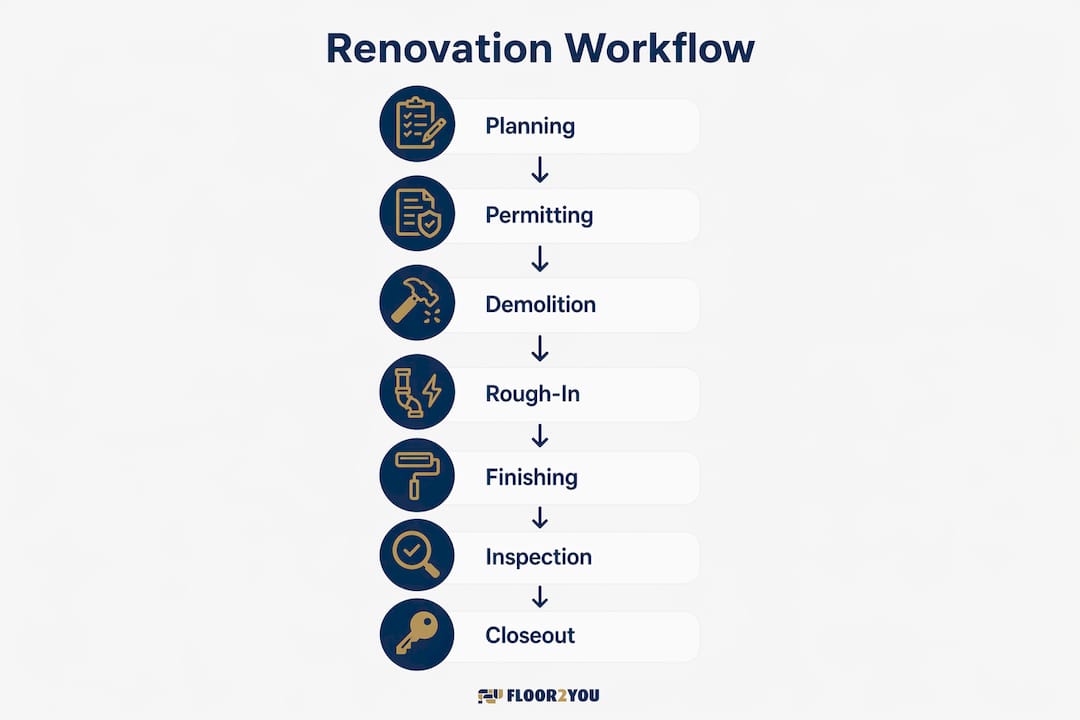
The steps for home renovation must follow a specific order. Doing flooring before plumbing rough-in, or painting before drywall is finished, creates rework that costs real money. The correct renovation order is: demolition, structural changes, rough-in for electrical and plumbing and HVAC, insulation and drywall, flooring, painting and trim, fixtures and hardware, then final details and cleaning.
Here is how each phase plays out in practice:
- Demolition. Remove everything scheduled for replacement: cabinets, flooring, fixtures, non-load-bearing walls. Protect surfaces you are keeping with heavy-duty plastic sheeting. In South Florida, dispose of debris through licensed haulers to comply with county waste regulations.
- Structural work. Address any framing repairs, beam replacements, or load-bearing wall modifications. This phase requires structural inspections before moving forward.
- Rough-in for electrical, plumbing, and HVAC. All new wiring, pipes, and ductwork go in before walls close. This is the most critical inspection point in the entire project.
- Insulation and drywall. Schedule inspections before closing walls for electrical and plumbing. Skipping this step can force you to reopen finished walls at your own expense. Once inspections pass, hang drywall, tape, mud, and sand to a smooth finish.
- Flooring. Install flooring after drywall is complete and dust has settled. For South Florida homes, consider moisture-resistant options like luxury vinyl plank or porcelain tile in high-humidity areas. Check out the flooring project management guide for sequencing details specific to this phase.
- Painting and trim. Paint walls and ceilings before installing trim and baseboards. This sequence protects finish work and speeds up the painting phase significantly.
- Fixtures and hardware. Install light fixtures, plumbing fixtures, cabinet hardware, and appliances after painting is complete. This protects new finishes from scratches and paint overspray.
- Final details and cleaning. Touch up paint, install switch plates and outlet covers, clean all surfaces, and prepare for final walkthrough.
| Phase | Common mistake | Correct approach |
|---|---|---|
| Rough-in | Skipping inspection before drywall | Always get sign-off before closing walls |
| Flooring | Installing before drywall dust settles | Wait 48 hours after final sanding |
| Painting | Painting after trim installation | Paint walls first, then install trim |
| Fixtures | Installing before painting | Always sequence fixtures last |
Pro Tip: Order long-lead items like custom cabinetry and specialty tile the same week you pull permits. By the time permits are approved and demolition is done, your materials will be ready. This single habit eliminates the most common cause of mid-project delays in South Florida renovations.
How do you manage the renovation project and team communications effectively?
Renovation project management is where most homeowners lose control of their budget and timeline. Minor supply chain delays or failed inspections can cascade into month-long project delays, and poor communication between trades accelerates that risk. A structured communication plan prevents most of these problems before they start.
Practical habits that keep a renovation on track:
- Set a weekly check-in with your general contractor, either in person or by video call, to review progress against the schedule
- Require written change orders for every scope modification, no matter how small. Verbal agreements disappear when disputes arise
- Keep a shared digital folder with all contracts, permits, material receipts, and inspection reports. Google Drive or Dropbox works fine for this
- Track delivery dates for every major material order and confirm one week before expected arrival
- Document every site visit with dated photos. This creates a visual record of progress and any issues
General contractors manage hiring subcontractors, ordering materials, and securing permits to keep the renovation on schedule and budget. Your job as the homeowner is to make decisions quickly and communicate changes clearly. Delayed decisions from the homeowner side are the second most common cause of schedule overruns after supply chain issues.
Pro Tip: Create a simple decision log. Every time you make a choice, such as a tile color, fixture model, or paint finish, write it down with the date and who confirmed it. This eliminates the "I thought you said" conversations that derail projects and damage contractor relationships.
What are the best practices for final walkthrough and project closeout?
The final walkthrough is your last opportunity to enforce quality before releasing final payment. Approach it systematically, not emotionally. A renovation timeline is rarely rigid, and the closeout phase often reveals small issues that accumulated during the rush to finish. Give yourself two to three hours for a thorough inspection.
Walk through with this checklist:
- Test every light switch, outlet, and fixture for proper function
- Run all plumbing fixtures and check under sinks for leaks
- Inspect all painted surfaces in natural light for missed spots, drips, or uneven coverage
- Check flooring for gaps, lippage between tiles, or squeaks in hardwood
- Open and close every door and window to confirm smooth operation and proper sealing
- Verify all hardware is installed correctly and tightened
- Confirm all debris and construction materials have been removed from the property
Photograph every issue and document it in a written punch list with specific locations and descriptions. Thorough photo documentation significantly increases the likelihood of timely remediation by contractors. The punch list is a legal tool, and withholding final payment until all items are resolved is your strongest leverage.
Never release final payment based on a verbal promise to return and fix items. A signed punch list with a completion deadline protects both parties and keeps the contractor accountable.
For South Florida renovations specifically, confirm that the final electrical and plumbing inspections are on record with the county before signing off. Missing inspection records can create problems during property sales or insurance claims years later.
Key takeaways
A successful workflow for full home renovation requires executing phases in the correct sequence, securing permits before breaking ground, and maintaining written documentation at every stage.
| Point | Details |
|---|---|
| Budget with contingency | Set aside 15 to 20 percent of your total budget for unexpected costs discovered after demolition. |
| Sequence phases correctly | Follow demolition through rough-in, drywall, flooring, painting, and fixtures in strict order to avoid rework. |
| Permit before you build | Pull all required permits for structural, electrical, plumbing, and HVAC work before any construction begins. |
| Inspect before closing walls | Schedule rough-in inspections for electrical and plumbing before drywall goes up to avoid costly reopenings. |
| Use the punch list as leverage | Document all final issues with photos and withhold final payment until every item is corrected. |
Why the workflow matters more than the budget
Most South Florida homeowners I work with come in focused on the budget number. That focus is understandable, but it is usually misplaced. The budget is a result of the workflow. When you execute phases in the wrong order, or skip a permit, or change materials mid-project, the budget explodes. The workflow is the actual control mechanism.
The most common mistake I see in South Florida specifically is underestimating the permit timeline. Homeowners sign a contractor, get excited, and mentally move into their renovated home before a single permit is approved. Then the permit takes six weeks, the contractor moves to another job, and the project loses three months before a wall comes down. Building permit lead time into your schedule from day one changes everything.
Supply chain issues are the second reality that catches people off guard. South Florida's renovation market is competitive and active year-round. Popular flooring products, custom cabinetry, and specialty tile can have eight to twelve week lead times. Ordering materials the moment permits are submitted, rather than waiting until you need them, is the single habit that separates smooth projects from chaotic ones.
The full home renovation guide for South Florida reinforces what I have seen repeatedly: structure and preparation at the front end of a project determine the outcome far more than any single contractor or material choice. Invest the time in planning. It pays back every dollar.
— G
Plan your renovation flooring with Floor2you
Flooring is one of the most visible and highest-impact phases of any full home renovation, and it is also one of the easiest to get wrong if materials are not selected and ordered early.

Floor2you works with South Florida homeowners and property investors to select the right flooring for every room, coordinate installation within the renovation sequence, and deliver quality results on schedule. The team carries hardwood, luxury vinyl plank, laminate, tile, and more, with expert guidance on what performs best in South Florida's humidity and heat. Whether you are managing a single-family remodel or turning over a rental property, Floor2you's renovation services cover the full scope from material selection through professional installation. Get in touch for a quote and take one major phase off your project management plate.
FAQ
What is the correct order of phases in a home renovation?
The correct order is demolition, structural work, rough-in for electrical and plumbing and HVAC, insulation and drywall, flooring, painting and trim, fixtures and hardware, then final cleaning. Following this sequence prevents rework and cost overruns.
Do I need permits for a full home renovation in South Florida?
Yes. Structural changes, electrical, plumbing, HVAC, window and door replacements, additions, and decks all require permits from your local South Florida building department. Only licensed contractors can pull most of these permits in Miami-Dade, Broward, and Palm Beach counties.
How much contingency should I budget for a home renovation?
Budget 15 to 20 percent of your total project cost as a contingency fund. This covers hidden issues like rotted framing, outdated wiring, or plumbing problems that only appear after demolition begins.
How do I avoid delays during a full house remodel?
Order all materials before construction starts, lock in contractor schedules after permits are submitted, and require written change orders for every scope modification. Supply chain delays and failed inspections are the two most common causes of extended timelines.
When should I withhold final payment from my contractor?
Withhold final payment until every item on the punch list is corrected and documented. Photograph all defects, put the punch list in writing with a completion deadline, and confirm all required inspections are on record with the county before releasing payment.