
TL;DR:
- Updating a kitchen should focus on functionality and timeless design, not just aesthetics, to maximize value and daily ease. Targeted cosmetic updates like cabinet refacing and strategic layout improvements provide high returns, while full remodels are best reserved for structural needs or major layout flaws. Prioritizing real problems over style trends ensures a kitchen that serves your lifestyle today and for years to come.
Most homeowners think updating their kitchen is about looks. New countertops, a fresh paint color, maybe some open shelving that felt inspired at the time. But the real reasons to think seriously about why update kitchen design go much deeper than aesthetics. A kitchen that works poorly costs you time every single day. One that looks dated costs you real money when it's time to sell. And one that doesn't reflect how you actually live makes cooking feel like a chore instead of something you actually want to do.
Table of Contents
- Key Takeaways
- Why update kitchen design: the financial case
- Function first: layout, workflow, and technology
- Aesthetic and trend-driven reasons to update in 2026
- Update vs. full remodel: how to decide
- What I've learned from watching kitchens get it right and wrong
- Ready to refresh your kitchen? Floor2you can help
- FAQ
Key Takeaways
| Point | Details |
|---|---|
| High ROI on targeted updates | Minor cosmetic updates can return over 100% of their cost, making them one of the smartest home investments. |
| Layout matters more than finishes | Fixing a poor kitchen layout delivers more daily value than any surface upgrade you can make. |
| Timeless beats trendy | Transitional design styles have staying power, keeping your kitchen feeling current for years without a second update. |
| Update vs. remodel is a real choice | Not every problem requires a full remodel. Knowing the difference saves thousands of dollars and weeks of disruption. |
| Flooring ties it all together | New flooring is often the overlooked detail that makes every other kitchen update look intentional and finished. |
Why update kitchen design: the financial case
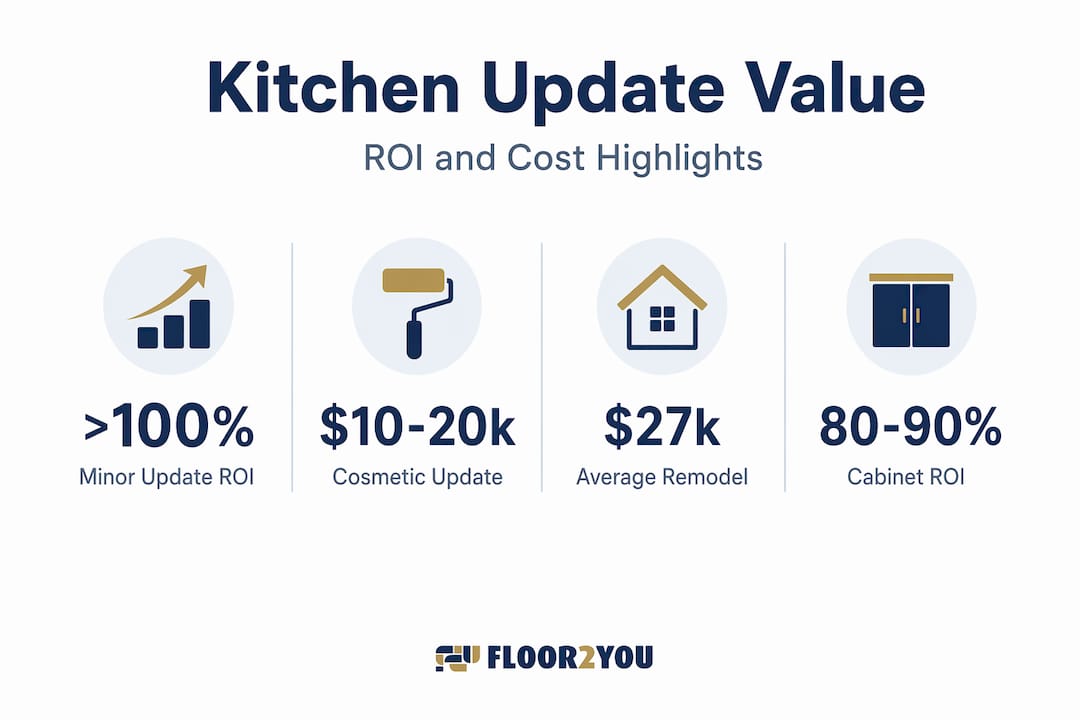
Let's start with money, because this is where most homeowners are genuinely surprised. A targeted cosmetic kitchen update, one that doesn't move walls or shift plumbing, can deliver over 112% ROI according to the 2025 Zonda Cost vs. Value benchmark. That means you can spend $15,000 on a smart kitchen refresh and potentially add more than that to your home's resale value.
The national average kitchen remodel in 2026 runs about $26,962, with cosmetic refreshes starting in the $10,000 to $20,000 range. Cabinets alone consume 30% to 40% of most budgets, which is exactly why cabinet refacing is one of the best places to start. You get a dramatic visual change at a fraction of full replacement cost.
Pro Tip: Cabinets are the single highest-impact area per dollar in any kitchen update. Before buying new ones, price out refacing or repainting. Most homeowners save between $5,000 and $12,000 and get 80% of the same effect.
Here's how different update types compare on investment and return:
| Update type | Approximate cost | Estimated ROI |
|---|---|---|
| Cabinet refacing | $4,000–$9,000 | 80–90% |
| New countertops | $3,000–$7,000 | 70–85% |
| Appliance replacement | $2,000–$6,000 | 60–75% |
| Full cosmetic refresh | $10,000–$20,000 | 100–113% |
| Full remodel with layout change | $30,000–$75,000+ | 50–70% |
Notice something? The full remodel with layout changes actually delivers the lowest return on investment. That doesn't mean it's never the right call. It means you need a clear reason beyond "I want something new." Understanding how updates affect home value before you commit is one of the smarter things you can do as a homeowner.
Function first: layout, workflow, and technology
Here's the part most design articles skip. A beautiful kitchen with a broken layout is still a frustrating kitchen. The classic work triangle, the relationship between your sink, stove, and refrigerator, is the backbone of every kitchen that feels easy to use. When those three points are too far apart or constantly interrupted by foot traffic, cooking becomes genuinely exhausting. Efficient kitchen layouts grounded in the work triangle reduce daily friction and make the space feel twice as large without adding a square foot.
You don't always need to move plumbing or walls to improve function. Some of the most impactful functional upgrades are completely cosmetic in scope:
- Under-cabinet lighting eliminates the shadow problem that makes prep work harder than it needs to be
- Pull-out drawers inside lower cabinets double usable storage without touching a single pipe
- A deeper sink solves the splashing and space problem that frustrates nearly every home cook
- Dedicated recycling or trash pull-outs clear counter clutter permanently
- A lazy Susan or corner cabinet organizer rescues the most wasted space in almost every kitchen
Technology integration is another reason homeowners are rethinking their kitchens right now. Smart kitchen features like Wi-Fi-enabled appliances are no longer a luxury tier feature. Refrigerators that track food inventory, ovens you preheat from your phone, and faucets with precision temperature control are showing up in mid-range remodels across South Florida. These aren't just conveniences. They reflect how people actually use their kitchens in 2026.
Pro Tip: Before spending on any aesthetic update, write down the three things that annoy you most about your kitchen daily. Nine times out of ten, fixing those three things delivers more satisfaction than any cosmetic change.
Aesthetic and trend-driven reasons to update in 2026
Trends matter, but they can also trap you. One of the clearest lessons from watching kitchen design cycle through the past decade is that chasing the very latest style often means another update in five years. The most durable reason to update your kitchen aesthetically is to make it feel genuinely yours while leaning on design choices that won't expire.
That's why it's no accident that 72% of NKBA respondents named transitional or timeless design as their preferred kitchen style for the next three years. Transitional kitchens blend classic structure with clean, modern finishes. They don't scream any particular decade. They age with the house instead of against it.
The 2026 aesthetic trends worth paying attention to include:
- Integrated appliances behind cabinet panels for a cleaner, less "appliance-heavy" look
- Matte and textured surfaces replacing high-gloss finishes for a warmer, more tactile feel
- Two-tone cabinetry using contrasting upper and lower cabinet colors to add depth without complexity
- Natural materials like wood, stone, and concrete that connect the kitchen to the outdoors
- Hidden storage solutions that minimize visual clutter on counters and walls
A successful mid-range kitchen renovation balances durable materials, functional choices, and timeless aesthetics designed to age well over decades rather than follow fleeting trends. That's not a compromise. It's the actual goal.
Update vs. full remodel: how to decide
The most common source of confusion for homeowners is not knowing whether their situation calls for an update or a full remodel. These are genuinely different projects in terms of time, cost, and disruption, and understanding the scope difference upfront saves a lot of regret.
An update works within the existing footprint. You replace surfaces, swap fixtures, change hardware, and add lighting without moving anything structural. A remodel changes the bones. It moves walls, relocates plumbing, rewires electrical, or completely reconfigures the layout. Keeping your existing layout intact can save $5,000 to $20,000 in plumbing and electrical work alone, with zero visible difference in finish quality.
Ask yourself these questions before deciding:
- Does the current layout actively prevent me from using the kitchen well, or do I just dislike how it looks?
- Are there structural issues like water damage, outdated wiring, or failing pipes that need addressing regardless?
- Is my goal to stay in this home long-term, or am I preparing to sell within three to five years?
- What is my realistic budget, and does it cover a remodel or just an update?
- How much disruption can I handle? A full remodel takes three to six weeks minimum. An update often takes days.
If your honest answer to question one is "it looks outdated but functions fine," an update is almost certainly the smarter move. If the layout genuinely interrupts how you cook and gather, look at open-concept remodeling options as a potential solution. And remember: you can always phase updates over time, starting with cabinets and countertops, then flooring, then appliances, spreading cost without sacrificing quality.
What I've learned from watching kitchens get it right and wrong
I've seen homeowners spend $40,000 on a full kitchen remodel and feel less satisfied than a neighbor who spent $12,000 on targeted updates. The difference almost always comes down to one thing: the expensive remodel chased style, while the update solved real problems.

The kitchen has evolved into the primary social hub of the home, and that means the design needs to serve gathering, not just cooking. When I see kitchens that feel genuinely great to be in, they're almost never the ones with the most expensive finishes. They're the ones where someone thought carefully about how people actually move through the space.
My take is that most homeowners update their kitchen for the wrong trigger. They do it because they're bored with how it looks, not because they've outgrown how it works. Boredom is a valid feeling. But it rarely justifies a $50,000 remodel. Fresh paint, new hardware, and better lighting can cure boredom for under $2,000. Addressing a genuinely broken layout is worth every dollar of a larger investment. Know which problem you're solving before you spend anything.
Preservation and adaptability are the values shifting kitchen thinking right now. The smartest homeowners I've encountered aren't asking how to make their kitchen look like a showroom. They're asking how to make it last, perform well, and serve their family for the next fifteen years. That's the question worth starting with.
— G
Ready to refresh your kitchen? Floor2you can help
When you're clear on what your kitchen actually needs, the next step is finding a team that can execute it without drama. Upgrading kitchen flooring is often the detail that ties a kitchen refresh together, turning disconnected updates into a cohesive design statement. New tile, luxury vinyl plank, or hardwood flooring in the kitchen works alongside your cabinet and countertop changes to make the whole space feel deliberate.

Floor2you specializes in exactly this kind of coordinated kitchen work across South Florida. Whether you need new flooring to complete a cosmetic update or want a full kitchen renovation managed start to finish, the team delivers quality craftsmanship with clear timelines and honest pricing. Reach out to Floor2you for a consultation and find out what your kitchen is really capable of.
FAQ
What are the main benefits of a kitchen renovation?
The main benefits include increased home resale value, improved daily function, and a space that better fits your lifestyle. Targeted cosmetic updates can return over 100% of their cost at resale.
How much does a kitchen update cost vs. a full remodel?
A cosmetic kitchen update typically costs $10,000 to $20,000, while a full remodel averages around $26,962 nationally. Layout changes add $5,000 to $20,000 on top of finish costs.
Why modernize your kitchen if you're not selling soon?
A modernized kitchen improves how you use and enjoy your home every day. Better lighting, layout, and storage reduce friction and make the space genuinely more pleasant to spend time in.
What kitchen design style has the best longevity?
Transitional or timeless design is the most durable choice, with 72% of design professionals naming it the preferred style for the next three years. It blends classic structure with clean modern finishes.
Should I update my kitchen or do a full remodel?
If your layout functions well, a targeted update almost always delivers better value. Reserve a full remodel for situations where the layout itself creates daily problems or where structural issues need to be addressed.