

TL;DR:
- Renovating investment properties with low-cost cosmetic upgrades can significantly increase rental income and market value.
- The best upgrades include door hardware, light fixtures, fresh paint, and durable flooring, all offering high ROI.
Renovating an investment property is the process of improving its condition and features to increase rental income and overall market value. Real estate investors who treat property upgrades as financial decisions, not personal preferences, consistently outperform those who rent as-is. High-impact cosmetic updates like door hardware yield 75–150% annual ROI, and light fixture replacements deliver 38–112%. These numbers make the case for renovation before you even open a spreadsheet. The question is never whether to renovate. The question is which upgrades to prioritize and how much to spend.
Why renovate investment property: the financial case
Renovation is the fastest lever investors have to increase cash flow without buying a new asset. A fresh coat of paint, updated flooring, and a cleaned-up kitchen can justify a rent increase that pays back the cost within months. That is not theory. That is the math behind strategic property upgrades that experienced landlords run before every tenant turnover.
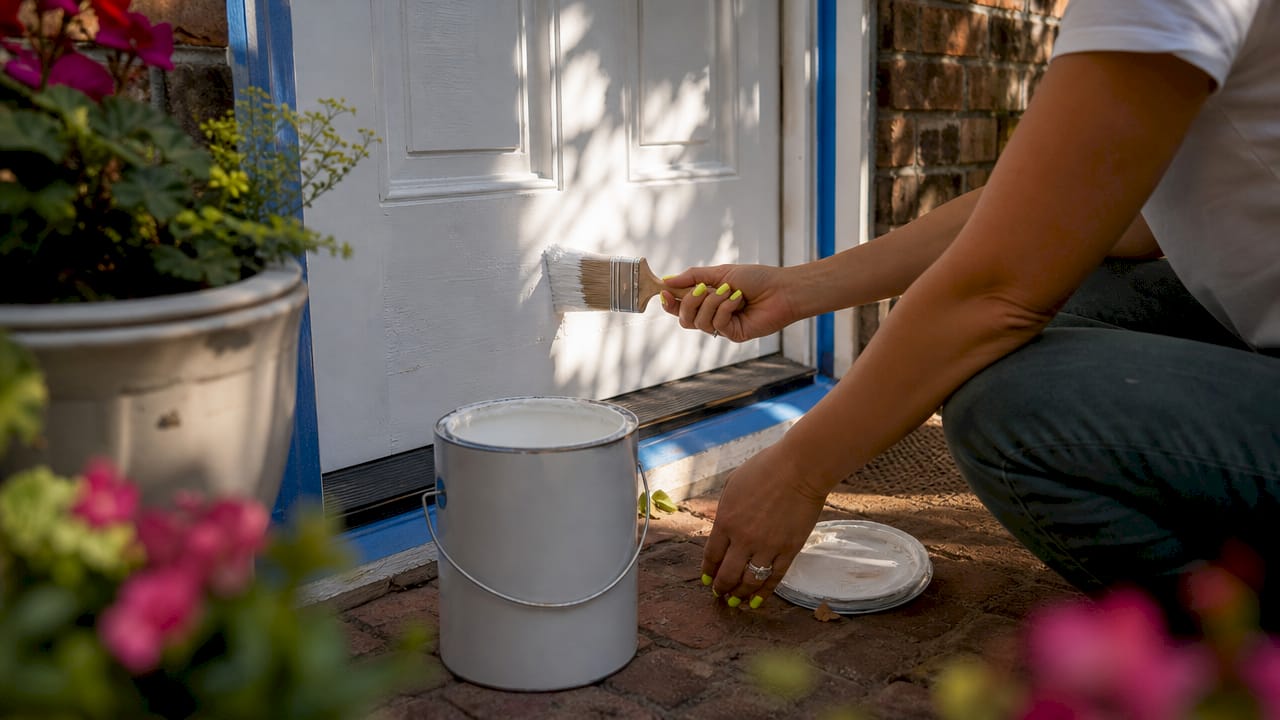
The core financial logic is simple. Higher rents compound over time. A $150 monthly rent increase adds $1,800 per year to your gross income. Over five years, that is $9,000 in additional revenue from a single renovation decision. Multiply that across a portfolio of units and the numbers become significant fast.
Renovation also protects your asset. Deferred maintenance accelerates deterioration. A landlord who skips a $400 roof repair today may face a $4,000 water damage claim next year. Proactive upgrades reduce emergency repair costs and keep the property competitive in the rental market.
What are the top renovation upgrades that maximize rental income?
Not all upgrades are equal. The highest-returning investments for rental properties are almost always low-cost and cosmetic, not structural or luxury.
| Upgrade | Estimated Annual ROI |
|---|---|
| Door hardware replacement | 75–150% |
| Light fixture updates | 38–112% |
| Cleaning and staging | 60–120% |
| Fresh interior paint | Strong positive return |
| LVP flooring installation | Strong positive return |
| Exterior pressure washing | Strong positive return |
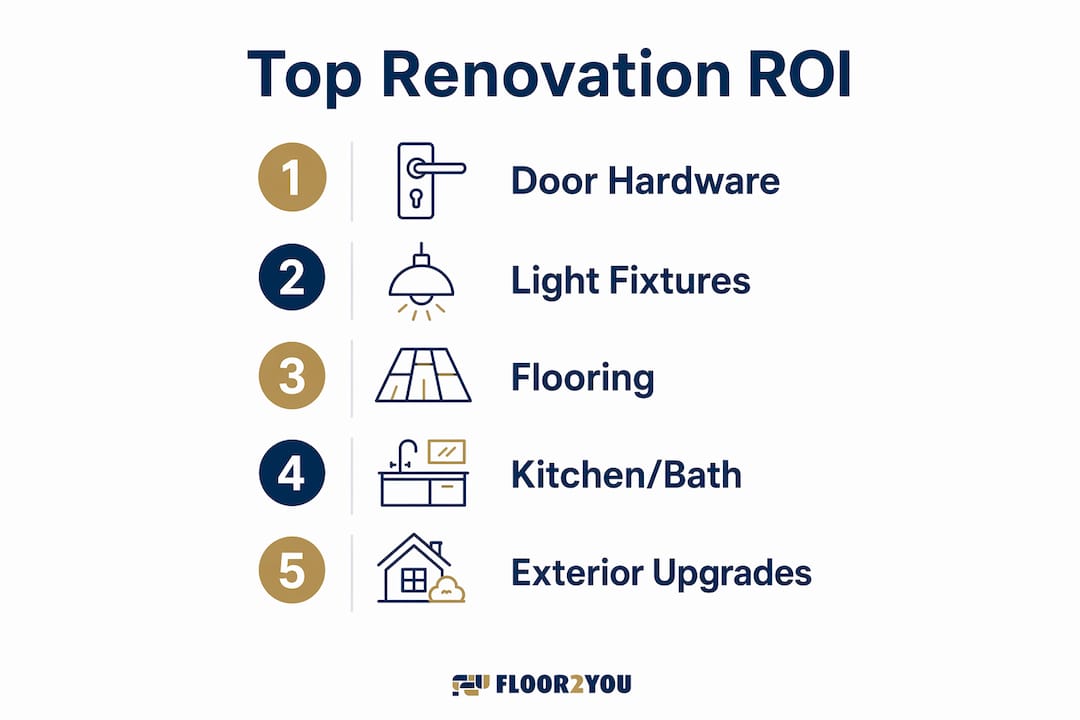
The pattern is clear: low-cost exterior upgrades like pressure washing and updated front doors improve curb appeal and leasing speed at minimal expense. First impressions drive leasing decisions. A tenant who pulls up to a clean, well-maintained exterior is already sold before they walk through the door.
Kitchen and bathroom updates also deliver strong returns, but only when kept within budget. Replacing cabinet hardware, installing a new faucet, and adding a tile backsplash costs far less than a full remodel and produces nearly the same tenant appeal. For a deeper look at kitchen upgrade ROI, the math consistently favors targeted improvements over full gut renovations.
Flooring is one of the highest-visibility upgrades in any rental. Luxury vinyl plank (LVP) is the current standard for investment properties because it is durable, water-resistant, and looks modern without the cost or fragility of hardwood.
Pro Tip: Stick to neutral colors for paint and flooring. Neutral finishes photograph better for listings, appeal to a wider pool of tenants, and are easier to touch up between tenancies.
How to determine the right renovation budget and scope
Budgeting is where most investors make their biggest mistakes. Spending too little leaves money on the table. Spending too much destroys returns.
The industry standard is to keep total renovation spending at or below 15–20% of the property's After Repair Value (ARV). This ARV-based budget rule prevents over-capitalization and keeps your equity position healthy. If a property is worth $300,000 after repairs, your renovation budget should not exceed $45,000–$60,000 in most cases.
The second financial test is the payback period. A renovation must allow you to recover its cost through rent increases within 36 months. Renovations exceeding 36-month payback risk destroying returns, especially when you factor in tenant turnover. The average tenant stays roughly 14 months. A renovation that takes 50 months to pay back through rent premiums will almost certainly lose money before it breaks even.
Here is a simple framework for evaluating any renovation decision:
- Calculate the rent increase. Estimate how much more you can charge per month after the upgrade.
- Divide the renovation cost by the monthly rent increase. This gives you the payback period in months.
- Compare to the 36-month threshold. If payback exceeds 36 months, reconsider the scope.
- Factor in vacancy. Add the cost of any weeks the unit sits empty during renovation to your total spend.
- Standardize the finish. Choose materials you can replicate across units to reduce future repair costs.
Standardizing finishes like flooring and paint colors reduces inflation risk, repair complexity, and speeds up tenant turnover processes. When every unit uses the same LVP color and the same paint, you can restock materials in bulk and repair damage without custom-ordering anything.
Pro Tip: Build a one-page renovation spec sheet for your property. List the exact paint brand, color code, flooring SKU, and hardware finish you use. This saves hours during every future turnover and keeps costs predictable.
When and why to renovate versus renting as-is
Timing a renovation is as important as choosing the right upgrades. Renovating at the wrong moment can cost more in lost rent than the upgrade ever recovers.
Vacancy is the ultimate renovation risk. Extended vacancies caused by over-ambitious renovations often erase the rental premiums investors expected to gain.
The key variables to assess before starting any renovation are:
- Days on market for comparable units. If similar properties in your area lease in under 20 days, major renovations during vacancy may cost more in lost rent than they gain in higher rents.
- Current rent versus market rent. If you are already at market rate, a renovation will not justify a meaningful increase.
- Lease expiration timing. Renovate between tenancies, not mid-lease. Coordinating work with natural turnover eliminates the vacancy cost entirely.
- Condition of competing units. If nearby rentals have updated kitchens and you do not, you will lose applicants to them regardless of price.
- Tenant quality signals. A well-maintained property attracts tenants who treat it well. Deferred maintenance signals that you do not care, and it attracts tenants who match that energy.
The best time to renovate is immediately after a tenant vacates and before you list the unit. Even a one-week cosmetic refresh, including cleaning, paint touch-ups, and hardware swaps, can justify a higher asking rent and reduce days on market. A professional rental property turnover clean is one of the highest-ROI steps you can take before listing.
Common investor mistakes when renovating rental properties
The most expensive renovation mistake is applying personal taste to a financial asset. Investors who renovate based on what they would want in their own home consistently over-spend and under-earn.
- Choosing premium finishes tenants will not pay for. Marble countertops and custom cabinetry look great but do not command proportionally higher rents in most markets.
- Ignoring durability in favor of aesthetics. Semi-gloss paints and builder-grade appliances outlast premium alternatives in rental environments and are far easier to repair.
- Renovating without a rent comp analysis. Spending $20,000 on a kitchen in a neighborhood where top rents are $1,200 per month is a capital allocation error.
- Skipping the 80/20 rule. The goal is a clean, functional, and modern-enough property. Focus on the 20% of upgrades that deliver 80% of tenant appeal. Everything beyond that is personal preference, not investment strategy.
- Underestimating turnover costs. Every renovation that extends vacancy by two weeks costs you two weeks of rent. That cost must be included in your payback calculation.
Over-renovation driven by personal taste produces expensive upgrades with zero rental yield increase. The fix is simple: make every decision based on what the market will pay, not what you prefer.
Pro Tip: Before approving any upgrade over $500, ask one question: "Will this allow me to charge more rent or reduce vacancy?" If the answer is no, skip it.
Ways to reduce renovation costs while improving property value
Controlling renovation costs does not mean cutting corners. It means making smarter material and sequencing decisions.
- Choose LVP flooring over hardwood. LVP costs significantly less, installs faster, and holds up better in rental environments. It also photographs well, which matters for online listings.
- Prioritize repairs that prevent future damage. Fixing a slow leak today costs a fraction of what water damage remediation costs next year. Preventive repairs have the highest effective ROI of any renovation category.
- Sequence work to minimize vacancy. Schedule flooring, paint, and cleaning in the correct order so tradespeople are not waiting on each other. Poor sequencing adds days to your vacancy period.
- Use staging and minor cosmetic upgrades before listing. Making a rental feel welcoming does not require major spending. Cleaned grout, new light bulbs, and a fresh-smelling unit lease faster than a renovated unit that shows poorly.
- Add energy-efficient upgrades selectively. Energy-efficient improvements reduce tenant utility bills, which supports longer retention and rental competitiveness without requiring premium finishes.
The most cost-effective renovation strategy combines durable materials, standardized finishes, and a tight sequencing plan. Investors who follow this approach spend less per unit and turn properties faster than those who improvise on-site.
Key takeaways
Renovating an investment property pays off when upgrades are chosen based on market data, kept within the 15–20% ARV budget rule, and recovered through rent increases within 36 months.
| Point | Details |
|---|---|
| ROI-first upgrade selection | Prioritize door hardware, light fixtures, and LVP flooring for the highest returns per dollar spent. |
| ARV budget discipline | Keep total renovation costs at or below 15–20% of After Repair Value to protect equity. |
| 36-month payback rule | Any renovation that takes longer than 36 months to recover through rent increases likely loses money. |
| Standardize finishes | Use the same paint, flooring, and hardware across units to cut repair time and material costs. |
| Vacancy is the real risk | Time renovations to coincide with tenant turnover to eliminate lost rent from the cost equation. |
What I have learned from years of renovating rentals
The hardest mindset shift for most investors is accepting that a rental property is not a home. It is a financial instrument. The moment you start making decisions based on what you would enjoy living in, you start losing money.
I have watched investors spend $15,000 on a kitchen renovation in a market where the rent ceiling was $1,400 per month. The math never worked. The kitchen looked beautiful. The ROI was negative. The property took years to recover that capital through rent.
The investors I have seen build real wealth from rentals share one habit: they treat every renovation decision like a loan approval. They ask what the return is, what the payback period is, and whether the market will actually reward the spend. If the numbers do not work, they do not do the work.
Durability beats beauty every time in a rental. Semi-gloss paint, LVP flooring, and builder-grade fixtures hold up through multiple tenancies and cost a fraction of premium alternatives. The property renovation strategies that compound over a portfolio are always the boring ones: standardize, document, and repeat.
The investors who struggle are the ones who renovate for pride. The ones who build wealth renovate for yield.
— G
Floor2you: flooring and renovation built for rental investors
Rental property investors in South Florida need a renovation partner who understands the difference between a home remodel and an investment property upgrade. Floor2you specializes in exactly that.

Floor2you offers durable flooring solutions including LVP, tile, laminate, and hardwood, all selected and installed with rental properties in mind. Their team handles full kitchen and bathroom remodels, painting, and complete renovation projects with the speed and consistency that investors need between tenancies. If you are ready to increase your property's value with upgrades that actually move the rent needle, Floor2you is the team to call. Fast response times, transparent pricing, and a track record with property managers and Airbnb hosts make them the go-to choice across South Florida.
FAQ
What renovations give the best ROI on a rental property?
Door hardware and light fixture replacements deliver the highest annual ROI, ranging from 38–150%, because they cost little and immediately improve tenant perception. LVP flooring and fresh paint are the next best investments for most rental properties.
How much should I spend on renovating an investment property?
Keep total renovation costs at or below 15–20% of the property's After Repair Value (ARV). Spending beyond that threshold risks over-capitalizing the asset and reducing your overall return.
How do I know if a renovation will pay off?
Divide the renovation cost by the monthly rent increase it will generate. If the result is more than 36 months, the renovation likely destroys value rather than creating it.
Should I renovate before finding a tenant or after?
Renovate between tenancies, immediately after a tenant vacates and before you list the unit. This eliminates vacancy cost and lets you market the upgraded property at a higher rent from day one.
Does energy efficiency matter for rental properties?
Energy-efficient upgrades reduce tenant utility bills, which improves affordability and supports longer tenant retention. They also make your listing more competitive in markets where tenants compare total monthly costs.