
TL;DR:
- Investing in high-quality materials reduces long-term maintenance costs and increases property value in South Florida.
- Premium materials, such as impact-rated windows and moisture-resistant siding, last longer and resist climate-related damage more effectively.
Quality materials are defined by their engineered durability, not their price tag. For homeowners, property managers, and real estate investors in South Florida, the decision to invest in quality materials is one of the clearest paths to long-term financial gain. Premium roofing, energy-efficient insulation, and durable flooring from recognized brands all share one trait: they cost more upfront and far less over time. The South Florida climate adds urgency to this choice. Moisture, UV exposure, and hurricane-force winds degrade low-grade materials faster here than almost anywhere else in the country.
Why invest in quality materials: the financial case
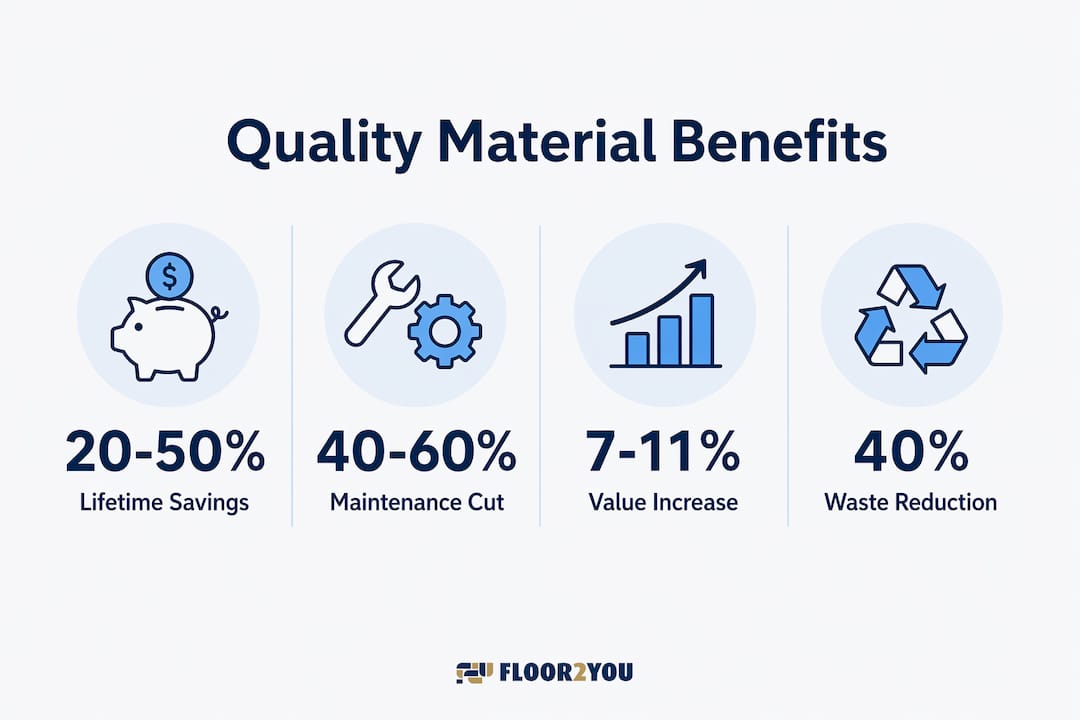
The numbers behind durable material investment are hard to ignore. Premium construction materials deliver 20–50% lifetime cost savings by reducing maintenance and replacements over a 10–20 year period. That figure represents real money for any property owner managing multiple units or planning a long-term hold.
High-end materials also cut maintenance costs by 40–60% compared to builder-grade alternatives. That reduction compounds over time, especially in rental properties where repair calls eat directly into net operating income.
The market value impact is equally concrete. Properties built or renovated with high-quality materials carry 7–11% higher market values and sell or lease up to 25% faster than comparable properties with standard finishes. For an investor holding a $500,000 property, an 11% value premium represents $55,000 in additional equity. That is not a rounding error.
Pro Tip: When evaluating renovation budgets, calculate the cost per year of service rather than the sticker price. A floor that lasts 30 years at $8 per square foot costs less annually than a floor that lasts 10 years at $4 per square foot.
Energy efficiency adds another layer of financial benefit. Energy-efficient materials such as Energy Star-rated fixtures and high-performance insulation reduce annual utility bills by 15–30%. In South Florida, where air conditioning runs year-round, that reduction is significant. A property spending $3,600 annually on cooling could save over $1,000 per year with the right insulation and window systems.
The environmental case is also measurable. Quality materials cut construction waste by 40% because they require less frequent replacement. Fewer replacements mean fewer trips to the landfill and lower labor disruption costs over the life of the building.
How do premium materials compare to builder-grade options?
The gap between premium and builder-grade materials shows up most clearly in lifespan data. Premium roofing lasts up to 50 years, while standard asphalt shingles last 15–20 years. That difference means a homeowner who installs quality roofing once may never replace it again. A homeowner who installs asphalt shingles will replace them two or three times over the same period.
The concept of cost per year of service makes this concrete. A premium roof costing 50% more upfront but lasting three times longer has a dramatically lower annual cost. The same logic applies to cabinetry, siding, and flooring.
| Material category | Builder-grade lifespan | Premium lifespan | Custom material ROI |
|---|---|---|---|
| Roofing | 15–20 years | Up to 50 years | Significantly lower cost per year |
| Hardwood flooring | 10–15 years (surface wear) | 25–100 years (refinishable) | Higher resale value |
| Kitchen cabinetry | 10–15 years | 20–50 years | 75% vs. 45% ROI |
| Exterior siding | 10–20 years | 30–50 years | Lower maintenance spend |
One common misconception is that price equals quality. True quality is defined by engineered test performance and durability ratings, not brand prestige or cost alone. A mid-priced product with a verified moisture-resistance certification will outperform an expensive product with no rating in South Florida conditions.
For South Florida specifically, the materials that deliver the greatest returns share three traits: moisture resistance, UV stability, and impact ratings. Porcelain tile, fiber cement siding, impact-rated windows, and luxury vinyl plank flooring all meet these criteria. Solid hardwood flooring, while beautiful, requires careful humidity management in South Florida's climate and performs best in climate-controlled interiors.
Pro Tip: Always ask for the manufacturer's technical data sheet before purchasing. Look for ASTM or Florida Building Code compliance ratings. A product without documented performance data is a risk, regardless of its price.
Why material quality is a risk-management strategy in South Florida
South Florida's climate is not a minor variable in renovation planning. It is the primary factor that separates a good material decision from a costly one. Material quality functions as a risk-management decision in climates prone to moisture and heat, where low-grade materials create expensive callback cycles.
The hidden damage problem is particularly serious here. Moisture infiltration behind low-grade siding or under cheap flooring does not announce itself. It spreads silently for months before it becomes visible. By the time a homeowner sees a stain or a warped board, the structural damage behind it often costs exponentially more to fix than the original material savings. Ignoring material quality leads directly to this outcome.
"Investing in quality materials is not about luxury. It is about avoiding expensive callbacks and hidden damage risks in harsh environments." — makeitredi.com
For property managers overseeing multiple units, callback loops are a budget killer. A single water intrusion event from failed caulking or low-grade window seals can trigger plumbing calls, drywall repairs, mold remediation, and tenant complaints in sequence. Premium materials break that chain before it starts.
Homes built with premium materials also attract insurance advantages. Properties with premium materials can qualify for insurance discounts due to their proven durability against hurricanes. In South Florida, where wind mitigation credits can meaningfully reduce annual premiums, this benefit is real and recurring.
Pro Tip: Request a wind mitigation inspection after installing impact-rated roofing or windows. The resulting insurance discount often pays back a portion of the upgrade cost within a few years.
How to choose and evaluate quality materials for your renovation
Choosing quality materials requires a clear evaluation process, not just a bigger budget. The criteria that matter most in South Florida are moisture resistance, impact ratings, UV stability, and verified third-party certifications.
Start with these four steps before purchasing any material:
- Check for certifications. Look for Florida Building Code approval, ASTM ratings, or Energy Star certification. These are independent performance benchmarks, not marketing claims.
- Request the technical data sheet. Any reputable manufacturer provides documented performance data. If a supplier cannot produce one, move on.
- Calculate cost per year of service. Divide the total installed cost by the expected lifespan. This single calculation often reverses the apparent savings of a cheaper option.
- Prioritize durability features for the local climate. In South Florida, moisture resistance and impact ratings are non-negotiable for exterior materials. UV stability matters for anything exposed to direct sunlight.
For flooring specifically, the benefits of quality flooring extend beyond aesthetics. Durable floors reduce replacement frequency, improve tenant satisfaction in rental units, and contribute directly to appraisal values. Luxury vinyl plank, porcelain tile, and properly sealed hardwood all perform well in South Florida interiors when installed correctly.
Property managers and investors should also review renovation tips that maximize value before committing to a material selection. The sequence of renovations matters as much as the materials themselves. Flooring installed before plumbing work is completed, for example, risks damage that erases the quality advantage entirely.
The daily experience of quality is also a factor that appraisers and buyers notice immediately. Premium doors close smoothly and countertops resist stains. These details influence buyer confidence and appraisal outcomes in ways that are difficult to quantify but consistently observed in the market.
Key Takeaways
Investing in quality materials delivers lower lifetime costs, higher property values, and measurable climate resilience for South Florida homeowners and investors.
| Point | Details |
|---|---|
| Lifetime cost savings | Premium materials reduce maintenance costs by 40–60% over 10–20 years. |
| Market value uplift | Quality materials add 7–11% to property value and speed up sales by up to 25%. |
| Energy bill reduction | High-performance insulation and fixtures cut annual utility costs by 15–30%. |
| Climate risk management | Moisture-resistant, impact-rated materials prevent hidden damage and costly callbacks. |
| Cost per year of service | Premium roofing lasting 50 years costs far less annually than asphalt replaced every 15–20 years. |
What I've learned from watching South Florida properties age
I have seen the same mistake made dozens of times. A property owner saves $8,000 on builder-grade flooring and siding during a renovation. Three years later, they spend $22,000 fixing moisture damage, replacing warped floors, and repainting siding that has faded and cracked under the South Florida sun. The math never works out in favor of cutting corners on materials here.
The properties that hold their value and generate consistent rental income share one pattern: the owners treated material selection as a financial decision, not a cost-cutting exercise. They asked for certifications. They calculated cost per year of service. They chose quality craftsmanship over the lowest bid.
The other thing I have noticed is that quality communicates itself without explanation. A buyer walking into a home with solid-core doors, porcelain tile, and properly finished hardwood floors does not need a sales pitch. The materials speak. Appraisers respond to the same signals. That perception gap between a quality renovation and a builder-grade one shows up directly in offers and appraisals.
My honest advice: do not treat the material budget as the first place to find savings. Treat it as the foundation of your return on investment. Every dollar you protect there compounds over the life of the property.
— G
Floor2you: quality flooring built for South Florida homes
South Florida properties need materials that can handle the heat, humidity, and storm season year after year. Floor2you specializes in exactly that.
Floor2you offers a curated selection of premium flooring solutions including hardwood, luxury vinyl plank, porcelain tile, and laminate, all installed by experienced local professionals who understand South Florida's climate demands. Whether you are renovating a primary residence, upgrading a rental property, or refreshing an Airbnb unit, Floor2you manages the full process from material selection through final installation. The team responds quickly, communicates clearly, and delivers work that holds up. If you are ready to protect your investment with materials that last, Floor2you is the right place to start.
FAQ
What are the long-term cost benefits of quality materials?
Premium materials deliver 20–50% lifetime cost savings by reducing maintenance and replacement frequency over 10–20 years. The savings compound further through lower energy bills and reduced repair callbacks.
Do quality materials increase property value in South Florida?
Properties renovated with high-quality materials carry 7–11% higher market values and sell or lease up to 25% faster. In South Florida's competitive real estate market, that advantage is significant for both resale and rental income.
What materials perform best in South Florida's climate?
South Florida's climate demands moisture-resistant, UV-stable, and impact-rated materials. Porcelain tile, fiber cement siding, impact-rated windows, and luxury vinyl plank flooring consistently outperform builder-grade alternatives in this environment.
How do I evaluate a material's true quality before buying?
True quality is defined by engineered test performance, not price. Request the manufacturer's technical data sheet and look for ASTM ratings or Florida Building Code compliance before purchasing any material.
Is upgrading rental property flooring worth the cost?
Yes. Quality flooring in rental properties reduces replacement frequency, improves tenant satisfaction, and raises appraisal values. Investors can review rental flooring upgrade benefits to understand the specific returns available in South Florida's rental market.