
TL;DR:
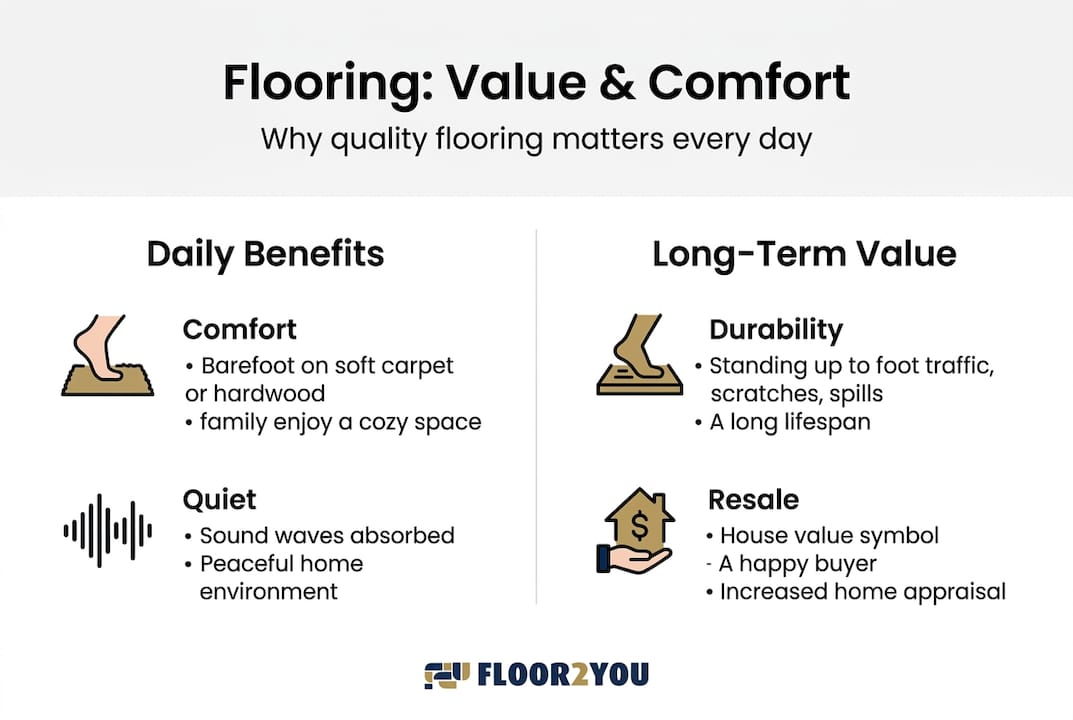
- Quality flooring lasts longer and saves money on replacements compared to cheap options.
- Durable materials are better suited for South Florida's humid climate and heavy traffic.
- Investing in high-quality flooring enhances home value, safety, comfort, and environmental sustainability.
Flooring is one of those home decisions that feels simple until you realize you're replacing it three years later. Many South Florida homeowners pick the cheapest option available, drawn in by the low price tag per square foot, only to discover that bubbling seams, scratched surfaces, and slippery tiles cost far more in repairs and replacements than a quality floor ever would. This article walks you through the real financial and lifestyle impact of your flooring choice, backed by data, so you can make a decision you'll feel good about for decades, not just until the next rainy season.
Table of Contents
- Why quality flooring matters more than you think
- Durability, safety, and comfort: the tangible benefits
- Quality flooring and property value: what the data shows
- Sustainability and true cost: why long-term thinking wins
- Why most homeowners underestimate flooring's long-term impact
- Ready for beautiful, lasting floors? Discover your options
- Frequently asked questions
Key Takeaways
| Point | Details |
|---|---|
| Lifetime value | Investing in quality flooring saves money over time by reducing replacements and repairs. |
| Comfort and safety | Premium flooring brings better comfort, safety, and performance for South Florida homes. |
| Boosted resale appeal | High-quality floors increase your property’s value and make a great impression on future buyers. |
| Sustainable choice | Durable, long-lasting floors are environmentally responsible and cut down on waste. |
Why quality flooring matters more than you think
Let's start with the number that surprises most people. A budget floor priced around $2.50 per square foot might seem like a steal, but if it fails in four years, you're paying removal costs, new materials, and labor all over again. That cycle repeats. Meanwhile, a floor priced in the $4.50 to $6.50 per square foot sweet spot is built to last 20 years or more, meaning the math flips entirely in your favor over time.
This is not just about money. It's about living in a home that functions well every single day.
South Florida adds its own layer of complexity. High humidity, frequent storms, and temperature swings create conditions that expose the weaknesses of cheap flooring fast. Cheap vinyl can bubble and lift. Low-grade laminate swells and warps. Even budget tile grout crumbles faster in humid environments. What works fine in a dry climate can become a hazard or an eyesore in Miami or Fort Lauderdale within a single wet season.
The hidden costs of cheap flooring stack up quickly:
- Frequent replacement cycles every three to five years instead of lasting 15 to 20 years
- Removal and labor fees each time, which often rival the cost of the original flooring itself
- Poor dimensional stability, meaning boards expand, contract, and separate over time
- Slippery surfaces when wet, which create real safety risks, especially in bathrooms and kitchens
- VOC off-gassing from low-grade adhesives that affects indoor air quality
Understanding the professional flooring benefits of investing wisely is key to avoiding the trap of sticker-price thinking.
"The cheapest floor in the showroom is rarely the cheapest floor over time. When you account for replacement, labor, and the disruption of living through another renovation, quality pays for itself."
It's also worth recognizing that not all flooring materials are equal when it comes to South Florida's specific demands. You need materials that handle moisture without warping, resist mold, and maintain their appearance under heavy foot traffic. Exploring the flooring types for South Florida homes available today makes the right choice much clearer. The bottom line: quality flooring is not a luxury upgrade. It's a smart, practical investment that prevents ongoing financial drain.
Durability, safety, and comfort: the tangible benefits
Now that the real cost picture is clearer, let's talk about what quality flooring actually delivers in your daily life. Because the difference between a budget floor and a quality one is not just how long it lasts. It's how it feels, how it performs, and how safe it keeps your family.
Start with construction. Premium flooring materials feature thicker cores, typically 8 to 12mm for SPC (stone plastic composite) compared to just 3.5mm in budget options. They include wear layers of 20 to 30 mil that resist scratches and scuffs, embossed in register (EIR) texturing that mimics real wood or stone for both visual realism and grip, and better acoustic properties that reduce the hollow, clickety sound underfoot.
Here's a simple comparison of what you're actually getting:
| Feature | Budget flooring | Quality flooring |
|---|---|---|
| Core thickness | 3 to 4mm | 8 to 12mm |
| Wear layer | 6 to 8 mil | 20 to 30 mil |
| Surface texture | Flat, printed | EIR (realistic, grip-enhanced) |
| Moisture resistance | Partial | Full waterproof |
| Expected lifespan | 3 to 7 years | 15 to 25 years |
| Sound absorption | Minimal | Significantly better |
| Dent and scratch resistance | Low | High |
Safety is often overlooked in the flooring conversation, but it matters enormously in South Florida homes. Wet floors from tracked-in rain, poolside drips, or bathroom splashes create slip hazards. Quality vinyl and tile options include textured surfaces specifically designed to provide grip underfoot when wet. Budget smooth-finish floors are notoriously slippery. For households with children, elderly family members, or pets, this is not a minor detail.
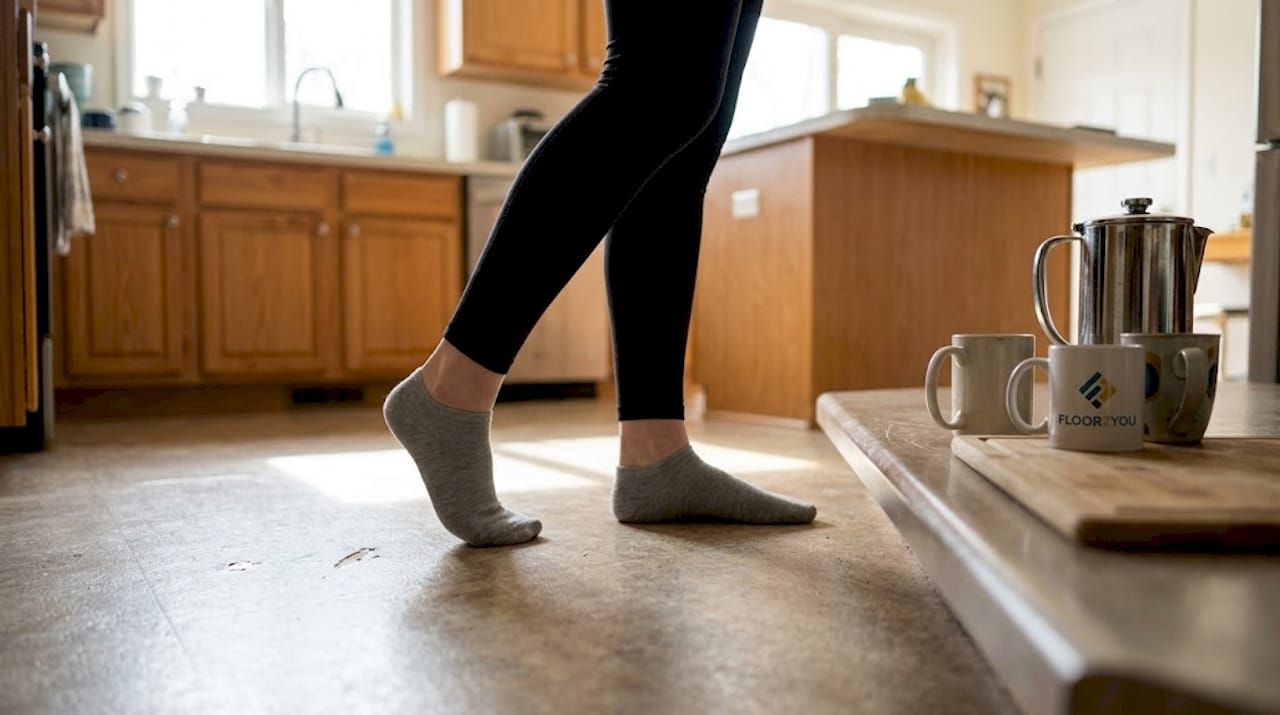
Comfort underfoot is the other daily benefit. A quality floor with proper underlayment reduces joint fatigue, muffles sound between floors, and stays cooler in summer. When you're standing in the kitchen cooking or walking from the living room to the bedroom multiple times a day, that surface quality is something you notice.
Pro Tip: When shopping for vinyl or SPC flooring in South Florida, prioritize a minimum 12 mil wear layer for light traffic areas and at least 20 mil for kitchens, hallways, and living rooms. Anything under 8 mil will show scratches within a year or two of regular use.
The advantages of vinyl flooring in humid climates are particularly strong because SPC and WPC (wood plastic composite) vinyl are 100% waterproof and dimensionally stable. They don't react to moisture the way laminate or hardwood do. That stability means no buckling, no gaps, and no warping after a humid summer. For anyone comparing products, reviewing vinyl flooring options side by side will show just how much the specs vary between price points.
Key durability benefits of quality flooring include:
- Scratch resistance from harder wear layers, essential in homes with pets
- Dent resistance from thicker, denser cores that don't compress under furniture
- Stain resistance from protective coatings on premium surface finishes
- Moisture barriers that prevent subfloor damage from water intrusion
- Warranty coverage that actually protects your investment, often 15 to 25 years
Quality flooring and property value: what the data shows
Beyond personal comfort, let's see how your flooring decision impacts your home's overall value. And the data here is more compelling than most homeowners realize.
The 2025 NAR Remodeling Impact Report documents joy scores of 9 to 10 out of 10 for kitchen and bathroom upgrades that include flooring improvements. Joy score is a measure of how happy homeowners feel after completing a remodeling project. When flooring is part of those upgrades, satisfaction climbs to the top of the scale.
This matters for resale too. Buyers walking through a home notice flooring immediately. It's one of the first things they feel and see. Worn, stained, or outdated floors signal neglect and trigger lower offers. Fresh, durable, modern flooring communicates that the home has been cared for. In South Florida's competitive real estate market, that perception translates directly into dollar value.
| Flooring type | Average lifespan | Impact on buyer perception | Typical ROI consideration |
|---|---|---|---|
| Budget laminate | 4 to 7 years | Often a red flag | May require replacement before listing |
| Mid-range vinyl/SPC | 15 to 20 years | Neutral to positive | Strong for rental properties |
| Quality hardwood | 25 to 50 years | Strong buyer appeal | High for primary residences |
| Large-format tile | 20 to 30 years | Modern, clean aesthetic | Excellent in South Florida |
The connection between modern flooring trends and buyer appeal is real. Wide plank floors, large-format tiles, and neutral tones are what today's buyers expect in updated South Florida homes. Installing dated, budget-grade flooring before selling essentially signals that the home needs work, even if everything else has been updated.
Here's what the data consistently shows about quality floors and property value:
- Higher offer prices from buyers who see durable, attractive flooring as a move-in ready signal
- Faster time on market because fewer buyers need to negotiate for flooring replacement credits
- Stronger appraisal values when quality materials are properly documented and installed
- Better rental yields for investment property owners because tenants prefer quality surfaces
For anyone navigating the contractor selection process, understanding the process of hiring flooring contractors correctly is just as important as choosing the right material. Poor installation of a quality floor can undermine all of its benefits, while expert installation makes even a mid-range floor perform like a premium one.
The real takeaway: flooring is not a background element in your home's value story. It's a central character that buyers, tenants, and appraisers all evaluate.
Sustainability and true cost: why long-term thinking wins
Last, let's tie value to stewardship. Your flooring choice doesn't just affect your wallet and your comfort. It affects how much waste your household generates over a lifetime of homeownership.
Here's the math that rarely gets discussed. If a budget floor lasts five years and needs replacement three times over 15 years, you've sent three full floors to the landfill, paid for three rounds of labor, and dealt with three rounds of renovation disruption. A quality floor installed once and lasting 20 or more years generates a fraction of that waste.
Research confirms that durable flooring lowers lifecycle costs and environmental impact compared to frequent cheap replacements. Natural stone and high-quality tile, in particular, show lower long-term lifecycle costs compared to low-grade ceramic in multiple sustainability studies. That's better for the planet and for your budget.
Here's a step-by-step way to think through the real cost of your flooring decision:
- Calculate the total installed cost, including materials, underlayment, removal of existing floor, and labor.
- Divide that by the expected lifespan of the floor to get an annual cost of ownership.
- Add estimated maintenance costs, like refinishing for hardwood or regrouting for tile.
- Factor in replacement disruption costs, like hotel stays or temporary storage if the project is large.
- Compare that annual figure across two or three flooring options before making a final decision.
When you run this math, a quality floor that costs twice as much upfront but lasts four times longer is not twice the investment. It's a fraction of the total cost. The best flooring for longevity in South Florida also tends to be the most sustainable choice precisely because it stays in place.
Pro Tip: Before choosing any flooring, ask your contractor for the product's published lifecycle cost data or warranty terms. A 25-year warranty on a vinyl plank floor tells you something important about how the manufacturer stands behind the material.
Natural options like porcelain tile and high-grade stone are particularly strong choices for South Florida homeowners who want sustainability alongside style. They resist moisture completely, require minimal maintenance beyond cleaning, and can outlast the mortgage on your home. Even when eco-friendly materials like bamboo or reclaimed wood are considered, the longevity factor remains the single biggest driver of true sustainability.
Why most homeowners underestimate flooring's long-term impact
Here's something most flooring guides won't tell you directly: the biggest regrets we hear from homeowners in South Florida are not about choosing the wrong color or the wrong style. They're about choosing the wrong quality tier, then living with that decision for years longer than they planned.
People routinely underestimate how long it takes to schedule a renovation and how much disruption it causes. So when a cheap floor starts failing at year three, many homeowners wait another two years before fixing it, meaning they live on a bad floor for five years total.
The other thing guides miss is the comfort factor. You can research ROI numbers and lifecycle costs all day, but the quiet satisfaction of a floor that feels solid underfoot every single morning is hard to quantify. We've seen homeowners replace a perfectly functional budget floor simply because they never enjoyed walking on it.
Flooring underlayment is a perfect example of a detail that gets skipped to save money and then regretted deeply. Proper underlayment improves sound absorption, thermal comfort, and the overall feel of the floor. Cutting that corner is one of the most common mistakes in budget flooring projects, and it's entirely avoidable.
Our honest advice: buy the best quality floor you can reasonably afford, installed by people who know what they're doing. The sticker price difference between a budget and quality floor is almost always smaller than the regret of getting it wrong.
Ready for beautiful, lasting floors? Discover your options
If this article has shifted how you think about flooring, you're already ahead of most homeowners who go into a renovation focused purely on upfront price.
At Floor2You, we've helped hundreds of South Florida homeowners find flooring that fits their budget, their lifestyle, and their home's long-term value. From premium vinyl and SPC to tile, hardwood, and laminate, our team guides you through every option with honest recommendations and professional installation. We handle the full project, from selection through completion, so you get lasting results without the stress. Reach out today for a free quote and let's find the floor your home deserves.
Frequently asked questions
How does quality flooring affect my home's resale value?
Quality flooring increases buyer appeal, often boosting resale value and leading to higher satisfaction scores after remodeling. The 2025 NAR Remodeling Impact Report documents joy scores of 9 to 10 out of 10 for upgrades involving flooring improvements.
What makes premium flooring more durable?
Premium floors use thicker cores and wear layers, typically 8 to 12mm cores and 20 to 30 mil wear layers, along with realistic EIR texturing that resists damage and lasts significantly longer in high-traffic areas.
Is spending more on flooring worth it in South Florida's climate?
Yes. Quality flooring handles South Florida's humidity and wear far better than budget options, which frequently fail through expansion and moisture damage, leading to costly and disruptive replacements.
How does investing in sustainable flooring save money long term?
Durable materials like stone and tile lower lifecycle costs and generate less waste than cheap floors that need frequent replacement, making them better for both your wallet and the environment over the long run.