

TL;DR:
- Hiring a professional remodeling contractor protects homeowners from costly hidden issues by managing permits, trades, and unexpected structural problems. They ensure quality craftsmanship, proper communication, and accountability, making the entire renovation process more reliable and efficient. Local contractors often provide faster response, regional expertise, and stronger community accountability compared to large national firms.
Most homeowners assume the biggest risk in a renovation is spending too much. The real risk is hiring the wrong person, or no professional at all. Understanding why hire a remodeling contractor matters comes down to one uncomfortable truth: what you cannot see behind your walls can cost you far more than a contractor's fee ever will. This guide breaks down exactly what professional remodeling contractors do, what you get that you cannot get from YouTube tutorials or a cheap handyman, and how to make sure you hire someone worth trusting with your home.
Table of Contents
- Key Takeaways
- Why hire a remodeling contractor: the full scope of work
- The real benefits of hiring a professional remodeling contractor
- Local vs. national: why local contractors win
- How to choose the right remodeling contractor
- My take: what homeowners consistently get wrong about hiring contractors
- Ready to work with contractors you can actually trust?
- FAQ
Key Takeaways
| Point | Details |
|---|---|
| Contractors manage hidden surprises | Professionals build contingency plans into budgets so unexpected structural issues do not derail your project. |
| Permits protect your investment | Licensed contractors handle permits and inspections from day one, protecting your home's resale value and your safety. |
| Local contractors outperform national chains | Local remodelers bring personalized service, regional code knowledge, and real community accountability. |
| Cheapest bids cost the most | Project success depends on experience and planning far more than the lowest price estimate. |
| Communication is what separates good from great | Regular written updates and clear timelines are the backbone of a renovation that finishes on schedule. |
Why hire a remodeling contractor: the full scope of work
Most people picture a contractor swinging a hammer. The actual job is closer to running a small operations business on your behalf, inside your home, for weeks or months.
A professional remodeling contractor handles:
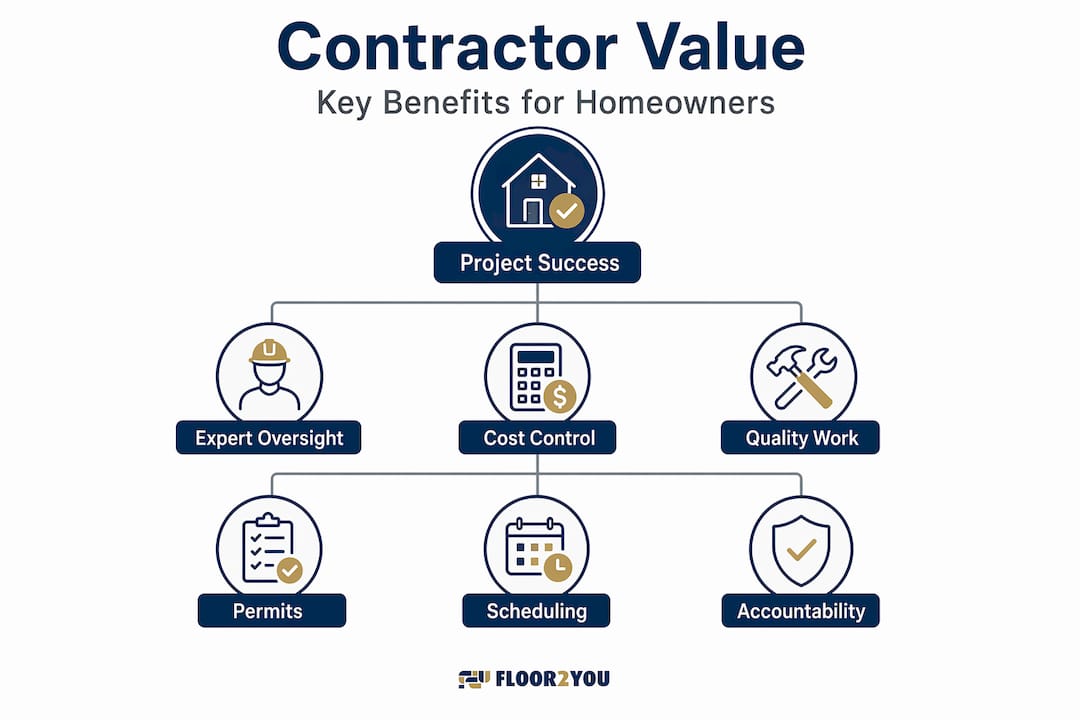
- Project planning and design coordination. They translate your vision into a realistic scope of work with materials, sequencing, and trade scheduling figured out before anyone lifts a tool.
- Permit acquisition and code compliance. A responsible contractor integrates permits into the project timeline from the start, not midway through. This keeps inspections on schedule and keeps your project legal.
- Skilled trades coordination. Plumbers, electricians, tile setters, and drywall crews need to show up in the right order. A contractor manages that sequencing so no one is waiting on someone else.
- Budget and timeline tracking. They track spending against estimates and flag problems before they become expensive surprises.
- Risk mitigation. Experienced contractors build flexibility into project plans so that when hidden structural issues appear during demolition, the project adjusts without panic or full stoppage.
Pro Tip: Ask any contractor you interview how they have handled an unexpected structural problem mid-project. Their answer tells you more about their competence than any portfolio photo.
The bathroom remodeling workflow alone involves a specific sequence of demolition, rough plumbing, electrical rough-in, waterproofing, cement board, tile, fixtures, and finish work. Skipping a step or doing them out of order creates failures that show up months later, often behind finished walls where they are expensive to fix.
The real benefits of hiring a professional remodeling contractor
Here is what you actually get when you hire someone qualified, and why the benefits go well beyond a nice-looking finish.
-
Expert craftsmanship that prevents costly mistakes. A professional who has tiled a hundred bathrooms does not make the measurement errors or grout spacing inconsistencies a first-timer will. Project quality depends heavily on contractor experience, not just material selection.
-
Access to trusted subcontractors and material suppliers. Established contractors have relationships with reliable tradespeople and can often get materials at better prices than a homeowner walking into a supply house.
-
Scheduled communication and project updates. Clear, regular communication with written confirmations reduces confusion and keeps you in control of a project without requiring you to manage it daily.
-
Proper permits and inspections protecting long-term value. Licensed contractors manage permits and inspections properly, protecting you from liability and ensuring your renovation holds up during a future property sale or insurance claim. Unlicensed work can create serious exposure issues.
-
Warranty and accountability protections. A licensed contractor stands behind their work. If tile starts cracking six months later or a fixture fails, you have recourse. With an unlicensed handyman, you usually have nothing in writing and no leverage.
"The biggest thing homeowners overlook is that a contractor is not just doing the work. They are taking legal and professional responsibility for the outcome of that work inside your home."
Understanding the costs and value of professional remodeling helps frame the contractor fee not as an added expense, but as the protection that makes the entire investment worth making.
Design-build firms that combine design and construction under one roof reduce extra costs and improve communication by creating a single point of accountability. Even if you are not working with a full design-build firm, the principle matters: fewer handoffs mean fewer miscommunications and fewer mistakes.
Local vs. national: why local contractors win
When you are comparing your options, the choice between a local contractor and a large regional or national firm is not just about price. It is about what kind of experience you want and what kind of accountability you need.
| Factor | Local contractor | Large/national firm |
|---|---|---|
| Responsiveness | Usually faster, direct access to decision-makers | Often routed through call centers or project managers |
| Local code knowledge | Deep familiarity with regional requirements | General knowledge, may need to research local specifics |
| Community accountability | Reputation depends on local word-of-mouth | Brand reputation is national, local follow-up may be limited |
| Flexibility on scope | Easier to adapt mid-project | Changes often require formal change order processes |
| Personalized service | Tends to treat each project as a relationship | Volume-driven, less individualized attention |
Local remodeling contractors benefit homeowners through better responsiveness, personalized service, and regional building code knowledge compared to larger, out-of-town firms. In South Florida specifically, local code requirements around hurricane-resistant construction, moisture management, and regional material performance are not things a distant contractor will know intuitively.
There is also the economic dimension. Hiring local keeps money circulating in your community, supports local suppliers, and builds relationships you can return to for future projects.
Pro Tip: Search a contractor's name along with your city and the word "reviews" before calling. Local contractors live and die by their local reputation. What neighbors say online is usually accurate.
How to choose the right remodeling contractor
Knowing the benefits of hiring contractors is one thing. Making the right hire is another. These are the practical steps that separate a smart decision from a costly one.
-
Verify licensing and insurance before anything else. Ask for their license number, confirm it with your state's contractor board, and request a certificate of insurance that shows both general liability and workers' compensation coverage. If a worker is injured on your property and the contractor has no coverage, you could be liable.
-
Ask for a detailed written estimate. A professional estimate lists labor, materials, and timeline separately. If someone hands you a single number with no breakdown, that is a red flag. You cannot compare bids that are not itemized the same way.
-
Check references from recent, comparable projects. A kitchen remodel reference from three years ago does not tell you much about how they handle a bathroom renovation today. Ask for contacts from projects in the last 12 months.
-
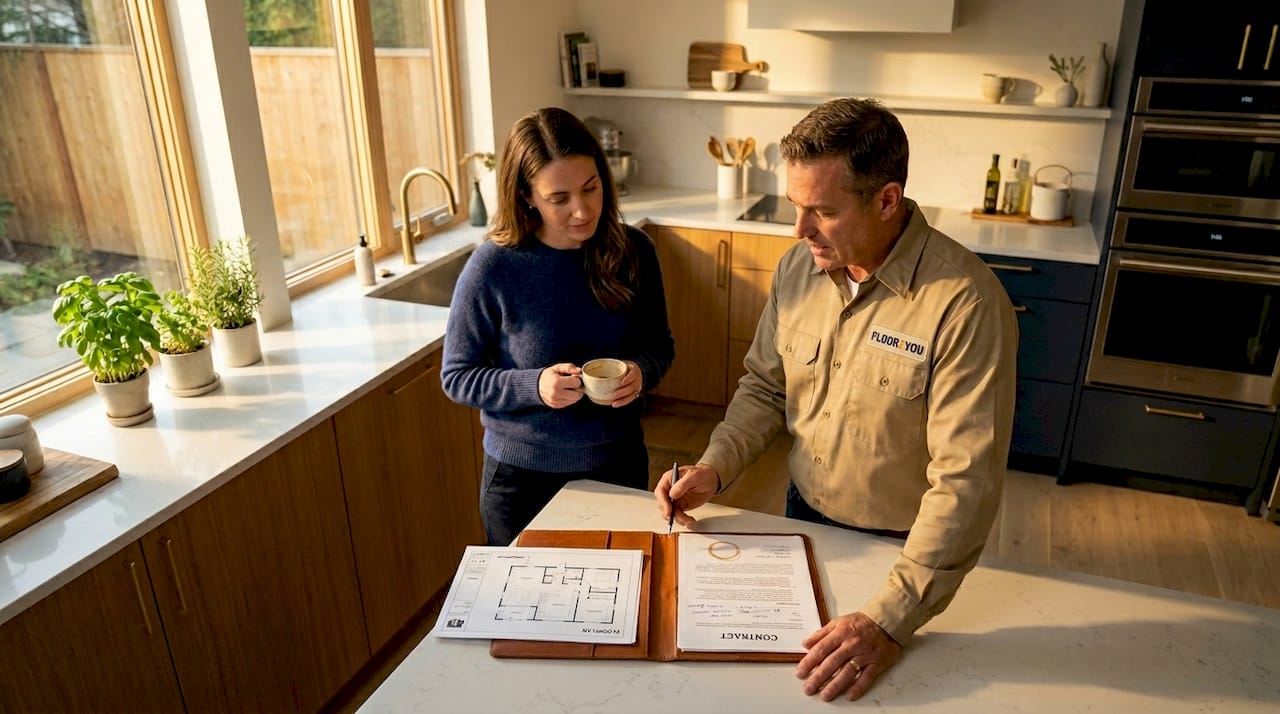
Read the contract before you sign anything. Your contract should spell out the scope of work, payment schedule, timeline with milestones, change order process, and warranty terms. If any of those are missing, ask for them in writing.
-
Watch for low-ball bids. Choosing the right contractor has far more to do with experience and thorough planning than the lowest price. A bid that comes in 30 percent below everyone else usually means something is being left out, or cut corners are already baked in.
-
Clarify communication expectations upfront. How often will you get updates? Who is your point of contact? Will updates come by phone, text, or email? Getting this agreed on in advance prevents weeks of frustration. Some contractors also offer financing options through partner companies, which can help you plan your investment without overextending your budget.
For a thorough walkthrough of how to plan a home remodel specific to South Florida's conditions and requirements, that resource covers the sequencing and contractor selection steps in detail.
My take: what homeowners consistently get wrong about hiring contractors
I have watched homeowners make the same mistake over and over, and it almost never involves choosing a bad tile color. The mistake is prioritizing price over process.
When someone accepts the lowest bid without asking how the contractor handled a surprise plumbing issue mid-project, or without confirming that permits are included in the scope, they are setting themselves up for a painful experience. I have seen projects where a homeowner saved two thousand dollars upfront on a cheaper contractor, then spent eight thousand dollars fixing unpermitted work before they could close on a home sale.
What I have learned is that the contractors who do the best work are rarely the cheapest and never the fastest to close a deal. They ask you questions about how you use your kitchen before they talk about cabinet styles. They mention permit timelines before you bring them up. They give you a timeline that seems longer than you want, because they have built in real buffer for the things that always go wrong behind walls.
The importance of remodeling professionals is not just about craftsmanship. It is about having someone who has done this enough times to know what they do not know yet, and who builds their process around that reality. Hiring someone with that mindset is worth paying for. Full stop.
Learning how to hire flooring contractors without stress is a good companion read for understanding what a quality hiring process actually looks like across different types of renovation work.
— G
Ready to work with contractors you can actually trust?
If this article has clarified anything, it should be that the right contractor makes the entire difference between a renovation you are proud of and one you are recovering from.

Floor2you works with South Florida homeowners on full home renovations including kitchen remodels, bathroom transformations, and flooring installations across hardwood, vinyl, laminate, and tile. The process starts with a straightforward consultation where you describe what you want and get real answers about timeline, scope, and cost. No pressure, no vague estimates. If you are ready to talk through your project, Floor2you makes it easy to get started without the usual contractor runaround.
FAQ
Why hire a remodeling contractor instead of doing it yourself?
Professional contractors bring licensed trade knowledge, code compliance, permits, and accountability that DIY simply cannot replicate. A mistake behind your walls can cost significantly more to fix than a contractor's fee would have cost upfront.
What does a remodeling contractor actually manage?
A contractor manages project planning, permit acquisition, subcontractor scheduling, budget tracking, and quality assurance from start to finish. They are the single point of accountability for everything that happens on your project.
Why use local contractors over national remodeling firms?
Local contractors typically offer faster response times, stronger community accountability, and deeper knowledge of regional building codes and materials. Their local reputation depends on every project they complete in your area.
How do I know if a remodeling contractor is trustworthy?
Verify their license with your state contractor board, confirm they carry general liability and workers' compensation insurance, and check references from projects completed in the last 12 months. A legitimate contractor will provide all of this without hesitation.
Does hiring a licensed contractor affect my home's resale value?
Yes. Permitted, inspected work done by a licensed contractor protects your home during future sales and insurance claims. Unpermitted work can create legal and financial complications that buyers and insurers will flag during due diligence.