
TL;DR:
- Fast remodeling emphasizes rapid project completion without sacrificing quality through detailed planning and efficient processes. The design-build approach reduces project timelines by up to 33% by overlapping phases and consolidating accountability. Speedy renovations benefit homeowners and investors by minimizing disruption, lowering costs, and maximizing returns.
Fast remodeling is the process of completing home renovation projects rapidly while maintaining quality and long-term value. For homeowners and real estate investors, why fast remodeling is important comes down to three things: reduced disruption, lower carrying costs, and faster returns. Design-build projects complete 33% faster than traditional methods, and nearly 40% of homeowners want renovations to start within seven days. Speed, when backed by solid planning, is not a shortcut. It is a competitive advantage.
Why fast remodeling is important for modern homeowners
The industry term for the most effective rapid renovation approach is the design-build model. Unlike the traditional design-bid-build process, design-build places design and construction under one team from day one. That single change eliminates the biggest time sink in any renovation: the gap between design completion and contractor bidding.
Communication gaps between designers, contractors, and clients cause 20–30% of project delays in traditional remodeling. Design-build removes that friction entirely. One team holds accountability for the full scope, so decisions happen faster and phases overlap instead of running back to back.
Here is what the design-build model does differently:
- Phase overlap: Design and pre-construction planning run simultaneously, cutting weeks off the schedule.
- Single-point accountability: One contractor owns the timeline, budget, and quality, so nothing falls through the cracks.
- Pre-ordered materials: Procurement starts during design, not after permits are approved.
- Fewer change orders: Integrated teams catch conflicts early, before they become expensive field problems.
Pro Tip: Ask any contractor you interview whether they use a design-build or design-bid-build process. If they separate design from construction, expect a longer timeline and more coordination friction.
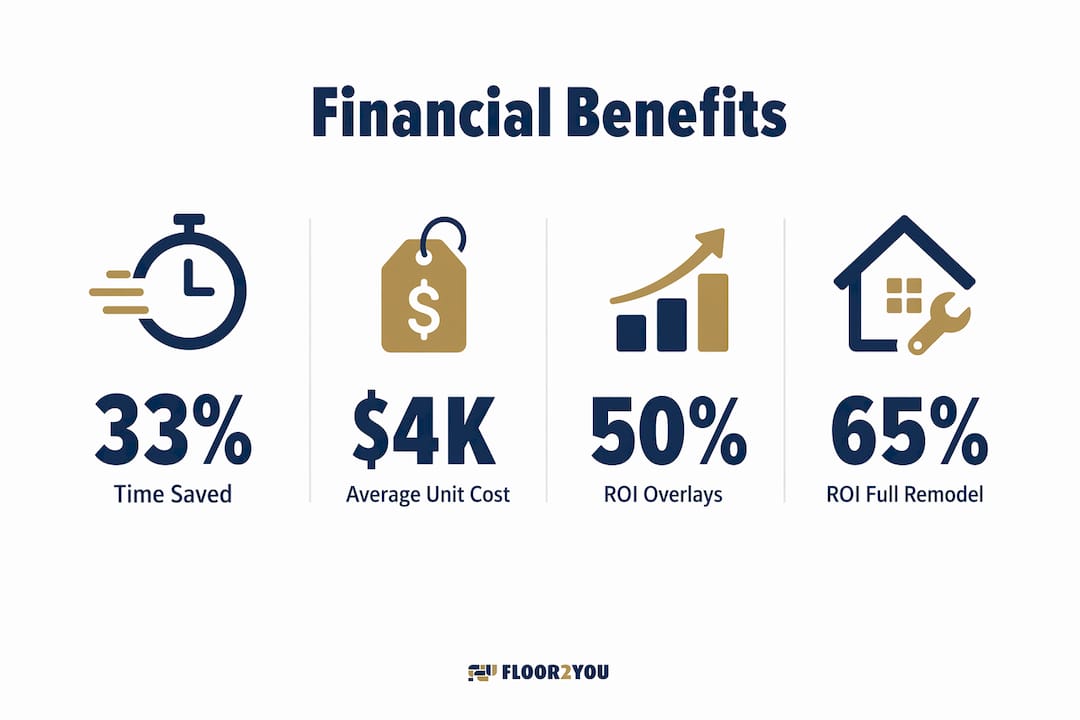
The result is a 33% reduction in total project time without cutting corners on craftsmanship. For South Florida homeowners managing busy schedules, that difference is significant.
What are the financial benefits of remodeling quickly?
Speed in remodeling is a financial variable, not just a convenience. Every day a property sits mid-renovation is a day it generates no rental income, no resale value, and no livability for the owner.

For real estate investors, the math is direct. Multifamily unit turnover costs average $4,000 per unit plus lost rent during the vacancy period. A two-week delay on a unit renting at $2,000 per month costs an additional $1,000 in lost income on top of the turnover expenses. Multiply that across a portfolio, and slow renovations become a serious drag on returns.
Investors treat renovation timelines as a balance-sheet variable because interest, taxes, and vacancy losses accumulate daily. Faster project completion directly improves capital velocity, meaning money cycles back into the next investment sooner.
For homeowners, the benefits of quick remodeling show up differently but are just as real:
| Scenario | Slow Remodel (6–8 weeks) | Fast Remodel (2–3 weeks) |
|---|---|---|
| Kitchen out of service | 6–8 weeks of disruption | 2–3 weeks of disruption |
| Contractor daily rate exposure | Higher total labor cost | Lower total labor cost |
| Resale listing delay | Delayed market entry | Faster listing and sale |
| Tenant vacancy loss | $2,000+ per month lost | Minimal vacancy loss |
The advantages of fast home updates extend beyond comfort. A faster project means less time living around construction, fewer meals eaten out, and a quicker return to normal life. For Airbnb hosts and short-term rental operators, every week of downtime is direct revenue loss.
The importance of speedy renovations becomes clearest when you calculate the true cost of delay. A remodel that takes four extra weeks does not just cost more in labor. It costs in lost rent, delayed listings, and compounding disruption.
What trade-offs exist between speed, quality, and home value?
Speed and quality are not opposites. They become opposites only when speed is pursued without a plan. Rushing without a clear scope leads to defects and costly rework, which ultimately extends the timeline and inflates the budget.
The most common mistakes in rushed remodels follow a predictable pattern:
- Skipping a detailed pre-project scope, which forces decisions mid-construction
- Ordering materials reactively instead of pre-purchasing before work begins
- Hiring crews based on availability rather than fit for the specific project type
- Ignoring permit timelines, which can stall a project for weeks regardless of crew speed
Pre-measured products and factory-cut materials solve a large portion of this problem. When components arrive job-ready, on-site labor drops and unpredictability shrinks. A bathroom vanity that arrives pre-assembled and pre-plumbed takes hours to install, not days.
Pro Tip: Before any renovation starts, request a written scope of work that lists every material, every subcontractor, and every permit required. A contractor who cannot produce this document is not ready to move fast.
Speed is a byproduct of meticulous planning, not a substitute for it. The contractors who finish fastest are almost always the ones who spent the most time preparing before the first tool was picked up. Poor planning does not just slow a project down. It erodes the long-term satisfaction and resale value that made the renovation worthwhile in the first place.
For investors seeking maximum ROI, the lesson is clear. A well-planned fast remodel outperforms both a slow careful remodel and a rushed careless one.
How do you choose the right fast remodeling approach?
Not every property needs the same type of renovation, and choosing the wrong approach wastes both time and money. The two primary options are one-day surface overlays and full infrastructure remodels. Each serves a different property profile.
One-day overlays are engineering-driven systems that install modular components over existing surfaces. A bathroom overlay, for example, places a new acrylic or composite shell over the existing tub and wall surround in a single day. These systems work well for newer homes, rental units needing a cosmetic refresh, and accessibility upgrades where speed matters most.
One-day remodel overlays recoup approximately 50% ROI, while full infrastructure remodels achieve 65% or more by addressing core systems like plumbing, electrical, and structural elements. The higher ROI of full remodels reflects the deeper value they add, but they require more time and investment.
Overlay systems are often inappropriate for homes over 25 years old because hidden plumbing defects, outdated electrical panels, and structural wear require full access to correct. Installing a surface overlay over a failing subfloor or corroded pipe creates a larger problem later.
Here is a practical framework for choosing:
Choose a one-day overlay when:
- The home is fewer than 25 years old with no known infrastructure issues
- The goal is cosmetic improvement for resale or rental turnover
- Budget and timeline are the primary constraints
Choose a full remodel when:
- The home is 25 or more years old
- Plumbing, electrical, or structural systems need updating
- The goal is maximum long-term value and a 65%+ ROI return
Understanding remodeling costs and value before committing to either path helps you avoid overspending on a cosmetic fix or underspending on a property that needs real infrastructure work.
Key takeaways
Fast remodeling delivers the best results when speed is built on thorough pre-project planning, the right delivery method, and materials selected to match the property's age and condition.
| Point | Details |
|---|---|
| Design-build cuts timelines | Design-build projects finish 33% faster by overlapping phases and unifying accountability. |
| Vacancy costs are real | Multifamily turnover averages $4,000 per unit plus lost rent, making speed financially critical. |
| Planning enables speed | Rushing without a clear scope causes rework; meticulous planning is what makes fast remodeling possible. |
| Match method to property age | Use overlays for newer homes and full remodels for properties over 25 years old to protect ROI. |
| Full remodels yield higher ROI | Full infrastructure remodels return 65%+ ROI versus approximately 50% for surface overlays. |
Speed without sacrifice: what i've learned from real renovations
After watching hundreds of renovation projects play out, the pattern is consistent. The fastest projects are never the ones where the contractor rushed. They are the ones where the homeowner and contractor spent an extra week planning before the first demo day.
The biggest mistake I see is treating speed as a contractor's job. It is not. Speed is a shared outcome. When a homeowner delays material selections, changes the tile choice mid-project, or skips the permit process to save time, the project slows down regardless of how good the crew is. The contractor can only move as fast as the decisions in front of them.
What actually works is treating the pre-construction phase as the real work. Locking in materials, finalizing the scope, pulling permits early, and coordinating subcontractors before demolition starts. When all of that is done, the physical construction becomes almost mechanical. Crews show up, materials are on site, and the project moves.
The other thing I would push back on is the assumption that fast remodeling means cosmetic remodeling. Some of the fastest projects I have seen were full gut renovations. The speed came from integrated teams, pre-fabricated components, and a contractor who had done that exact scope dozens of times. Experience is its own form of efficiency.
For South Florida homeowners and investors, the right contractor is the one who can tell you exactly how long your project will take and why. Vague timelines are a red flag. Specific schedules backed by a clear scope are the sign of a team that knows how to move fast without cutting corners.
— G
Ready to remodel faster? Floor2you can help
Floor2you brings South Florida homeowners and investors a remodeling process built for speed and quality from the first call to the final walkthrough.

Floor2you coordinates materials, permits, and crews before work begins, so your project moves without the delays that slow most renovations down. Whether you need a kitchen refresh, a bathroom upgrade, or a full home renovation, the team handles every detail. Homeowners and Airbnb hosts across South Florida trust Floor2you for fast project starts, transparent timelines, and craftsmanship that holds up long after the crew leaves. Start your renovation with a team that treats your timeline as seriously as you do.
FAQ
What makes fast remodeling different from a rushed job?
Fast remodeling is the result of thorough pre-project planning, pre-ordered materials, and integrated teams. A rushed job skips planning and causes defects; a fast remodel completes on schedule because every decision was made before work started.
How much faster is design-build compared to traditional remodeling?
Design-build projects finish 33% faster than traditional design-bid-build methods by overlapping design and construction phases under one accountable team.
Does a faster remodel hurt my home's resale value?
Speed does not reduce resale value when the work is properly planned and executed. Full infrastructure remodels completed efficiently still return 65% or more ROI, matching or exceeding slower projects.
When should i choose a one-day overlay over a full remodel?
Choose a one-day overlay for homes under 25 years old that need cosmetic updates for resale or rental turnover. Opt for a full remodel when plumbing, electrical, or structural systems are outdated or failing.
Why do investors prioritize renovation speed so heavily?
Investors treat renovation timelines as a balance-sheet variable because every day of vacancy means lost rent, ongoing interest, and delayed capital reinvestment. Faster completions directly improve overall portfolio returns.