

TL;DR:
- Integrating smart home infrastructure during renovations is more cost-effective and flexible than retrofitting after completion. Proper planning and wiring during rough-in enable energy savings, enhance property value, and future-proof homes for evolving technology. Combining bundled upgrades with strategic protocol choices maximizes smart home benefits and minimizes long-term costs.
Smart home renovations integrate internet-connected devices directly into remodeling projects to optimize energy use, convenience, and property value from day one. The industry term for this practice is smart home integration, and understanding why consider smart home renovations now rather than later is the single most important decision you will make during any remodel. The strategic timing advantage is real: when walls are open and electricians are already on site, adding smart infrastructure costs a fraction of what retrofitting demands later. This article covers the cost logic, energy savings, value impact, and planning steps that make smart integration during renovation the most financially sound approach for homeowners and investors alike.
Why smart home renovations are best done during remodeling
The most overlooked reason to integrate smart technology during a remodel is pure economics. Installing smart features while walls are open and infrastructure is accessible costs significantly less than retrofitting after finishes are complete. When your electrician is already running wire, adding a KNX bus cable or conduit to future device locations adds minimal labor cost. Doing the same job after drywall, tile, and paint are finished means tearing out finished surfaces, patching, repainting, and paying for two rounds of work instead of one.
The planning alignment benefit is equally significant. Smart home systems require specific wiring routes, panel space, and sensor positions that are nearly impossible to optimize once a home is buttoned up. Architecting electrical plans concurrently with smart home integration ensures cable routing, actuator locations, and panel capacity support both current needs and future expansion without costly rework. Skipping this step is the single most common and expensive mistake homeowners make.
Here is what gets missed most often during renovation planning:
- Under-cabling switch locations. Every switch box that might eventually control smart lighting needs a neutral wire. Standard switch wiring often omits it, making smart switch installation impossible without rewiring.
- Ignoring outdoor and window zones. Smart blinds, outdoor lighting, and weather sensors all need dedicated cabling. These locations are easy to reach during rough-in and nearly impossible to wire cleanly afterward.
- Delaying the protocol decision. Choosing between KNX, Z-Wave, Zigbee, or Matter after rough-in forces compromises. Each protocol has different wiring requirements, and the decision shapes your entire system architecture.
- Skipping conduit in concrete or masonry. In South Florida construction, running conduit through block walls or concrete slabs during the build phase is the only practical path to future wiring flexibility.
Pro Tip: Ask your electrician to pull a dedicated home-run cable to every switch location, even rooms you are not automating yet. The cable cost is negligible during rough-in. The cost to add it later is not.
The option to add automation later is itself a core motivation for wiring during renovation, even when you have no immediate plans to automate. Future-proofing your home for the next 10 to 20 years of technology changes is a decision you can only make cheaply once.
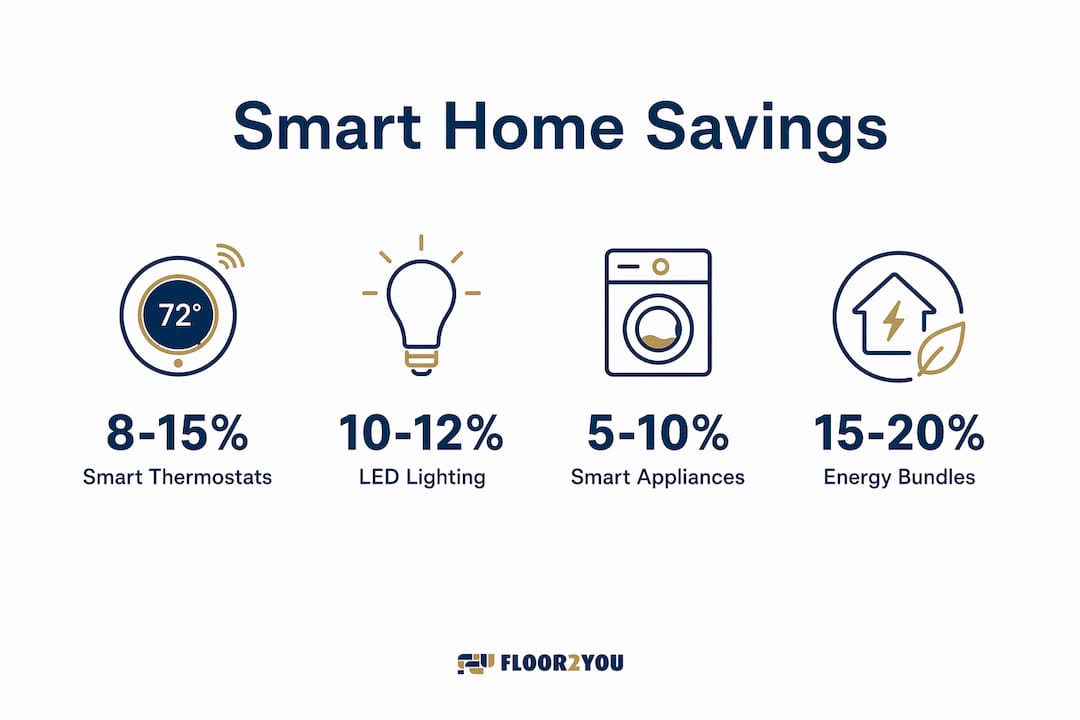
How much energy can smart home upgrades actually save?
Smart thermostats are the highest-impact single device in any home automation plan. Smart thermostats reduce heating and cooling bills by approximately 8 to 15 percent, depending on climate and occupant behavior. That translates to roughly $172 per year in average savings, a figure that compounds across the life of the device. In South Florida's cooling-heavy climate, the savings skew toward the higher end of that range.
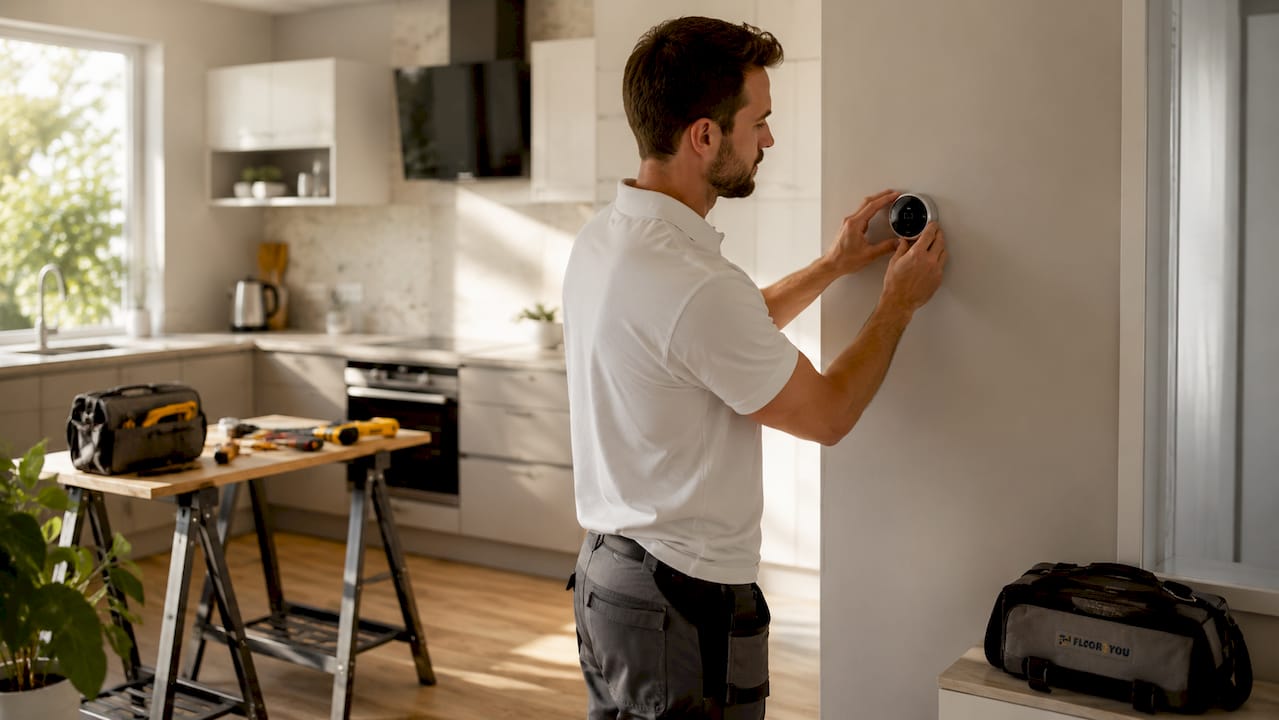
The mechanism behind those savings matters more than the headline number. Automated setbacks reduce HVAC energy waste by enforcing consistency that manual schedules consistently fail to maintain. Most homeowners intend to adjust their thermostat when they leave for work or go to sleep. Most do not do it reliably. A smart thermostat with geofencing or occupancy detection removes the human failure point entirely. The savings come from behavioral enforcement, not from artificial intelligence features marketed on the box.
| Smart upgrade | Estimated energy impact | Key mechanism |
|---|---|---|
| Smart thermostat | 8–15% reduction in HVAC costs | Automated setbacks and occupancy detection |
| Integrated envelope retrofit | 34–37% reduction in annual electricity use | Insulation, glazing, shading, and smart controls combined |
| Smart lighting controls | 20–30% lighting energy reduction | Occupancy sensors and daylight harvesting |
| Smart blinds and shading | Reduces solar heat gain | Automated positioning based on sun angle and temperature |
The table above illustrates a critical point: coordinated upgrade bundles outperform isolated devices. A smart thermostat paired with upgraded insulation, high-performance glazing, and automated shading can cut annual electricity use by 34 to 37 percent versus a baseline home. That is not the sum of individual savings. It reflects the interaction effect when measures work together, which is why planning them as a package during renovation produces better returns than adding them one at a time.
Pro Tip: Check your utility provider for ENERGY STAR smart thermostat rebates before purchasing. Some programs offer rebates of up to $75 per unit, which meaningfully shortens the payback period on an already cost-effective upgrade.
Does smart home technology actually increase property value?
Smart home upgrades improve resale attractiveness, particularly when energy management and security features are well integrated rather than bolted on as afterthoughts. The evidence on exact dollar value uplift is mixed, but the directional finding is consistent: move-in ready homes with buyer-desired smart features sell faster and compete more effectively in listings. For investors, that speed-to-sale advantage has a direct financial value beyond any price premium.
The features that add the most measurable value align with universal buyer priorities. Energy efficiency and safety automation top the list because they address needs every buyer has, regardless of how tech-savvy they are. A smart security system, automated exterior lighting, and a programmable thermostat appeal to a first-time buyer and a seasoned investor equally. Niche features like whole-home audio or motorized art walls appeal to a narrower audience and carry more resale risk.
For property investors specifically, the advantages of home automation during renovation break down into three practical categories:
- Move-in ready positioning. Buyers and renters pay a premium for homes where smart systems are already installed, tested, and functional. A system that requires a new owner to configure and troubleshoot is a liability, not an asset.
- Operational cost reduction. Smart energy management lowers utility costs, which directly improves net operating income on rental properties. That improvement capitalizes into higher property value under income-based appraisal methods.
- Competitive listing differentiation. In South Florida's active real estate market, smart home features appear prominently in listing descriptions and attract more qualified showings. The marketing advantage is real even when the appraisal uplift is modest.
Validate expected returns against local market comparables before committing to premium smart systems. The ROI varies by market and quality, and a $15,000 whole-home automation system in a neighborhood where comparable homes sell for $350,000 will not return its cost. A $3,000 smart security and thermostat package in the same home almost certainly will. Understanding home remodeling costs and value before you budget is the difference between a smart investment and an expensive hobby.
How to plan and implement smart home renovations effectively
Smart home planning belongs in week one of your renovation project, not week eight. The sequence below reflects what actually works when smart integration is done right.
- Engage a smart home advisor before finalizing electrical plans. Your electrician knows wiring. A smart home specialist knows where sensors, actuators, and controllers need to be positioned for a system that works cleanly. Bringing both professionals together during design avoids the expensive conflicts that arise when smart requirements are overlaid onto a completed electrical plan.
- Select your smart home protocol before rough-in. KNX is the most widely used professional standard for wired smart home systems and offers vendor independence and long-term support. Matter is the emerging wireless standard with broad manufacturer adoption. The choice determines wiring requirements, so it must be made before cables are pulled.
- Pull cables to all likely device locations, even if you are not automating them now. Every window (for smart blinds), every switch box (for smart lighting), every outdoor zone (for security and landscape lighting), and every HVAC zone (for smart thermostats) should receive dedicated cabling during rough-in. The incremental cost is low. The cost to add it later is high.
- Prioritize lighting, blinds, and HVAC for initial automation. These three categories deliver the highest daily impact on comfort and energy use. They are also the systems where automation produces the most consistent, measurable savings. Start here before expanding to entertainment, appliances, or specialty systems.
- Design for scalability from the start. A system that cannot expand without rewiring is not a smart home. It is an expensive collection of gadgets. Specify panel space, controller capacity, and network infrastructure that supports twice the devices you plan to install initially.
Pro Tip: Even if you plan to phase your automation rollout over several years, complete all rough-in cabling during the renovation. The labor to install cable in an occupied, finished home costs three to five times more than during construction.
Investors managing multiple properties benefit from standardizing on a single protocol and vendor ecosystem across their portfolio. Consistency reduces training time, simplifies troubleshooting, and makes it easier to upgrade rental properties systematically rather than managing a patchwork of incompatible systems.
Key takeaways
Smart home renovations deliver their greatest value when infrastructure is installed during the remodel phase, not added afterward.
| Point | Details |
|---|---|
| Timing is the primary cost driver | Installing smart wiring during rough-in costs a fraction of retrofitting after finishes are complete. |
| Energy savings require bundled upgrades | Smart thermostats alone save 8–15%; combined with insulation and glazing, savings reach 34–37%. |
| Value impact is feature-dependent | Energy management and security automation add the most resale value; niche features carry higher risk. |
| Protocol selection shapes everything | Choose KNX, Matter, or another standard before rough-in to avoid wiring conflicts and future limitations. |
| Cable now, automate later | Pulling cables to all device locations during renovation preserves optionality without committing to full automation immediately. |
The renovation window you only get once
Most homeowners treat smart home technology as something to add after the renovation is finished. That is the most expensive way to do it, and I have seen the consequences firsthand. A homeowner who skips smart wiring during a full kitchen and bathroom remodel will spend two to three times more to retrofit those same systems two years later, and the result will never be as clean or as capable.
The insight that changed how I think about this: you are not deciding whether to automate your home. You are deciding whether to pay for the infrastructure once or twice. Pulling cable during rough-in is cheap. Tearing out tile and drywall to run cable later is not. The decision to wire comprehensively during renovation is not about committing to a specific technology. It is about preserving your options.
For investors, the calculus is even clearer. A well-planned remodel that includes smart infrastructure positions a property for the next decade of buyer expectations, not just today's market. The buyers and renters entering the market in 2028 and 2030 will expect smart features the way today's buyers expect stainless appliances. Getting ahead of that expectation during a renovation you are already doing costs relatively little. Missing that window costs significantly more.
My recommendation: treat smart home integration as a standard line item in every renovation budget, not an optional upgrade. The infrastructure cost is modest. The regret of skipping it is not.
— G
Start your smart renovation with Floor2you

Floor2you works with South Florida homeowners and property investors who want renovations done right the first time. When you are already investing in a kitchen remodel, bathroom upgrade, or full home renovation, integrating smart-ready infrastructure during that same project is the most cost-effective decision you can make. Floor2you's project management approach coordinates trades, timelines, and specifications so nothing gets missed during rough-in. If you are ready to plan a renovation that sets your home up for the next decade, start your project with Floor2you today. The team is available for fast quotes and straightforward project planning across South Florida.
FAQ
What are smart home renovations?
Smart home renovations are remodeling projects that integrate internet-connected devices and infrastructure, such as smart thermostats, automated lighting, and security systems, directly into the construction process rather than adding them after completion.
Why is it cheaper to add smart features during a renovation?
Installing smart wiring and devices while walls are open during rough-in costs significantly less than retrofitting after finishes are complete, because you avoid tearing out and repairing drywall, tile, and paint.
How much can smart thermostats save on energy bills?
Smart thermostats reduce heating and cooling costs by approximately 8 to 15 percent annually, with average savings around $172 per year, primarily by automating setbacks that manual schedules fail to maintain consistently.
Do smart home features increase resale value?
Smart home upgrades improve resale attractiveness and competitiveness, with the strongest value impact coming from energy management and security automation, which address universal buyer priorities regardless of tech preference.
What smart home protocol should I choose for a renovation?
KNX is the leading professional standard for wired smart home systems and offers vendor independence and long-term support. Matter is the preferred wireless standard for broader device compatibility. The choice should be made before rough-in wiring begins.