
TL;DR:
- SPC flooring features a waterproof, dense core made from limestone and PVC, making it ideal for humid South Florida conditions. Its rigid, floating click-lock design ensures stability, durability, and a realistic appearance in moisture-prone environments. Choosing quality SPC flooring with appropriate wear layers provides long-term value and resistance to climate-related damage.
If you've ever watched a beautiful hardwood floor buckle after one bad rainy season, you already know the problem. South Florida's heat and humidity punish traditional flooring in ways most homeowners don't anticipate until it's too late. That's exactly why so many local remodeling projects now start with the same question: what is SPC flooring, and is it actually built for climates like ours? The short answer is yes. SPC flooring is a rigid, fully waterproof flooring type engineered to stay flat, stable, and good-looking even when moisture and heat are constant factors.
Table of Contents
- What is SPC flooring and how is it made?
- Key benefits of SPC flooring for South Florida homes
- How SPC flooring compares to other flooring options
- Installing SPC flooring: what South Florida homeowners should know
- Choosing the right SPC flooring: wear layer thickness and style considerations
- Rethinking flooring choices: why SPC flooring might be the smarter long-term investment for South Florida homes
- Explore SPC flooring options for your South Florida home remodeling project
- Frequently asked questions
Key Takeaways
| Point | Details |
|---|---|
| SPC composition | SPC flooring is made from a rigid limestone and PVC core layered with a durable wear surface and design film. |
| Waterproof and durable | It is completely waterproof and resists warping, scratches, and dents, making it ideal for humid South Florida homes. |
| Easy installation | SPC floors are typically installed as floating click-lock planks requiring proper subfloor prep for best results. |
| Wear layer matters | Wear layer thickness protects surface scratches but structural durability depends on the quality of the rigid core. |
| Smart investment | SPC’s engineered stability and waterproof design make it a practical long-term flooring solution for moisture-prone areas. |
What is SPC flooring and how is it made?
SPC flooring stands for Stone Plastic Composite, a type of luxury vinyl flooring built around a rigid core made from limestone powder and PVC. That combination creates a plank that is far denser and more stable than standard vinyl or laminate. The limestone adds mass and rigidity. The PVC binds it together and adds flexibility just enough to prevent cracking.
Most SPC planks are built in layers, each doing a specific job:
- Wear layer: A clear top coat that protects the surface from scratches, scuffs, and daily abuse
- Printed vinyl design layer: A high-resolution image that realistically mimics wood grain, stone, or tile
- Rigid SPC core: The limestone and PVC blend that defines the floor's structural performance
- Attached underlayment (optional): A foam or cork backing pre-attached to some planks for added comfort and sound absorption
The look of SPC flooring has come a long way. Modern printing technology produces designs that are genuinely difficult to distinguish from real hardwood or natural stone at a glance. So you get the SPC flooring advantages of a waterproof rigid core without sacrificing the warm, upscale appearance most homeowners want.
The rigid core is the defining feature. It's what separates SPC from older vinyl plank or sheet vinyl products that could still shift, compress, or feel hollow underfoot. That core is the backbone of everything SPC does well.
Now that you know what SPC flooring is, let's explore the key benefits that make it a top choice for South Florida homes.
Key benefits of SPC flooring for South Florida homes
South Florida is not a forgiving environment for flooring. High humidity year-round, frequent rain, occasional flooding, and the kind of heat that turns an unventilated garage into an oven all add up to conditions that destroy lesser materials quickly. SPC flooring was practically engineered for exactly this.
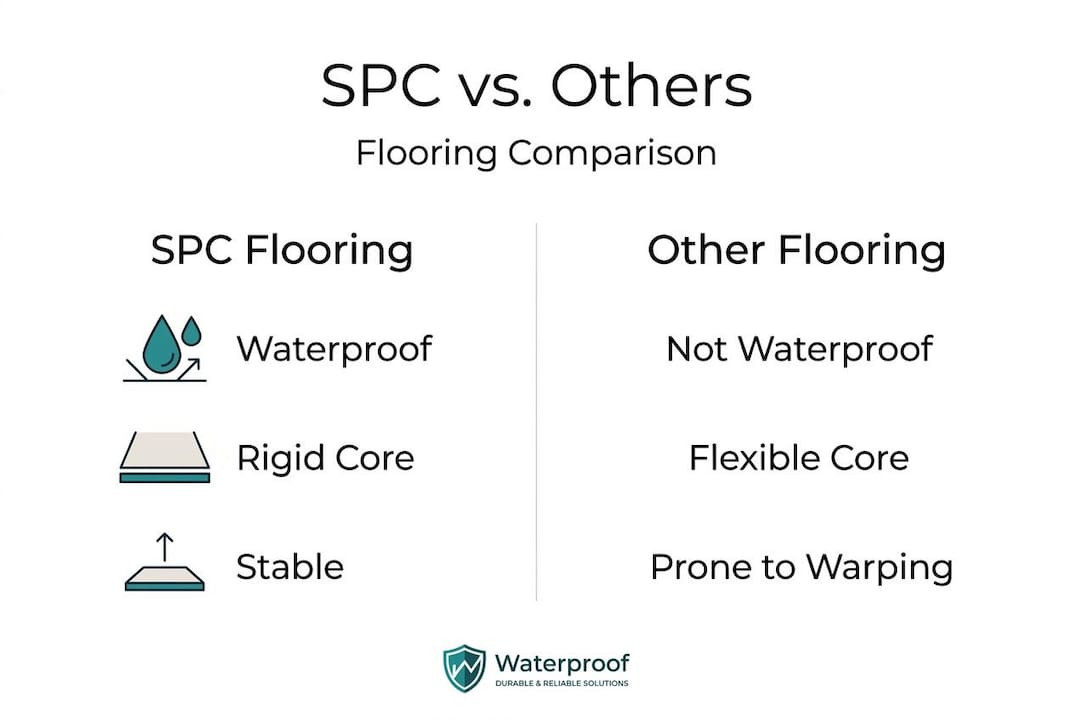
SPC flooring is 100% waterproof and resists warping or swelling even with standing water. That's not marketing language. The limestone and PVC core does not absorb moisture at all, which is why it can sit in a wet bathroom, a leaky kitchen, or a screened patio without degrading. Compare that to laminate, which starts to swell at the edges the moment water seeps through the seams.
Here's a quick summary of the core SPC flooring benefits for South Florida conditions:
- Full waterproofing: Safe for kitchens, bathrooms, laundry rooms, and any space prone to moisture
- Dimensional stability: The rigid core resists expansion and contraction from heat and humidity swings
- Scratch and dent resistance: The wear layer handles pet claws, furniture legs, and dropped items without showing damage easily
- Low maintenance: Sweep and damp-mop. No waxing, no refinishing, no seasonal treatments
- Kid and pet friendly: The surface is easy to clean and tough enough to handle everyday chaos
"Rigid core flooring is increasingly favored by builders for its waterproof capabilities, durability, and ease of installation."
Pro Tip: If you're choosing waterproof flooring options for a bathroom or kitchen remodel, look for SPC planks with an attached underlayment. It adds a small but noticeable improvement in comfort underfoot, especially on hard concrete subfloors common in South Florida slab homes.
One often overlooked SPC flooring benefit is temperature stability. In a home that cycles between air conditioning and outdoor heat, flooring that expands and contracts with every temperature swing will eventually gap or buckle. The rigid core of SPC absorbs that stress and keeps the floor flat. For more on how that translates to home value, the benefits of SPC flooring go well beyond surface durability.
Understanding SPC's advantages helps when comparing it to other flooring types you'll encounter.
How SPC flooring compares to other flooring options
Most homeowners weighing SPC are also looking at hardwood, laminate, or WPC (Wood Polymer Composite) flooring. Each has real merits, but the differences matter a lot in a humid climate.
SPC offers better waterproofing and dimensional stability than traditional hardwood and laminate. And rigid core flooring is the leading category favored by builders for durability and installation ease. Here's how the main options stack up:
| Flooring type | Waterproof | Humidity stable | DIY installation | Realistic look | Average lifespan |
|---|---|---|---|---|---|
| SPC | Yes (100%) | Excellent | Easy (click-lock) | Very high | 20-25 years |
| Laminate | No (water-resistant only) | Poor | Moderate | High | 10-15 years |
| Hardwood | No | Poor in humidity | Difficult | Best | 25+ years (with upkeep) |
| WPC | Yes | Good | Easy | High | 15-20 years |
A few important distinctions to understand before you decide:
- SPC vs laminate flooring: Laminate has a fiberboard core that swells when wet. SPC does not. In South Florida, that difference alone rules laminate out for most moisture-prone rooms.
- SPC vs WPC: WPC has a foamier, softer core that feels slightly cushier underfoot but is less dense than SPC. SPC's harder core makes it more resistant to heavy furniture and dents over time.
- SPC vs hardwood: Hardwood is still the gold standard for natural beauty and longevity when properly maintained. But in a humid climate, it requires significant maintenance and careful climate control. SPC handles the same conditions effortlessly.
For deeper flooring comparisons between SPC and other materials, it's worth reviewing your specific room conditions before committing.
With the advantages clear, let's look at how SPC flooring installs and what you should know for your project.
Installing SPC flooring: what South Florida homeowners should know
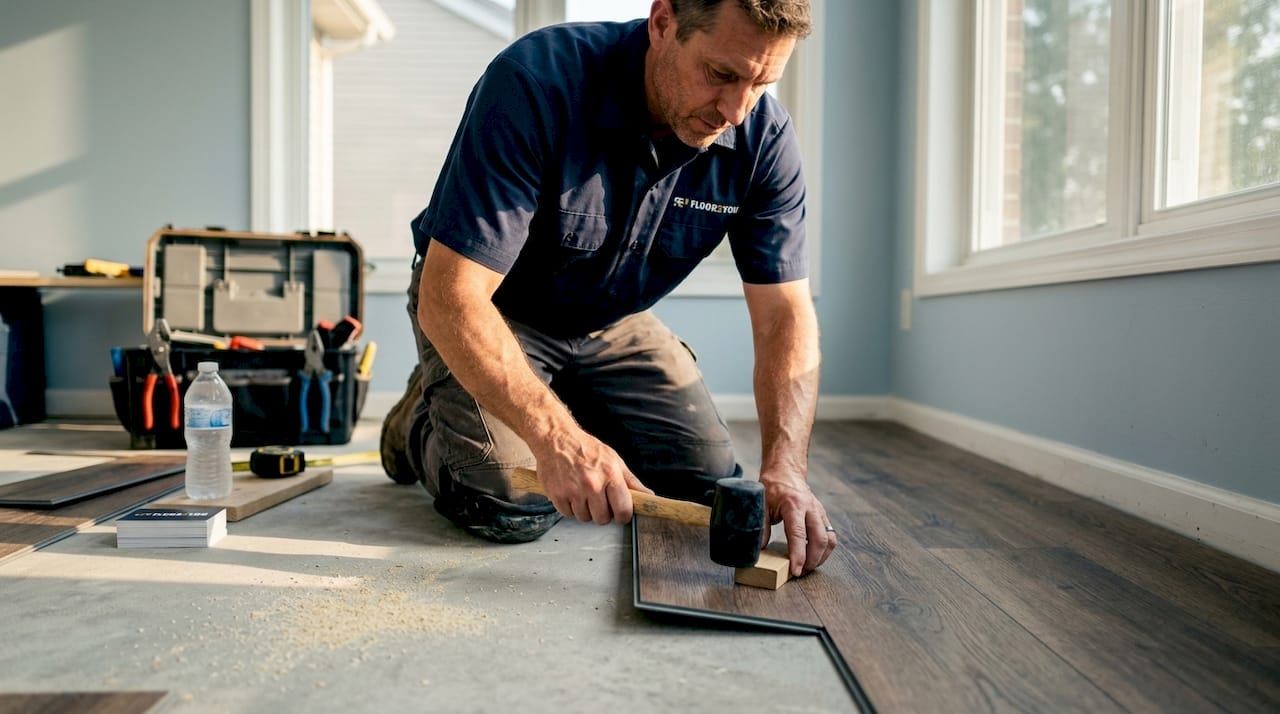
One of SPC flooring's most practical features is how it goes in. Most products use a floating click-lock installation system without glue or nails, which makes it approachable for confident DIYers and fast for professional crews.
Proper subfloor preparation is critical to prevent joint issues and hollow spots in SPC floors. Here's the basic process:
- Clean and level the subfloor. Remove debris, fix high spots with a grinder, and fill low spots with floor leveling compound. Most manufacturers require the subfloor to be flat within 3/16 inch over 10 feet.
- Acclimate the planks. Let the boxes sit in the room for 24-48 hours so the planks adjust to the room's temperature before installation.
- Plan your layout. Start from the straightest wall, stagger the end joints by at least 6 inches between rows, and avoid very short pieces at the end of rows.
- Maintain expansion gaps. Leave 1/4 inch around all walls and fixed objects. SPC is stable but still needs room around the perimeter.
- Click planks together carefully. Use a tapping block and rubber mallet. Never force the locking tabs by hitting the plank directly.
- Install baseboards or shoe molding last. This covers the expansion gaps and gives the floor a finished look.
Pro Tip: Never use double underlayment or a thicker pad than the manufacturer specifies. SPC's click-lock system is engineered to work at a precise height. Too much cushion underneath causes the locking tabs to flex and fail, leading to planks that pop apart over time.
Before you start, review a full flooring installation checklist to make sure your subfloor and room conditions are ready. If you're exploring the floating method in more detail, this guide to floating SPC installation covers the process from start to finish.
With installation covered, learn how to select the right SPC product to meet your traffic and style needs.
Choosing the right SPC flooring: wear layer thickness and style considerations
Not all SPC flooring is created equal. The two factors that matter most for long-term performance are wear layer thickness and core quality.
Typical residential wear layers range from 0.2 to 0.3 mm (8 to 12 mil) for low-traffic areas and 0.4 to 0.5 mm (16 to 20 mil) for medium-traffic areas. Here's a practical reference:
| Wear layer thickness | Best for | Traffic level |
|---|---|---|
| 0.2 mm (8 mil) | Bedrooms, guest rooms | Low |
| 0.3 mm (12 mil) | Living rooms, dining rooms | Moderate |
| 0.4 mm (16 mil) | Kitchens, hallways | High |
| 0.5 mm (20 mil) | Entryways, pet households | Very high |
The rigid core quality influences structural durability more than just the wear layer thickness. A plank with a dense, well-manufactured core will outperform a cheaper product with a thicker wear layer every time. Think of the core as the foundation and the wear layer as the finish coat. Both matter, but the foundation determines how long the floor lasts.
Key things to evaluate when shopping for SPC:
- Total plank thickness: Thicker planks (6-8mm total) feel more solid underfoot and are better for subfloors with minor imperfections
- Design realism: Look for embossed-in-register textures where the surface texture aligns with the printed grain for a more convincing appearance
- Color palette: South Florida interiors often favor lighter tones that reflect natural light; SPC SPC wear layer benefits now come in wide-plank formats and neutral palettes that work well in open floor plans
- Attached underlayment: If your subfloor is concrete (very common in South Florida slab construction), attached underlayment adds meaningful comfort and sound dampening
Pro Tip: Prioritize core density over wear layer marketing. A 0.3 mm wear layer on a high-quality dense core will outperform a 0.5 mm wear layer on a cheap, hollow core in real-world residential use.
Now that you know how to choose SPC, let's step back and consider a practical perspective on selecting and living with SPC flooring.
Rethinking flooring choices: why SPC flooring might be the smarter long-term investment for South Florida homes
Here's something most flooring articles won't tell you. Homeowners tend to fixate on waterproofing as the single deciding factor when choosing flooring for humid climates. Waterproof vs not waterproof. Full stop. But that framing misses the more important question: what happens to the floor after the water is gone?
SPC's main advantage is engineered rigid core stability under moisture and pressure, not just water resistance. That's a meaningful distinction. A floor that repels water but shifts, compresses, or develops hollow spots under furniture is still a problem floor. The rigid limestone core prevents all of that. It's why SPC holds up in entryways under heavy traffic, under furniture that never moves, and in rooms where humidity fluctuates by 30 to 40 percent across seasons.
We see this play out in South Florida remodeling projects regularly. Homeowners install what looks like a premium laminate product, it performs well for a year or two, and then the edge swelling starts. The seams lift. The boards separate. None of that is dramatic, but all of it is expensive to fix and deeply frustrating when it was entirely preventable.
Choosing investing in quality flooring means thinking about what the floor will face 10 years from now, not just what it looks like when it goes in. SPC flooring earns its value over time through the conditions it survives, not the features listed on the box. That's the case we'd make to any South Florida homeowner weighing their options.
Explore SPC flooring options for your South Florida home remodeling project
If this guide has helped clarify your flooring choices, the next step is finding the right product for your specific space. At Floor2You, we work with South Florida homeowners every day on exactly these decisions, from choosing the right wear layer for a busy kitchen to ensuring your subfloor is prepped correctly before the first plank goes down.
Browse SPC flooring options at Floor2You and explore our full range of residential flooring solutions tailored for South Florida homes. Before you start your project, review our flooring installation checklist to make sure your subfloor is ready and your expansion gaps are planned. If you're leaning toward a floating installation, our guide on click-lock floating floors walks you through the full process. Our team is ready to help you make a confident, informed choice for your home.
Frequently asked questions
What does SPC stand for in flooring?
SPC stands for Stone Plastic Composite, a type of luxury vinyl flooring built around a rigid core made from limestone powder and PVC. The limestone gives the floor its density and rigidity.
Is SPC flooring waterproof?
Yes. SPC flooring is 100% waterproof and will not warp or swell even with standing water, making it one of the safest choices for kitchens, bathrooms, and any moisture-prone space in South Florida.
Can I install SPC flooring myself?
Yes, because SPC is a floating click-lock system suitable for DIY projects, as long as you prepare the subfloor correctly and follow the manufacturer's expansion gap guidelines.
Do I need underlayment with SPC flooring?
Many SPC planks come with underlayment already attached; if yours don't, use only specified thin underlayment (typically 1 to 1.5 mm) to keep the locking joints functioning properly and avoid hollow spots.
How thick should the wear layer be for home SPC flooring?
For typical residential use, a 0.2 to 0.3 mm wear layer (8 to 12 mil) is usually sufficient for bedrooms and living areas; go thicker for high-traffic spaces like kitchens and entryways.