
TL;DR:
- Homeowners in South Florida should prioritize mid-range renovations that balance cost, functionality, and climate resilience. Focusing on kitchens, bathrooms, and flooring upgrades can maximize value while minimizing disruption. Tailoring renovation scope to specific goals and local climate conditions ensures long-lasting, satisfying results.
Deciding where to put your renovation dollars is one of the hardest calls a South Florida homeowner has to make. Between the humidity, the hurricane seasons, the steady rise in home values, and the sheer variety of materials and contractors on the market, the stakes feel high every time you pick up a tile sample or flip through cabinet catalogs. Whether you're upgrading before a sale, refreshing an aging home, or creating a space that works better for your family, understanding the types of renovations available — and what each one actually delivers — can save you thousands and a lot of frustration.
Table of Contents
- How to assess your renovation needs
- Kitchen renovations: Minor, mid-range, and major makeovers
- Bathroom renovations: Options for style, safety, and comfort
- Flooring renovations: Transformative and practical updates
- Comparison: Which renovation type is right for you?
- Our perspective: What most home renovation guides overlook
- Ready to transform your South Florida home?
- Frequently asked questions
Key Takeaways
| Point | Details |
|---|---|
| Start with your goals | Defining what you want from your renovation helps you set the right budget and scope. |
| Kitchen, bath, and flooring matter most | Upgrades in these areas deliver the strongest mix of value, function, and comfort for homeowners. |
| Choose the right scale | Minor, mid-range, and major projects have different costs and benefits—pick what suits your timeline and budget. |
| Plan for the future | Consider accessibility and maintenance to ensure long-term usability and safety in your renovation choices. |
| Get expert advice | Leveraging local experts helps you avoid mistakes and maximize your renovation’s impact. |
How to assess your renovation needs
Every successful renovation starts long before a single tile is pulled up or a cabinet door is removed. It starts with clarity about what you actually need and why. Homeowners who skip this step often end up spending more than they planned or finishing a project that doesn't solve the original problem.
The main drivers for renovation fall into a few clear categories: improving daily comfort, boosting resale value, adding accessibility features, refreshing aesthetics, or reducing ongoing maintenance. Most projects mix two or three of these motivations together, and that's fine. The important thing is knowing which one is your priority.
Renovation scope is another concept worth understanding early. Minor, mid-range, and major remodels are the standard categories most industry professionals use, and they describe very different levels of disruption, cost, and transformation. A minor renovation might mean replacing fixtures or repainting cabinets. A major remodel could involve moving walls, reconfiguring plumbing, and replacing every surface in the room. When you're planning, knowing which scope you're in helps you set realistic expectations for both budget and timeline.
To get started on the right foot, ask yourself these key questions before you call a contractor:
- Which spaces do you and your family use most every day?
- What's your realistic budget, including a 15% buffer for surprises?
- Do you need the work done by a specific date (listing the home, hosting family, etc.)?
- Are you planning to stay in the home long-term or sell within a few years?
- Are there any accessibility or safety concerns for current or future occupants?
Understanding home remodeling costs and value before you begin is essential, and a solid remodel planning guide can help you map out the sequence of work so nothing gets done twice.
Pro Tip: Write down your renovation goal in one sentence before you start getting quotes. Something like "We want to update the kitchen to increase resale value within 12 months" gives every contractor a clear target and keeps you from drifting into scope creep.
Kitchen renovations: Minor, mid-range, and major makeovers
The kitchen is the most used room in most homes, and it tends to generate the most renovation interest. Kitchens are the most common interior space that homeowners renovate, and there's a good reason for that. A well-done kitchen upgrade touches daily life in a meaningful way. You feel it every morning when you make coffee and every evening when you cook dinner.
Here's how the three main scopes break down for kitchen projects:
-
Minor kitchen renovation: Repainting cabinets or replacing cabinet doors, swapping out hardware, adding a new faucet, replacing a countertop, and updating lighting fixtures. These projects typically run between $5,000 and $15,000 and can often be completed in one to two weeks without major disruption.
-
Mid-range kitchen renovation: Installing new semi-custom cabinets, replacing countertops with stone or quartz, upgrading appliances, adding a tile backsplash, and refreshing plumbing fixtures. Costs generally land between $25,000 and $50,000 depending on material choices and kitchen size.
-
Major kitchen renovation: Reconfiguring the layout, moving walls or plumbing, installing custom cabinetry, high-end appliances, and completely new flooring. Renovation costs vary widely at this level, often ranging from $60,000 to well over $100,000 for upscale projects.
| Renovation type | Typical cost range | Timeline | Common upgrades |
|---|---|---|---|
| Minor | $5,000 to $15,000 | 1 to 2 weeks | Paint, hardware, faucets, countertops |
| Mid-range | $25,000 to $50,000 | 3 to 6 weeks | Cabinets, appliances, backsplash, stone counters |
| Major | $60,000 and up | 2 to 4 months | Layout changes, custom cabinetry, full systems |
"The kitchen is the heart of the home — but it doesn't have to cost a fortune to make it feel brand new. The right mid-range renovation can completely transform how a kitchen looks and functions without the price tag of a full gut remodel."
See a renovation cost breakdown to understand how individual line items add up before you commit to a scope.
Pro Tip: Upgrading to stainless steel appliances and quartz countertops during a mid-range renovation is one of the highest-impact moves you can make. It gives a kitchen a high-end appearance without the cost of moving walls or reconfiguring plumbing.
Bathroom renovations: Options for style, safety, and comfort
Bathrooms rank just behind kitchens in renovation popularity, and the numbers back that up. 25% of homeowners choose a bathroom remodel versus 21% who opt for an addition, making bathroom upgrades one of the most reliable renovation investments you can make.
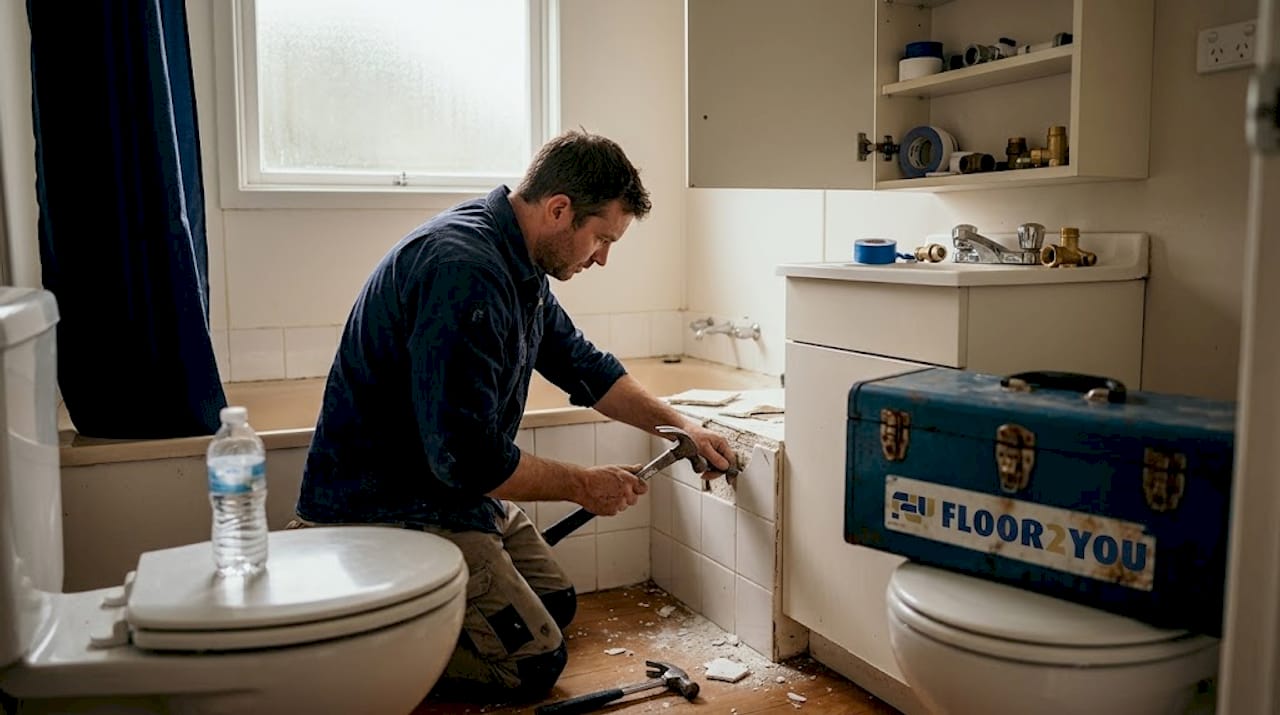
In South Florida, bathroom renovations carry extra weight because of the constant moisture exposure. Older homes especially can have grout, tile, and fixtures that are quietly deteriorating beneath the surface. That's why even a minor bathroom refresh can uncover maintenance issues that need addressing.
Here's how the three main scopes play out in bathrooms:
Minor bathroom renovation:
- New fixtures (faucets, towel bars, mirror, lighting)
- Recaulking the tub or shower
- Fresh paint with moisture-resistant formula
- New toilet or vanity replacement
Mid-range bathroom renovation:
- Complete tile replacement in shower or flooring
- New vanity with stone countertop
- Updated shower head and plumbing fixtures
- Improved ventilation
Major bathroom renovation:
- Full gut and reconfiguration of the layout
- Walk-in shower conversion replacing a tub
- Double vanity installation
- Custom tile work, heated flooring, and new lighting plan
| Feature | Minor | Mid-range | Major |
|---|---|---|---|
| Layout changes | None | Minimal | Full reconfiguration |
| Tile work | Spot repair | Full replacement | Custom installation |
| Accessibility features | Basic | Grab bars, non-slip | Walk-in shower, wider doors |
| Typical cost | Under $10,000 | $15,000 to $35,000 | $40,000 and up |
Accessibility is one of the most overlooked aspects of bathroom renovations. Home modification research consistently groups safety enhancements like grab bars, non-slip surfaces, and walk-in shower conversions together as essential modifications that improve usability over the long term. These features aren't just for aging homeowners. They matter for families with young children, recovering from injury, or simply wanting a safer daily experience.
"A bathroom that works safely and comfortably for every member of your household is worth more than one that just looks great in a listing photo."
Before starting any bathroom project, review common bathroom renovation pitfalls so you can avoid budget surprises. And if you're not sure how to sequence the work, the South Florida remodeling steps guide walks you through the process room by room.
Flooring renovations: Transformative and practical updates
Flooring might not get as much attention as kitchens and bathrooms, but it's often the single upgrade that makes the biggest visual impact on a home. New floors change the way light moves through a space, make rooms feel larger or more intimate, and tie every other design element together. In South Florida especially, flooring scope variations matter because the right material choice can mean the difference between a floor that lasts 30 years and one that warps or molds within five.
The three main flooring renovation types are:
- Refinishing: This applies primarily to hardwood floors that are still structurally sound. Sanding and recoating can restore a worn floor to near-original condition for a fraction of the cost of full replacement.
- Replacement: Pulling up old flooring and installing new material. This is the most common scope for most South Florida homeowners, especially when updating from carpet or damaged tile.
- Material upgrade: Moving from a lower-grade material to a higher-performing option, such as replacing vinyl sheet with luxury vinyl plank or swapping out basic ceramic tile for large-format porcelain.
Here's a comparison of the most popular flooring options for South Florida homes:
- Porcelain tile: Extremely durable, completely moisture-resistant, and works well in high-humidity environments. Great for kitchens, bathrooms, and living areas. Can feel cold underfoot without radiant heating.
- Luxury vinyl plank (LVP): One of the fastest-growing choices for South Florida homes. Waterproof, comfortable underfoot, easy to install, and available in convincing wood-look designs. Excellent value.
- Engineered hardwood: More stable than solid wood in Florida's humidity, but still vulnerable to standing water. Best for bedrooms and living areas where moisture levels are controlled.
- Solid hardwood: Beautiful and classic, but not ideal for South Florida without careful climate control. Better suited for cooler, drier climates or interior rooms with consistent temperature.
- Ceramic tile: More affordable than porcelain and perfectly suitable for lower-traffic areas. Not as dense as porcelain, so it chips more easily.
Understanding the benefits of flooring upgrades goes beyond aesthetics. New flooring improves maintenance, comfort, and even indoor air quality when you replace aging carpet. Learn how South Florida flooring choices can transform your home's design, and when you're ready to get started, our guide on hiring flooring contractors takes the stress out of the selection process.
Pro Tip: In South Florida, moisture-resistant flooring is not optional. Luxury vinyl plank and porcelain tile are your safest bets for areas prone to humidity or occasional water exposure. Even in bedrooms, a waterproof underlayment under engineered wood can prevent costly damage from humid seasons.
Comparison: Which renovation type is right for you?
With all three major renovation categories on the table, it helps to see how they stack up side by side. Here's a summary to match your situation to the right renovation scope, based on project type and room selection as the key drivers of renovation value.
| Goal | Best room to renovate | Recommended scope | Estimated investment |
|---|---|---|---|
| Maximize resale value | Kitchen | Mid-range | $25,000 to $50,000 |
| Improve daily function | Bathroom | Minor to mid-range | $8,000 to $30,000 |
| Long-term climate resilience | Flooring | Replacement or upgrade | $5,000 to $20,000 |
| Accessibility or aging-in-place | Bathroom | Major | $35,000 and up |
| Full lifestyle upgrade | Kitchen and bath | Major | $80,000 and up |
Quick decision takeaways:
- Selling soon? Focus on kitchen and flooring updates at the mid-range level. These deliver the strongest return for buyers.
- Staying long-term? Invest in a bathroom that works for every stage of life, including accessibility features.
- Rental or Airbnb property? Durable, easy-to-clean materials across all three areas. LVP flooring, solid tile work in baths, and updated kitchen fixtures are the sweet spot.
- Limited budget? Minor renovations in the kitchen or bathroom can still make a significant visual difference at a fraction of the cost.
Check the renovation value overview for more detail on how each project type performs in South Florida's specific real estate market.
Our perspective: What most home renovation guides overlook
Most renovation guides are written with a national audience in mind. They pull data from Midwest and Northeast markets, average out project costs across very different climates, and treat "high ROI" as a universal truth. That advice doesn't always travel well to South Florida.
Here's what we've seen after working on homes across this region: the biggest mistakes homeowners make aren't about choosing the wrong countertop or the wrong tile color. They come from ignoring climate realities and chasing trends that don't hold up in a humid, storm-prone environment. A hardwood floor that looks stunning in a home design magazine may look like a buckled mess in a Fort Lauderdale home after one bad rainy season.
We also think the renovation conversation focuses too much on stylish finishes and not enough on user-friendly function. The demographic reality of South Florida is shifting. More families are multigenerational. More retirees are choosing to age in place rather than move. The importance of flooring quality isn't just about aesthetics; it's about whether grandma can walk safely across your living room, whether your rental guests feel comfortable, and whether your floors survive a decade of heavy use without looking worn.
Our honest recommendation: before jumping to a major gut remodel because you saw it on a home renovation show, seriously consider whether a well-executed mid-range renovation solves the same problem. In most cases it does, for significantly less money and with far less disruption to your life. Save the major investment for situations where the layout genuinely doesn't work, not just when you want something newer-looking.
The homeowners we see with the most satisfaction after renovation aren't necessarily the ones who spent the most. They're the ones who matched the scope to their actual goals.
Ready to transform your South Florida home?
You now have a clear framework for understanding renovation types, comparing costs, and matching the right scope to your specific situation. That knowledge is a solid foundation. But the next step is getting expert eyes on your space.

At Floor2You, we specialize in residential renovations across South Florida, including full kitchen and bathroom remodels and every type of flooring installation. We handle the project from start to finish with transparent pricing, fast response times, and the kind of craftsmanship that holds up to the South Florida climate. Whether you're updating a single bathroom or renovating your entire home, our team is ready to make it happen efficiently and beautifully. Visit Floor2You to explore your options, request a quote, and see real project results from homeowners just like you.
Frequently asked questions
What is the difference between a minor and major home renovation?
A minor renovation updates surface features or fixtures, while a major renovation alters layouts, plumbing, or adds new systems. Minor, mid-range, and major remodels each represent a distinct level of investment and disruption.
Which room is most commonly renovated by homeowners?
The kitchen is most common for interior renovations, followed closely by bathrooms, which makes sense given how much time families spend in both spaces.
What renovations add the most value to a South Florida home?
Kitchens, bathrooms, and flooring upgrades consistently deliver the strongest return because they improve both daily function and buyer appeal. Project type and room selection are the primary factors that drive renovation value.
Are accessibility features important in bathroom renovations?
Yes, features like grab bars, non-slip flooring, and walk-in showers significantly improve safety and long-term usability. Home modification research links these enhancements directly to better quality of life for all household members.
How should I choose new flooring for Florida's climate?
Prioritize moisture-resistant materials like luxury vinyl plank or porcelain tile that can handle humidity without warping, swelling, or growing mold. Expert installation with the right underlayment makes a major difference in how long your floors last.