

TL;DR:
- High-return renovations focus on exterior upgrades like garage doors and stone veneer that enhance curb appeal before interior remodeling.
- Some upgrades, such as marble floors or luxury kitchens, can decrease home value if they exceed neighborhood standards or over-personalize the space.
- Move-in ready homes, achieved through modest updates and curb appeal improvements, command higher prices and sell faster in competitive markets.
Renovation is defined as the process of improving a property's condition, function, and aesthetics to increase its market value and buyer appeal. The role of renovation for home value is direct: targeted improvements translate into measurable price premiums at resale, while poorly chosen upgrades can actively reduce what buyers will pay. Research from the NAR Remodeling Impact Report and the 2026 Cost vs Value Report confirms that not all projects are equal. Garage door replacements, steel front doors, and minor kitchen remodels consistently outperform luxury interior overhauls. Understanding which projects deliver returns and which destroy them is the single most important skill a homeowner or investor can develop before spending a dollar.
Which renovation projects offer the highest return on investment?
The 2026 Cost vs Value Report ranks garage door replacement at approximately 194% ROI, making it the single highest-returning project in the country. Manufactured stone veneer comes in second at around 153% ROI. These numbers mean that for every dollar spent on a garage door, buyers are willing to pay nearly two dollars more at resale.
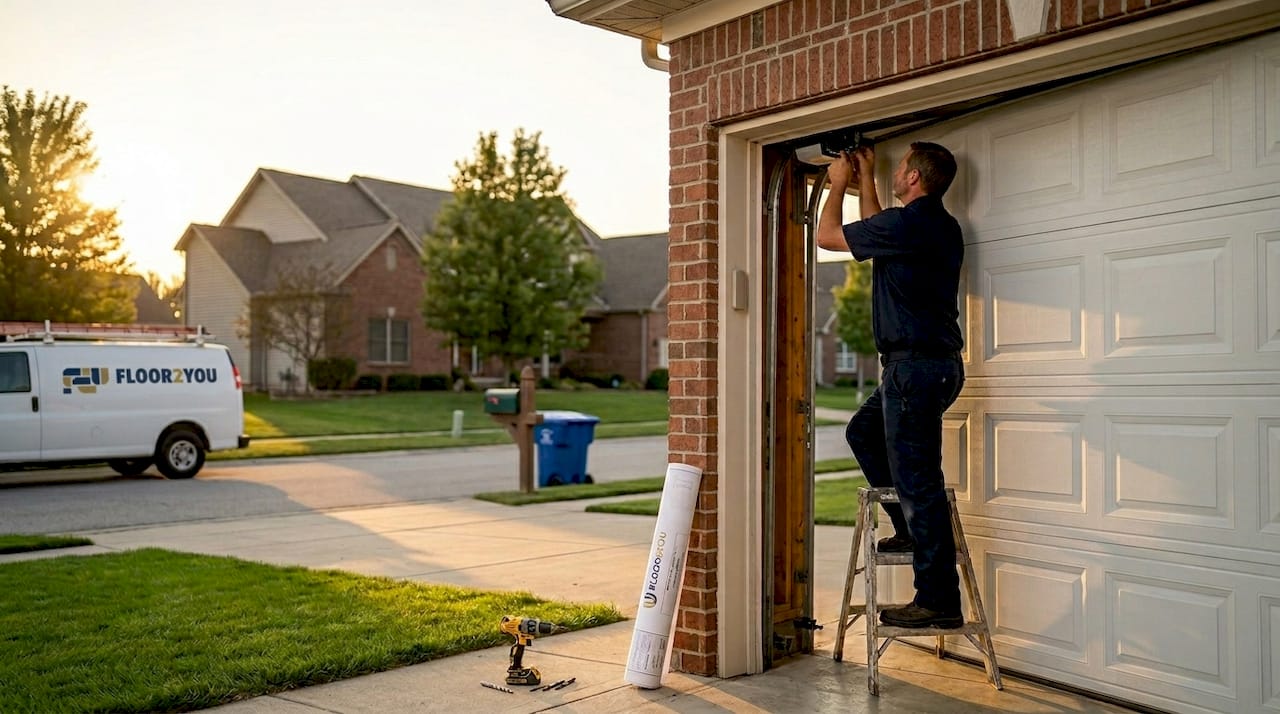
Exterior projects dominate the top of the ROI rankings because buyers form opinions before they ever walk through the front door. Curb appeal converts small investments into outsized perceived value. A fresh garage door or a new stone veneer facade signals maintenance and pride of ownership before a single interior room is seen.
NAR data shows that new steel front doors recover 100% of their cost at resale. Closet renovations recover 83%, fiberglass front doors recover 80%, and vinyl windows recover 74%. These are not luxury upgrades. They are visible, functional improvements that buyers can assess instantly.
The table below compares the top projects by cost recovery and ROI:
| Project | Approx. ROI / Cost Recovery | Key Reason |
|---|---|---|
| Garage door replacement | ~194% ROI | Highest curb appeal impact |
| Manufactured stone veneer | ~153% ROI | Signals quality and durability |
| New steel front door | 100% cost recovery | Functional and visible upgrade |
| Minor kitchen remodel | ~96% ROI | Refreshes without over-investing |
| Closet renovation | 83% cost recovery | Practical buyer priority |
| Major upscale kitchen remodel | 40%–52% ROI | High cost, limited return |
Pro Tip: A minor kitchen remodel at roughly 96% ROI consistently outperforms a major upscale kitchen remodel at 40% to 52%. Replacing cabinet fronts, hardware, and countertops beats a full gut renovation every time when your goal is resale value.
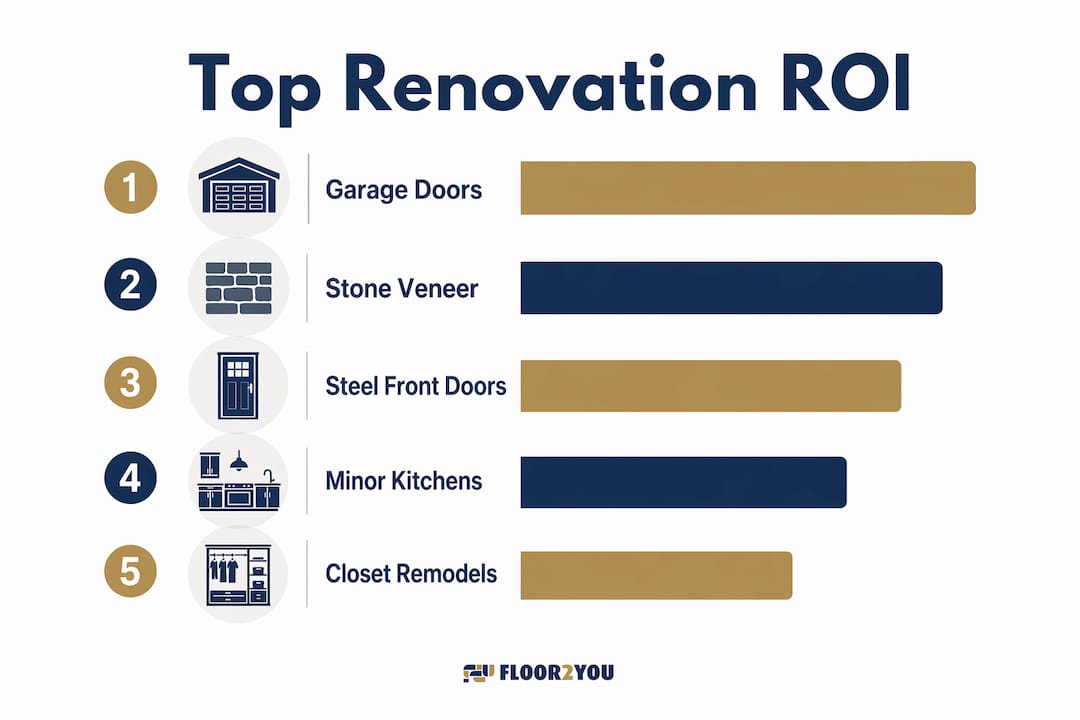
The pattern here is consistent. High cost recovery projects improve buyer-perceived condition quickly, focusing on curb appeal and visible systems rather than expensive personalized interiors. Investors who understand this distinction spend less and recover more.
How can some renovations negatively affect a home's resale value?
Not every upgrade adds value. Some renovations actively reduce what buyers will pay, and the data from Zillow is specific enough to be alarming.
According to Zillow research, marble floors decrease sale price by nearly 2% compared to comparable homes. Laminate flooring is linked to homes selling for 2.5% less. These are not minor rounding errors. On a $500,000 home, that is a $10,000 to $12,500 penalty for a flooring choice that felt like an upgrade.
The renovations most likely to hurt resale value share a few common traits:
- Bedroom-to-closet conversions. Removing a bedroom reduces the home's bedroom count in listing databases, which affects search visibility and shrinks the pool of buyers who will even find the listing. Fewer bedrooms also means a lower appraised value in most markets.
- Overly personalized interiors. Bold tile choices, unusual color palettes, and niche design themes appeal to a narrow slice of buyers. Most buyers mentally subtract the cost of reversing those choices from their offer price.
- Luxury upgrades in mid-range neighborhoods. Installing a $30,000 chef's kitchen in a neighborhood where comparable homes sell for $280,000 does not produce a $30,000 price increase. The market sets a ceiling, and no renovation breaks through it.
- Trendy materials with high maintenance perception. Marble looks premium but signals maintenance costs to buyers who know better. Style and material choices attract or repel buyers depending on current trends and practical considerations.
The underlying principle is that renovations must match buyer preferences and neighborhood standards, not personal taste. Understanding your local market before committing to any upgrade is not optional. It is the foundation of every smart renovation decision.
Why "move-in ready" renovations deliver a premium in competitive markets
Turnkey homes command a measurable price advantage. Turnkey homes sell for 2.9% more than expected, remodeled homes sell for 2.2% more, and fixer-uppers sell for 14% less. That spread represents the financial value of buyer certainty.
"Renovations adding to perceived buyer certainty and reducing post-sale work attract higher premiums. Homes marketed as move-in ready or with custom features sell significantly higher than fixer-uppers." — Zillow 2026 Research
Buyers in competitive markets are not just paying for square footage. They are paying to avoid the stress, cost, and time of managing contractors after closing. A home that looks finished and well-maintained removes that risk entirely. Marketing a home as turnkey increases buyer confidence and often reduces time on market as well.
The practical implication for South Florida homeowners is significant. In a market with strong buyer competition and high inventory turnover, the difference between a remodeled home and a fixer-upper is not just 14% in price. It is also the difference between a quick sale and months of price reductions.
Pro Tip: Strategic pre-listing refreshes, including fresh paint, updated fixtures, and clean flooring, cost far less than a full remodel but signal move-in-ready condition to buyers who are scanning dozens of listings online.
Minor updates that improve buyer perception consistently outperform expensive renovations that buyers cannot immediately see or appreciate. New flooring, a fresh coat of paint, and updated hardware are the kinds of improvements that photograph well, show well, and close deals faster. You can explore the financial impact of remodeling in more depth to understand how these decisions stack up financially before you commit.
How to strategically prioritize renovation projects to maximize home value
Prioritizing renovations requires a framework, not a wish list. The 2025 CAAR Remodeling Impact Report identifies four guiding questions every homeowner should answer before starting any project: Does it enhance first impressions? Does it match neighborhood standards? Does it make the home more competitive? And is the cost reasonable relative to the price reduction it prevents?
Follow this sequence when planning renovations for resale:
- Fix all visible defects first. Deferred maintenance invites price discounts from buyers and appraisers. Leaky faucets, cracked tiles, and peeling paint signal neglect. Address these before anything cosmetic.
- Boost curb appeal. Garage door, front door, landscaping, and exterior paint are the highest-ROI category. Buyers decide within seconds of arrival.
- Refresh kitchens and bathrooms modestly. Replace cabinet hardware, update faucets, and resurface countertops rather than gutting the room. A minor kitchen remodel at 96% ROI beats a major remodel at 40% to 52% every time.
- Update flooring throughout. Flooring is one of the first things buyers notice and one of the easiest to price-penalize. Choose materials that photograph well and appeal to a broad buyer pool.
- Paint every room in neutral tones. Fresh paint is the highest-return cosmetic investment available. It costs little and signals a well-maintained home.
The comparison below shows where renovation dollars go furthest versus where they disappear:
| Renovation type | Typical ROI range | Best for |
|---|---|---|
| Exterior upgrades (door, garage, veneer) | 100%–194% | All sellers |
| Minor kitchen and bath refreshes | 80%–96% | Pre-listing preparation |
| Flooring replacement (hardwood, vinyl) | 70%–80% | Buyer appeal and photography |
| Full kitchen gut renovation | 40%–52% | Long-term owners, not resale |
| Luxury custom interiors | Below 50% | Personal enjoyment only |
Calculating ROI based solely on installed cost without local market validation leads to poor renovation investment decisions. A $50,000 kitchen remodel in a $300,000 neighborhood will not produce a $50,000 price increase regardless of quality. Local comps set the ceiling, and every renovation budget should be built around that reality. For a deeper look at how to approach these decisions by project type, the kitchen, bath, and flooring guide from Floor2you breaks down the specifics by category.
Key takeaways
The most effective renovation strategy targets exterior upgrades, minor interior refreshes, and move-in-ready presentation rather than luxury overhauls or personalized design choices.
| Point | Details |
|---|---|
| Exterior projects lead ROI | Garage door replacement at ~194% ROI delivers the highest return of any single project. |
| Move-in ready commands a premium | Turnkey homes sell for 2.9% more; fixer-uppers sell for 14% less, per Zillow 2026 data. |
| Some upgrades reduce value | Marble floors and laminate are linked to sale price reductions of 2% to 2.5%. |
| Minor beats major for resale | A minor kitchen remodel at ~96% ROI consistently outperforms a major remodel at 40%–52%. |
| Local market sets the ceiling | ROI rankings are starting points; neighborhood price tiers determine actual renovation impact. |
What I've learned about renovation and value after years in the field
The most common mistake I see homeowners and investors make is confusing what they love with what buyers will pay for. A stunning custom tile bathroom might be the most beautiful room in the house. But if it costs $40,000 to install in a neighborhood where comparable homes sell for $350,000, the market will not reward that investment. Buyers in that price range have a ceiling in their heads, and no renovation breaks through it.
What actually moves the needle is less glamorous. A new garage door. A steel front door. Fresh paint in a neutral gray or white. Clean, consistent flooring throughout. These are the projects that photograph well, show well, and close deals faster. They signal to buyers that the home has been maintained, not neglected. That signal is worth more than any custom feature.
I also think the "move-in ready" premium is underappreciated by most sellers. A 2.9% premium on a $500,000 home is $14,500. That is real money, and it comes from removing buyer anxiety, not from installing a chef's kitchen. The buyers who are willing to pay more are not paying for the renovation itself. They are paying to avoid managing contractors after they move in.
The other trap I see constantly is over-improving for the neighborhood. Local comps are not suggestions. They are the market's verdict on what a home in that area is worth. Renovating past that ceiling is a donation to the next buyer. Spend to the neighborhood standard, not above it, and you will almost always come out ahead.
— G
Upgrade your home with Floor2you's renovation expertise

Floor2you works with South Florida homeowners and investors who want renovation results that actually show up at resale. From hardwood and vinyl flooring that photographs beautifully to full kitchen and bathroom refreshes that signal move-in-ready condition, the Floor2you team handles projects that move the needle on value. Every project comes with transparent pricing, fast turnaround, and the kind of craftsmanship that holds up under buyer scrutiny. If you are preparing a home for sale or upgrading a rental property to attract better tenants, explore Floor2you's renovation services and get a quote that fits your budget and your market.
FAQ
What renovations add the most value to a home?
Garage door replacement leads all projects at approximately 194% ROI, followed by manufactured stone veneer at 153% and new steel front doors at 100% cost recovery, according to the 2026 Cost vs Value Report. Exterior upgrades consistently outperform interior remodels because buyers form value judgments before entering the home.
Does renovation always increase home value?
No. Marble floors are linked to a nearly 2% decrease in sale price, and laminate flooring is associated with homes selling for 2.5% less, per Zillow research. Overly personalized upgrades and luxury renovations in mid-range neighborhoods frequently fail to recover their cost at resale.
How much more do move-in ready homes sell for?
Turnkey homes sell for 2.9% more than expected, and remodeled homes sell for 2.2% more, while fixer-uppers sell for 14% less, according to Zillow's 2026 home features research. The premium reflects buyer willingness to pay for certainty and convenience.
Should I renovate before selling or sell as-is?
Modest pre-listing improvements, including fresh paint, updated flooring, and curb appeal fixes, typically prevent deeper price discounts from buyers who factor deferred maintenance into their offers. Selling as-is in a competitive market almost always means accepting a lower price than a targeted refresh would cost.
How do I avoid over-improving my home before selling?
Compare your planned renovation budget against the sale prices of comparable homes in your neighborhood before committing. ROI rankings are starting points, and local market context determines the actual ceiling on what any renovation can return.