

TL;DR:
- Using high-quality materials in renovations increases durability, reduces maintenance costs, and boosts property value. Proper selection and installation are essential to ensure longevity and aesthetic appeal over time. Focusing on high-use areas with premium materials offers the best return on investment.
Quality materials in renovations are defined as construction and finish products selected for their proven durability, structural performance, and long-term value rather than lowest upfront cost. The role of quality materials in renovations extends far beyond surface appearance. Premium selections directly determine how long a renovation lasts, how much it costs to maintain, and how much value it adds to your home. Choosing premium-grade materials can reduce long-term maintenance costs by 40–60% and increase property market values by 7–11%. Those numbers represent real money over the life of your home.
How do quality materials affect renovation durability?
Material quality is the single biggest factor in how long a renovation holds up. Poor material selection accounts for 30–40% of premature structural failures in residential and commercial construction. That statistic means roughly one in three renovation failures traces back to a material decision made before the first nail was driven.
The physics are straightforward. Materials face constant stress from moisture, temperature swings, foot traffic, and daily use. A bathroom tile rated for light residential use will crack under the demands of a busy household. Corrosion-resistant steel extends structural lifespan by 15–25 years compared to standard steel. That gap compounds over decades into thousands of dollars in repair costs.
Environmental resilience matters most in South Florida, where humidity and heat accelerate material breakdown faster than in most U.S. climates. Material selection protects against moisture, temperature changes, and heavy use that cause premature finish failures. Choosing materials rated for your specific climate and use case is not optional. It is the baseline.
Key durability factors to evaluate before choosing any material:
- Moisture resistance rating for bathrooms, kitchens, and laundry rooms
- Wear layer thickness for flooring in high-traffic hallways and living areas
- Corrosion resistance for hardware, fixtures, and structural fasteners
- Impact tolerance for countertops and flooring in family homes with children
- UV stability for any material exposed to direct sunlight
Pro Tip: Match material specifications to actual use intensity. A guest bathroom used twice a week does not need the same wear rating as a primary bathroom used daily by four people. Over-specifying wastes budget; under-specifying causes early failure.
One factor homeowners consistently underestimate: correct installation is as critical as material quality itself. A premium porcelain tile installed without proper substrate preparation will crack just as fast as a cheap one. The material and the installation method are a package deal.
Does material quality really change how a space looks and feels?
Premium materials change a space in ways that photographs rarely capture. The weight of a solid wood cabinet door, the cool smoothness of natural stone under your hand, the way hardwood floors absorb sound differently than laminate. These tactile differences shape how you experience your home every single day.

Premium materials reduce micro-failures and cumulative damage over time, especially in frequently used living spaces. That means fewer chips, scratches, and stains disrupting the visual finish of your renovation. A kitchen that still looks sharp after five years of daily cooking is a direct result of material quality, not just cleaning habits.
Builder-grade materials often look acceptable on installation day. The difference becomes visible within two to three years. Laminate cabinet faces peel at the edges. Low-grade grout discolors and cracks. Vinyl flooring with a thin wear layer shows scuffs in the traffic lanes. Premium materials hold their appearance through years of real use.
Aesthetic benefits delivered by high-quality materials include:
- Consistent color and texture that does not fade or yellow with age
- Cleaner lines and tighter tolerances that make spaces feel more refined
- Easier maintenance because dense, sealed surfaces resist staining
- Better acoustic performance from solid materials that absorb rather than amplify sound
- Stronger resale appeal because buyers notice finish quality during walkthroughs
Quality flooring is one of the highest-visibility investments in any renovation. Investing in quality flooring directly boosts both comfort and perceived home value, two factors that matter whether you plan to stay or sell.
What are the financial benefits of using high-quality renovation materials?
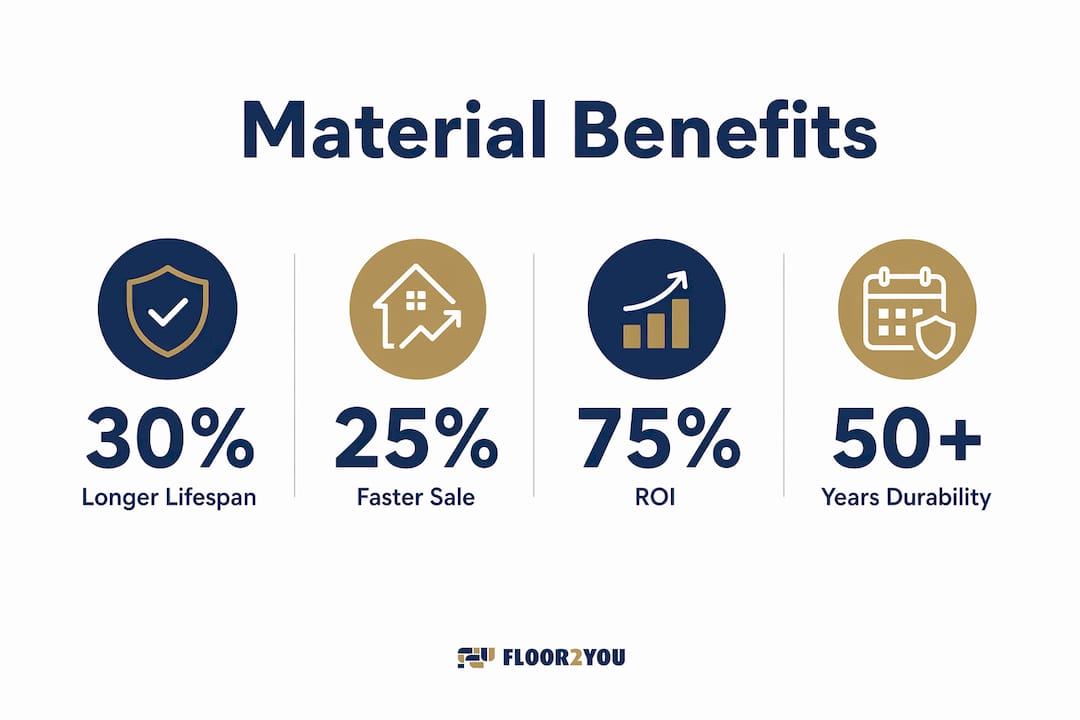
The financial case for premium materials is stronger than most homeowners expect. Luxury-grade renovations using high-quality materials achieve an ROI of approximately 75%, while builder-grade renovations typically achieve 45–60%. That gap represents a significant difference in what you recover when you sell.
Custom cabinetry illustrates the point clearly. Premium custom cabinets last 30–50 years. Builder-grade cabinets last 10–15 years. Over a 30-year period, you replace builder-grade cabinets twice while your neighbor with custom cabinets replaces nothing. The upfront cost difference shrinks considerably when you factor in two full replacement cycles.
| Material category | Builder-grade lifespan | Premium lifespan | Approximate ROI |
|---|---|---|---|
| Cabinetry | 10–15 years | 30–50 years | 75% vs. 45–60% |
| Flooring (hardwood) | 15–20 years | 50–100 years | High resale value |
| Countertops (stone vs. laminate) | 10–15 years | 25–50 years | Strong buyer appeal |
| Fixtures and hardware | 5–10 years | 20–30 years | Reduced callback costs |
Green-certified buildings with superior materials sell up to 25% faster than comparable properties. Speed to sale has real financial value, especially in a competitive market like South Florida where inventory moves quickly.
Pro Tip: Concentrate your premium material budget in high-use areas: the primary kitchen, main bathrooms, and primary living spaces. These are the rooms buyers inspect most carefully and the spaces your family uses most. Cost-effective materials work fine in low-traffic secondary spaces like guest rooms and storage areas.
Smart remodeling invests in premium materials in high-use areas while using cost-effective options elsewhere. This approach maximizes your return without requiring a premium budget across every square foot of the project.
What are the biggest misconceptions about choosing quality renovation materials?
The most common misconception is that quality always means the most expensive option. Architect Ross Cann frames it directly: quality is engineered performance, not necessarily higher cost. A mid-range porcelain tile with the right wear rating outperforms an expensive decorative tile that was not designed for floor use. Specification matters more than price tag.
A second misconception is that aesthetics and durability are separate decisions. They are not. The finish materials you choose for appearance, flooring, countertops, cabinetry, also determine how much maintenance your renovation requires. Choosing a beautiful but porous natural stone countertop without sealing it properly creates a maintenance burden that compounds every year.
Homeowners often underestimate material quality's impact beyond aesthetics, overlooking resistance to wear, moisture, and traffic. This oversight leads to renovations that look great on day one but require costly repairs within three to five years.
Use these criteria when selecting materials for any renovation:
- Use intensity: How many people use this space daily, and how hard?
- Environmental exposure: Does the space face moisture, heat, or direct sunlight?
- Maintenance tolerance: How much time and money are you willing to spend on upkeep?
- Design longevity: Will this material still look appropriate in 10 years?
- Installation requirements: Does the material require specialized installation to perform correctly?
Professional guidance from an experienced contractor helps you match materials to actual conditions rather than marketing descriptions. Tile performance in high-traffic areas depends on both the tile specification and the installation method, a combination that requires hands-on expertise to get right.
How do quality materials support long-term adaptability?
Durable, neutral foundational materials enable future updates without structural overhaul. Long-term adaptability is enhanced by using neutral, stable, high-quality foundational materials that allow aesthetic updates without structural changes. This means your renovation investment protects future owners and future design decisions, not just today's preferences.
Consider a solid hardwood floor installed over a properly prepared subfloor. It can be refinished multiple times over 50 years, changing stain color and sheen level to match evolving design trends without replacement. A low-grade laminate floor requires full replacement every 15 years, generating waste and cost with each cycle.
Investing in quality materials balances beauty and practicality, ensuring a renovation remains enjoyable rather than burdensome over time. Materials that hold up reduce the mental load of homeownership. You stop thinking about what needs fixing and start enjoying the space you created.
Sustainability standards like LEED and GREENGUARD certification identify materials that perform well over time while reducing indoor air pollutants. These certifications are not just environmental credentials. They are performance indicators that tell you a material was tested for real-world durability and safety.
Key Takeaways
Quality materials are the foundation of every renovation that holds its value, performs reliably, and requires minimal upkeep over decades of real use.
| Point | Details |
|---|---|
| Durability starts with specification | Match material ratings to actual use intensity and environmental conditions before purchasing. |
| Financial returns favor premium choices | Premium materials deliver roughly 75% ROI versus 45–60% for builder-grade options. |
| Aesthetics and performance are linked | High-quality finishes maintain their appearance longer, reducing visible wear and maintenance costs. |
| Focus budget on high-use areas | Invest in premium materials for kitchens, primary bathrooms, and main living spaces first. |
| Installation quality is non-negotiable | Even the best materials fail without proper installation per manufacturer specifications and building codes. |
What I've learned from watching homeowners choose materials
Most homeowners I talk to focus on the wrong number. They compare the price per square foot of two flooring options and choose the lower one. What they rarely calculate is the cost per year of ownership, which is the number that actually matters.
A $3-per-square-foot laminate floor that lasts 12 years costs more annually than a $7-per-square-foot hardwood floor that lasts 60 years and can be refinished four times. The math is not complicated. But it requires thinking past the invoice.
The other pattern I see constantly: homeowners spend generously on visible surfaces and cut corners on the substrate and installation. A beautiful tile job on a poorly prepared subfloor will crack within two years. The tile gets the credit when it looks good. The substrate gets the blame when it fails. Spend on both.
My honest advice is to prioritize renovation investments in the spaces you use most and the materials that bear the most stress. Your primary kitchen floor, your main bathroom tile, your countertops. These are the places where quality pays back every single day. The guest room closet is not.
The best renovations I have seen share one trait: the homeowner treated material selection as a research decision, not a shopping decision. They asked what the material was rated for, not just what it looked like. That shift in thinking is what separates a renovation that ages gracefully from one that starts showing its problems in year three.
— G
How Floor2you approaches quality material selection
Choosing the right materials for a renovation requires more than browsing a showroom. It requires matching specifications to real conditions, use patterns, and budget priorities.

Floor2you works with South Florida homeowners through every stage of that decision, from initial material selection through final installation. The team brings hands-on knowledge of how materials perform in the South Florida climate, where humidity and heat create conditions that test every finish and substrate. Whether you are planning a full home renovation or a focused kitchen or bathroom remodel, Floor2you provides the material expertise and installation quality that makes the difference between a renovation that lasts and one that disappoints. Reach out today to discuss your project and get a clear plan for materials that perform.
FAQ
What is the role of quality materials in renovations?
Quality materials determine how long a renovation lasts, how much it costs to maintain, and how much value it adds to your property. Poor material selection accounts for 30–40% of premature structural failures in renovation projects.
Do high-quality materials always cost more upfront?
Not always. Quality is engineered performance, not necessarily the highest price. A mid-range material with the right specifications for your use case often outperforms a premium decorative option that was not designed for that application.
How much can quality materials increase home value?
Premium-grade renovation materials can increase property market values by 7–11% and deliver an ROI of approximately 75%, compared to 45–60% for builder-grade materials.
Which areas of a home benefit most from premium materials?
High-use spaces like the primary kitchen, main bathrooms, and primary living areas deliver the strongest return on premium material investment because they face the most daily stress and receive the most scrutiny from buyers.
Does installation quality matter as much as material quality?
Yes. Correct installation is as critical as material quality. Even premium materials fail when installed without proper substrate preparation or outside manufacturer specifications.