
TL;DR:
- Painting offers one of the highest returns on investment in home renovation, with interior work returning over 100%. It influences buyer perception, signals quality, and protects surfaces, making it essential for resale value. Proper color choice and professional application maximize its impact and long-term benefits.
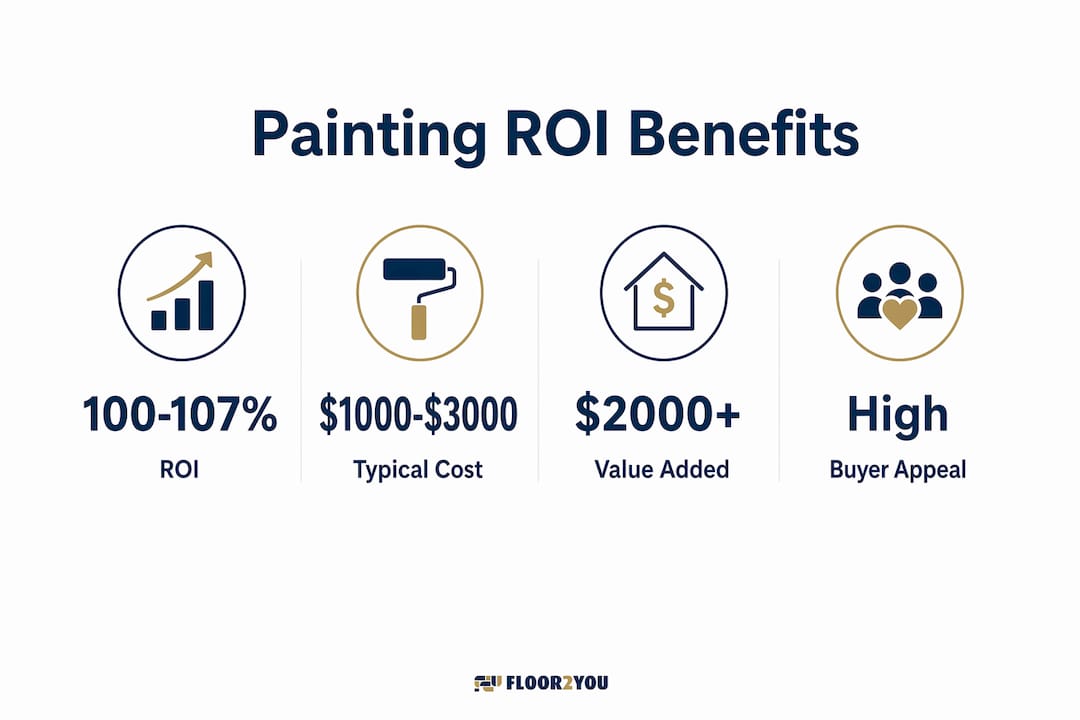
Painting is defined as the single highest-ROI cosmetic upgrade available in residential renovation, with interior painting returning 100–107% on investment and exterior work adding 2–5% to total home value. The role of painting in home renovation goes far beyond aesthetics. A fresh coat of paint protects surfaces, shapes buyer perception, and signals quality craftsmanship before any other feature gets noticed. Floor2you works with homeowners across South Florida who consistently underestimate how much a professional paint job moves the needle on both sale price and livability. Get the color wrong, and you can lose thousands. Get it right, and you gain more than you spent.
How does painting increase home value during renovation?
Paint delivers one of the strongest financial returns of any renovation task. Interior painting ROI sits between 100% and 107%, meaning you typically recover every dollar spent and then some. Exterior painting performs similarly, with ROI ranging from 51% to 150% depending on execution and market conditions.

Color selection is where the money gets made or lost. Zillow research found that a chocolate brown bedroom can add $2,277 to an offer, while an ochre yellow bedroom can reduce offers by up to $18,164. That is not a small margin. It means color is a financial decision, not just a personal one.
The cost barrier is low compared to other renovations. A professional interior paint job for a typical 3–4 bedroom home runs $1,000–$3,000. Compare that to a kitchen remodel averaging $25,000 or more, and painting becomes the obvious first move for homeowners working within a budget.
What colors add the most value?
The data points clearly toward nature-inspired and neutral tones:
- Chocolate brown and warm earth tones in bedrooms correlate with higher offers
- Sage green and soft blue-gray in living spaces signal calm and modernity
- Crisp white or off-white on trim and ceilings creates contrast that buyers notice immediately
- Ochre yellow, bold orange, and heavily saturated colors consistently reduce buyer interest and offer prices
Timing matters too. Painting done after flooring installation but before final staging captures the best visual result and protects new surfaces from scuffs during the final walkthrough.
What is the impact of paint on home design and buyer perception?
Paint is a biological tool before it is a decorative one. Warm hues stimulate the nervous system, making spaces feel energizing and social. Cool tones reduce stress, making them ideal for bedrooms and home offices. Matching color to room function is not a design preference. It is a practical decision that affects how buyers feel the moment they walk in.
Buyers form emotional impressions within seconds of entering a room. A neutral palette creates what designers call a "blank canvas" effect. Neutral tones sell faster and reduce the likelihood of buyers negotiating down the price to cover repainting costs. That negotiation point disappears entirely when the walls are already move-in ready.
Paint also reshapes space without construction. Darker paint on trim and architectural elements can visually alter room proportions, making low ceilings feel taller or narrow hallways feel wider. This technique costs nothing extra beyond the paint itself and requires no structural work.
Pro Tip: Apply a slightly lighter shade of your wall color to the ceiling to make a room feel taller without changing a single fixture. The eye reads the gradient as height.
Trendy colors carry real risk in resale scenarios. Highly specific or trendy colors reduce buyer appeal because they require the new owner to repaint immediately. Every buyer who sees a bold accent wall mentally subtracts the cost and hassle of covering it. Stick to palettes with broad appeal when resale is the goal.
Here is how color temperature maps to room function:
- Kitchen: Warm whites and soft yellows encourage appetite and conversation
- Bedroom: Cool blues and muted greens promote rest and lower stress
- Living room: Warm grays and greiges feel welcoming without being polarizing
- Bathroom: Soft whites and pale aquas signal cleanliness and calm
- Home office: Muted sage or slate blue supports focus without feeling cold
Practical aspects of painting in a renovation project
Painting fits into a renovation sequence at a specific point, and getting the order right protects your investment. The correct sequence is: complete structural work first, then flooring, then paint. Painting after flooring avoids drips on new surfaces and allows you to match wall colors to the finished floor tone.
How to sequence painting in a renovation:
- Complete all drywall repairs, patching, and priming before any color goes on
- Install new flooring before final paint coats so color coordination is accurate
- Paint walls and ceilings before installing new trim, baseboards, or hardware
- Touch up trim and baseboards last, after all other trades have finished
- Allow full cure time (typically 24–48 hours per coat) before staging or photographing
Cost planning is straightforward. A professional interior paint job costs $1,000–$3,000 for a standard home, which is a fraction of what kitchen or bathroom remodels require. That cost-to-return ratio makes painting the most accessible upgrade for homeowners at any budget level.
Pro Tip: Never skip primer on previously unpainted drywall or when making a dramatic color change. Skipping primer costs you two extra finish coats and an uneven result that photographs poorly.
Paint seals drywall and wood against humidity and moisture, preventing long-term damage that leads to expensive repairs. This protective function is especially relevant in South Florida's humid climate, where unsealed surfaces absorb moisture and degrade faster. Paint is not just cosmetic. It is a maintenance layer that extends the life of your walls, trim, and woodwork.
Professional painters also deliver results that DIY work rarely matches. Professional paint jobs improve listing photographs, signal quality to buyers, and consistently produce stronger ROI than homeowner-applied paint. The difference shows in edge lines, coverage consistency, and finish uniformity. Buyers notice, even when they cannot articulate why.
How does painting fit into a broader renovation strategy?
Painting works best as part of a layered renovation approach, not as a standalone fix. Paint is the most affordable improvement to start with, but it delivers peak results alongside structural updates like kitchen and bathroom remodels. A freshly painted kitchen with outdated cabinets still reads as dated. A freshly painted kitchen with updated hardware and countertops reads as move-in ready.
The synergy between painting and flooring is particularly strong. New hardwood or luxury vinyl plank flooring paired with fresh, coordinated wall colors creates a cohesive look that photographs exceptionally well. Strong listing photos drive more showings, and more showings drive stronger offers. The impact on time on market is measurable. Fresh, neutral paint makes homes appear move-in ready, which shortens the sales cycle.
You can learn more about maximizing renovation value by pairing painting with the right complementary upgrades. The goal is always a cohesive result where each update reinforces the others.
Here is how painting compares to other common renovation tasks in terms of cost and impact:
| Renovation task | Typical cost | Primary benefit |
|---|---|---|
| Interior painting | $1,000–$3,000 | Buyer perception, ROI 100–107% |
| Exterior painting | $2,500–$6,000 | Curb appeal, value increase 2–5% |
| Kitchen remodel (minor) | $15,000–$30,000 | Functional upgrade, strong ROI |
| Bathroom remodel | $10,000–$20,000 | Buyer appeal, value increase |
| Flooring replacement | $5,000–$15,000 | Durability, visual cohesion |
Painting also directly supports virtual tours and online listings, which now drive the first impression for most buyers. A room with fresh, well-chosen paint photographs in a way that feels bright, clean, and spacious. Rooms with scuffed or outdated paint look smaller and less maintained in photos, regardless of their actual size. For homeowners preparing to list, painting before photography is not optional. It is the baseline.
Key Takeaways
Painting is the highest-ROI cosmetic renovation available, returning 100–107% on interior work while protecting surfaces, shaping buyer perception, and reducing time on market when done professionally with market-appropriate colors.
| Point | Details |
|---|---|
| ROI is measurable | Interior painting returns 100–107%, making it the top cosmetic renovation by return. |
| Color choice is financial | Wrong colors can reduce offers by thousands; neutral and nature-inspired tones consistently outperform. |
| Sequence matters | Paint after flooring and structural work to protect surfaces and coordinate colors accurately. |
| Professional work pays off | Professional painters improve listing photos and buyer perception, directly boosting resale value. |
| Paint protects surfaces | Sealed drywall and wood resist moisture damage, reducing long-term repair costs. |
Why homeowners keep underestimating paint
Every week, I see homeowners budget carefully for flooring and kitchen updates, then treat paint as an afterthought. They pick a color from a small chip under fluorescent store lighting, buy the cheapest gallon available, and roll it on themselves the night before photos. Then they wonder why the listing photos look flat.
Paint is the first thing a buyer sees and the last thing a seller thinks about. That gap is where value gets left on the table. I have watched a single color change in a master bedroom shift buyer energy in a room. Not because the color was dramatic, but because it was right. Warm, grounded, and coordinated with the floor. Buyers stopped in the doorway instead of walking through.
The DIY instinct makes sense on paper. Paint seems simple. But the difference between a rolled wall and a brushed, primed, professionally cut wall shows up in every photograph and every in-person showing. Buyers feel quality before they measure it. A clean paint job signals that the rest of the home was maintained with the same care.
My honest advice: budget for paint the way you budget for flooring. Treat color selection as a financial decision, not a personal one. And if you are selling or renovating for resale, hire a professional. The renovation ROI on professional painting is one of the clearest in the industry.
— G
Floor2you's approach to renovation painting in South Florida
Floor2you handles painting as part of full residential renovation projects across South Florida, coordinating it with flooring, kitchen remodels, and bathroom updates so every finish works together.

Whether you are preparing a home for sale, updating a rental property, or refreshing your primary residence, Floor2you manages the full sequence from surface prep through final coat. The team understands South Florida's humidity conditions and selects materials that hold up to the climate. If you are ready to plan your next project, get started here and see how professional painting fits into a complete renovation plan.
FAQ
What ROI does interior painting deliver in a renovation?
Interior painting returns 100–107% on investment, making it one of the strongest-performing cosmetic upgrades in residential renovation.
What paint colors hurt home value the most?
Ochre yellow is the most documented value-reducing color, with Zillow data showing it can lower offers by up to $18,164 compared to neutral alternatives.
Should I paint before or after installing new flooring?
Install flooring first, then paint. This sequence lets you match wall colors to the finished floor and avoids paint drips on new surfaces during the renovation.
Does professional painting make a difference over DIY?
Professional paint jobs produce cleaner results, photograph better for listings, and signal quality to buyers in ways that DIY applications rarely match.
How does paint protect a home structurally?
Paint seals drywall and wood against moisture and humidity, preventing surface degradation that leads to costly repairs over time, especially in humid climates like South Florida.