
TL;DR:
- Remodeling in South Florida involves significant structural changes designed to withstand high humidity, hurricane risks, and salt air, unlike typical regional projects. It offers benefits such as increased property value, energy savings, storm resilience, and enhanced rental appeal through durable, climate-appropriate materials. Careful planning, understanding local codes, and working with experienced contractors are essential to ensure lasting results in this demanding environment.
Most homeowners assume remodeling is about picking new paint colors or swapping out cabinet hardware. In South Florida, that thinking can cost you. Remodeling here means adapting your home to a region where summer humidity consistently tops 80%, hurricane season runs six months of the year, and buyers expect both resilience and style. Whether you own a single-family home in Coral Springs, manage a rental in Miami Beach, or host guests through a short-term platform, understanding how South Florida remodeling works will help you spend smarter, protect your investment, and genuinely improve daily living.
Table of Contents
- What does remodeling mean in South Florida?
- Key benefits of remodeling your South Florida property
- Comparing popular remodeling projects in South Florida
- How to get started with your remodeling project
- What most guides miss about South Florida remodeling
- Ready to transform your South Florida home?
- Frequently asked questions
Key Takeaways
| Point | Details |
|---|---|
| Local expertise matters | South Florida remodeling uses methods and materials adapted for heat, humidity, and storms. |
| Adds property value | Strategic remodels like kitchens, baths, and new floors increase resale and rental potential. |
| Plan for the climate | Project timing and material choice should align with weather patterns and building codes. |
| Start with a plan | Mapping out your goals, budget, and required steps saves time and money. |
What does remodeling mean in South Florida?
Remodeling is not the same as basic repairs or a fresh coat of paint. By definition, remodeling involves significant structural or functional changes that modernize a space, improve performance, or reimagine how a home is used. In most of the country, that definition stops at aesthetics. Here, it goes further.
South Florida's exposure to tropical storms, salt air, and near-constant humidity means that material selection, ventilation design, and waterproofing are not optional considerations. They are central to every good project. A kitchen remodel in Chicago might prioritize quartz countertops for style. A kitchen remodel in Fort Lauderdale prioritizes the same countertop plus moisture-resistant cabinetry, impact-rated windows, and finishes that won't warp or peel in a wet season.
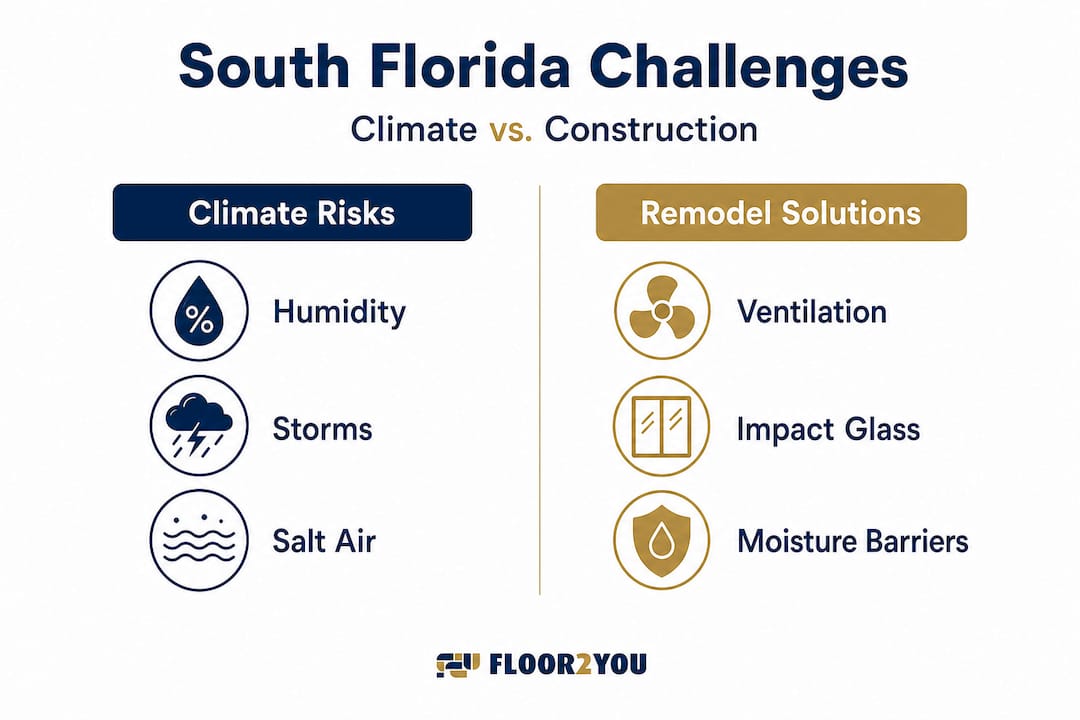
As remodeling services in South Florida experts consistently note, South Florida remodeling adapts homes to local climate challenges and lifestyle trends in ways national guides rarely cover.
The core services you'll encounter in this market include:
- Kitchen remodels: Layout changes, cabinetry upgrades, moisture-resistant surfaces
- Bathroom remodels: Waterproofing, updated fixtures, ADA-accessible options
- Flooring installation: Tile, vinyl plank, hardwood, laminate, each chosen for humidity tolerance
- Outdoor living spaces: Covered lanais, pool decks, screened enclosures
- Energy efficiency upgrades: Impact windows, insulation, smart HVAC systems
- Interior painting: Mold-resistant primers and finishes built for the tropics
"A successful South Florida remodel isn't just about what looks good on day one. It's about what still looks good and performs well after five hurricane seasons." This distinction separates local specialists from generic contractors who apply the same approach they'd use in Atlanta or Denver.
What makes local projects succeed is contractor knowledge of South Florida building codes, permit requirements, and material science. Not every beautiful floor or stunning kitchen will hold up to 90% humidity and occasional flooding. The best remodels here combine aesthetic vision with material practicality.
Key benefits of remodeling your South Florida property
With the basics covered, it's worth diving into the key reasons why remodeling is a strategic move in this region.
The benefits go well beyond curb appeal. Homeowners who invest thoughtfully in South Florida remodeling typically see returns across five major areas:
| Benefit | How it plays out locally |
|---|---|
| Higher home value | Updated kitchens and bathrooms consistently raise appraisal figures |
| Energy savings | New windows and insulation cut cooling costs significantly |
| Hurricane resilience | Impact-rated features reduce insurance premiums and storm damage |
| Rental appeal | Modern finishes attract quality tenants and justify higher rates |
| Low maintenance | Durable, climate-appropriate materials mean fewer repairs over time |
Remodeling increases property value and prepares homes for South Florida's demanding climate in ways that directly affect resale prices and insurance costs. That dual return is something you rarely see in markets with milder weather.
On the energy side, the gains are substantial. South Florida homes run air conditioning nearly year-round. Upgrading insulation, sealing air leaks, and installing energy-efficient windows can reduce monthly electricity bills by 15% to 25%. Over ten years, that adds up to thousands of dollars that stay in your pocket rather than going to the utility company.

For property managers and Airbnb hosts, the rental appeal factor is especially compelling. Guests and long-term tenants in South Florida expect modern, clean, and functional spaces. Outdated bathrooms with old tile and corroded fixtures lead to negative reviews and lower occupancy rates. A clean bathroom remodel or new flooring installation can immediately boost bookings and justify higher nightly rates.
Upgraded flooring enhances both style and durability against humidity, and the modern flooring benefits are visible almost immediately after installation. Luxury vinyl plank, for example, handles moisture far better than traditional hardwood in South Florida's wet season while still delivering a warm, high-end look.
Pro Tip: If you're remodeling a rental property, prioritize flooring and bathrooms first. These two areas drive the strongest first impressions with tenants and have the best cost-to-return ratio in the South Florida rental market.
Comparing popular remodeling projects in South Florida
Knowing the benefits, your next question may be: which projects give the most value for your goals? Here's how common jobs stack up.
Flooring upgrades are commonly requested due to the region's climate needs, but they are just one piece of a larger puzzle. Understanding how different projects compare helps you allocate budget effectively.
| Project | Typical cost range | Timeline | Complexity |
|---|---|---|---|
| Flooring (per room) | $2,000 to $6,000 | 2 to 5 days | Low to medium |
| Bathroom remodel | $8,000 to $20,000 | 2 to 4 weeks | Medium to high |
| Kitchen remodel | $15,000 to $50,000+ | 4 to 10 weeks | High |
| Outdoor living space | $10,000 to $35,000 | 3 to 8 weeks | Medium to high |
| Energy upgrades (windows) | $8,000 to $25,000 | 1 to 3 weeks | Medium |
A few factors unique to South Florida push costs and timelines beyond national averages. First, impact-rated windows and doors cost significantly more than standard options, but they are increasingly required by local building codes and insurers. Second, supply chains for premium materials sometimes have longer lead times in South Florida compared to inland markets. Third, labor costs in Miami-Dade, Broward, and Palm Beach counties reflect a competitive contractor market.
Here's how to think about prioritizing projects:
- Start with structural and weather-related upgrades if you have any aging windows, roof concerns, or obvious water intrusion issues. Beauty is secondary to protection.
- Move to high-use spaces next. Kitchens and bathrooms generate the best returns and the most visible improvements.
- Address flooring as a whole-home investment. Inconsistent flooring across rooms lowers perceived value. A cohesive approach to flooring choices for design makes your home feel intentional and polished.
- Layer in outdoor living improvements. South Florida's climate makes outdoor spaces genuinely usable year-round. A screened lanai or covered patio adds functional square footage without the cost of a true addition.
- Finish with cosmetic upgrades. Paint, lighting fixtures, and hardware are affordable and can dramatically refresh a space once the foundational work is done.
Pro Tip: When planning a remodel, build a 15% contingency into your budget for South Florida projects specifically. Unexpected issues like hidden moisture damage, outdated electrical in older homes, or permit revision fees are common and budget for them upfront to avoid project delays.
How to get started with your remodeling project
You've compared your options. Now here's how to move from vision to reality.
Getting started correctly is where many South Florida homeowners stumble. The excitement of a new project can lead to rushing past critical steps that protect both your timeline and your money. Step-by-step planning helps avoid costly mistakes that are far harder to fix mid-project than before you begin.
Follow this proven sequence:
- Define your goals clearly. Are you remodeling to sell, to rent, or to enjoy long-term? Each goal changes which projects deserve the most investment and which materials make sense.
- Set a realistic budget. Research local project costs, then add your 15% contingency. If the total exceeds what you can spend, decide which phases to tackle now and which to delay.
- Understand local permit requirements. In South Florida, permits are required for most structural changes, electrical work, plumbing updates, and window replacements. Skipping permits creates problems at resale and may result in fines or required demolition of unpermitted work.
- Plan around the weather calendar. Starting major exterior work just before hurricane season is a risk few contractors recommend. The cooler, drier months from November through April are generally ideal for South Florida remodeling projects.
- Account for material lead times. Popular tile lines, custom cabinetry, and specialty flooring can take four to twelve weeks to arrive. Order materials before you schedule contractors, not after.
- Vet your contractor thoroughly. Check that any contractor you hire carries Florida-specific licensing, active liability insurance, and carries workers' compensation coverage. Ask for references from recent South Florida projects specifically.
- Use a written contract. Every detail, from materials and brands to start and completion dates, should be in writing before work begins.
Review a detailed flooring installation checklist before your flooring phase begins. Proper subfloor preparation, acclimation periods for wood products, and moisture testing are steps that get skipped far too often, especially when homeowners are eager to see progress.
Pro Tip: Call your homeowner's insurance provider before starting major remodeling work. Some projects, like adding a metal roof or impact windows, can lower your premium enough to meaningfully offset the cost of the upgrade itself.
What most guides miss about South Florida remodeling
All practical steps aside, here's the hard-earned truth about getting South Florida remodeling right: most online guides are written for a national audience and quietly ignore the details that matter most here.
The biggest mistake we see homeowners make is following national remodeling advice without filtering it through a South Florida lens. A major home improvement publication might suggest laminate flooring as a budget-friendly option. In South Florida, standard laminate can buckle and swell in humid conditions within a couple of years. The budget savings evaporate fast when you're replacing it early.
The same problem shows up with contractors. Many homeowners hire based on the lowest bid without checking whether that contractor has genuine South Florida experience. A contractor who built his reputation in a dry climate may not understand how to waterproof a bathroom correctly for Florida's conditions, or may not be familiar with local wind-load requirements for exterior work.
Another gap in most guides is the overlooked role of moisture management across the entire home, not just the bathroom. Any remodel in this region should involve checking for existing moisture intrusion in walls, under floors, and around windows before new materials go in. Installing beautiful new flooring over a subfloor with hidden moisture damage creates mold problems within months.
Experienced South Florida homeowners also know that researching best flooring types in the region upfront saves significant money and frustration. Porcelain tile, luxury vinyl plank, and certain sealed engineered hardwoods consistently outperform other options in this climate. Carpet is often a poor choice in South Florida homes, especially near bathrooms or in high-humidity spaces, because it holds moisture and can harbor mold.
Finally, the value of local relationships cannot be overstated. Contractors with established connections to local suppliers get better material pricing, faster delivery, and priority scheduling. When a project hits a snag, those relationships also resolve problems faster than a contractor who calls the same 800-number you could call yourself.
Ready to transform your South Florida home?
Armed with clarity about what South Florida remodeling really involves, here's your next move.
You now understand why remodeling here requires a different approach, which projects deliver the best returns, and how to plan without the costly surprises that trip up most first-time remodelers in this market. The next step is connecting with a team that actually lives and works in South Florida and knows its unique demands firsthand.

Floor2You's remodeling solutions cover everything from full kitchen and bathroom remodels to flooring installation in tile, hardwood, vinyl, and laminate. The team also handles professional painting with mold-resistant finishes designed for South Florida conditions. Whether you're upgrading a primary residence, preparing a rental property, or refreshing a short-term rental, Floor2You manages the project from the first conversation to final walkthrough. Reach out today for a quote and see what a locally knowledgeable team can do for your property.
Frequently asked questions
What's the difference between remodeling and renovation in South Florida?
Remodeling focuses on major upgrades and adapting your home to local climate demands, while renovation typically restores existing features to their original condition. South Florida remodeling adapts homes to climate challenges in ways that go well beyond basic restoration.
Which remodeling projects add the most value to South Florida homes?
Kitchens, bathrooms, and flooring upgrades consistently offer the strongest returns because they align with buyer preferences and local climate resilience requirements. Remodeling increases property value while simultaneously preparing homes for South Florida's weather demands.
How does South Florida's climate affect remodeling decisions?
High humidity and storm risk require moisture-resistant materials, impact-rated windows, and energy-efficient designs for results that last. Upgraded flooring is one clear example where local climate directly shapes which products are appropriate.
When is the best time of year to start a remodeling project?
The cooler, drier months from November through April are generally the best window for South Florida remodeling. Most experienced contractors and homeowners avoid scheduling major exterior or structural work during hurricane season, which runs June through November.
Do I need a permit for home remodeling in South Florida?
Yes, most substantial remodeling projects require permits to comply with local building codes in South Florida's counties. Skipping permits can create serious complications when you sell or insure your home, so always verify permit requirements with your local building department before any work begins.