
TL;DR:
- South Florida homeowners prefer light, natural flooring to keep interiors bright, cool, and humidity-resistant.
- Modern flooring trends emphasize large format, matte finishes, natural textures, and eco-friendly materials.
- Climate considerations shape material choices, with moisture resistance and UV stability being crucial for durability.
While the rest of the country is leaning into darker, patterned hardwoods and rich, toasty palettes, South Florida homeowners favor lighter floors that keep interiors bright, airy, and cool. That contrast matters a lot when you're planning a remodel. Choosing the wrong trend for your climate can mean warped planks, faded finishes, or a look that simply feels out of place in a sun-drenched coastal home. This guide breaks down what modern flooring actually means in 2026, which materials perform best in our humidity, and how to make a smart, stylish choice that holds up year after year.
Table of Contents
- What defines modern flooring trends?
- How South Florida's climate shapes flooring choices
- Trend spotlight: Patterns, palettes, and finishes in 2026
- Choosing the right modern flooring for your home
- Why following national flooring trends can backfire in South Florida
- Ready to update your floors? Trust the experts
- Frequently asked questions
Key Takeaways
| Point | Details |
|---|---|
| South Florida trend difference | Local homeowners benefit more from lighter, coastal-inspired flooring than from national dark wood trends. |
| Climate-smart materials matter | Engineered hardwood, porcelain tile, and luxury vinyl are top picks for humid, high-traffic homes. |
| Trendy patterns, practical finishes | Wide planks, minimalist patterns, and matte finishes will dominate 2026’s modern look. |
| Function meets style | The best floors combine trend-forward design with easy day-to-day maintenance for lasting beauty. |
What defines modern flooring trends?
The word "modern" gets thrown around a lot in home design, but in flooring it has a specific meaning in 2026. Modern flooring is built around three core ideas: visual simplicity, natural inspiration, and low-maintenance performance. Clean lines, larger format tiles, and wide-plank hardwoods replace the busy, small-scale patterns of earlier decades.
2026 flooring trends are shaped by natural influences, ease of maintenance, and sustainable material options. That means you'll see a lot of stone-look porcelain, wood-look luxury vinyl tile (LVT), and engineered hardwood on the market right now. Each of these materials mimics nature while delivering the durability that real stone or solid wood sometimes can't match in everyday living.
Here's what defines the modern flooring aesthetic this year:
- Large format tiles and wide planks (think 6x36 planks or 24x24 tiles) that create a seamless, open feel
- Matte and low-sheen finishes that hide scratches and feel casual underfoot
- Wire-brushed or hand-scraped textures that add depth without looking fussy
- Neutral and nature-inspired color palettes including warm whites, sandy tones, and soft grays
- Geometric accent patterns like herringbone or chevron used in entryways or feature areas
- Eco-friendly materials such as bamboo, cork, and recycled-content LVT
"The most enduring modern floors blend honest materials, practical finishes, and a color palette that feels timeless rather than trendy."
One material worth knowing is travertine luxury flooring, a natural stone that has made a strong comeback in 2026. Its warm, porous texture fits perfectly into the coastal and organic design stories that South Florida homeowners love. Paired with a matte sealer, it delivers a high-end look without the cold, sterile feel of polished marble.
Finishes are a bigger decision than most people realize. A high-gloss finish shows every footprint and scratch, which is a real problem in busy households. Matte and satin finishes are far more forgiving and actually photograph better in the bright, natural light that floods most South Florida homes. That's a practical win that also happens to look great.
How South Florida's climate shapes flooring choices
South Florida is not a typical American climate. Average humidity levels regularly exceed 70%, summer heat is intense, and the threat of tropical storms means moisture can enter a home in ways that northern climates never experience. These realities make material selection far more than a style decision.
South Florida homeowners prioritize lighter floors for greater reflectivity and cooling effects, which is both a comfort strategy and a design one. Light-colored floors bounce natural light around a room, making spaces feel larger and cooler without touching the thermostat. That's a real energy and comfort benefit in a region where air conditioning runs almost year-round.
For stone flooring in humid climates, proper sealing and installation are critical. Unsealed stone can absorb moisture and develop mold or staining over time. Porcelain tile, on the other hand, is virtually impervious to water and remains one of the most reliable choices for South Florida kitchens, bathrooms, and even living areas.
Here's a quick comparison of the most popular flooring types for our climate:
| Flooring type | Moisture resistance | Best rooms | Maintenance level |
|---|---|---|---|
| Porcelain tile | Excellent | All rooms | Low |
| Luxury vinyl tile (LVT) | Excellent | All rooms | Very low |
| Engineered hardwood | Good | Living, bedroom | Medium |
| Natural stone (sealed) | Good | Living, entry | Medium |
| Solid hardwood | Poor | Bedroom only | High |
| Laminate | Fair | Low-moisture rooms | Low |
Key factors South Florida homeowners should weigh:
- Moisture resistance is non-negotiable for kitchens, bathrooms, and any ground-floor space
- UV stability matters near large windows and sliding glass doors where sunlight fades finishes
- Thermal comfort is improved by materials that don't retain heat, like tile and stone
- Storm resilience means avoiding materials that swell or buckle when water intrudes
Pro Tip: If you're installing flooring in a room with direct outdoor access, like a lanai-adjacent living room, choose a material rated for wet or semi-wet conditions. LVT and porcelain tile are your safest bets in those transition zones.
Trend spotlight: Patterns, palettes, and finishes in 2026
Understanding climate-driven material choices leads straight to the fun part: which patterns and finishes are defining the hottest looks this year?
Patterned hardwoods and toasty tones are trending nationwide, but lighter, breezier looks take clear precedence in South Florida. While a dark walnut herringbone floor looks stunning in a Chicago brownstone, that same floor in a Miami Beach condo can feel heavy, show humidity-related movement, and absorb heat in ways that make the room uncomfortable.
Here's how national trends stack up against what's actually selling and performing in South Florida:
| Trend category | National favorite | South Florida favorite |
|---|---|---|
| Wood tone | Dark walnut, espresso | Natural blonde, whitewashed oak |
| Pattern | Herringbone, chevron | Wide plank, straight lay |
| Finish | Satin, semi-gloss | Matte, wire-brushed |
| Material | Solid hardwood | Engineered hardwood, LVT |
| Accent tile | Bold geometric | Sandy neutral, travertine-look |
The most popular patterns in South Florida right now include:
- Wide plank straight lay for a clean, beachy, open feel
- Herringbone in light oak or whitewashed tones for entryways and feature walls
- Large-format tile in a grid or offset pattern for kitchens and bathrooms
- Sandy neutrals and natural blondes that echo the coastal landscape outside
One standout statistic worth noting: wide-plank flooring (planks 5 inches or wider) now accounts for a growing share of all residential hardwood sales in the U.S., and in coastal markets like South Florida, that number skews even higher. Wider planks show off the natural grain of the wood and make rooms feel more spacious, both of which are priorities for local buyers.
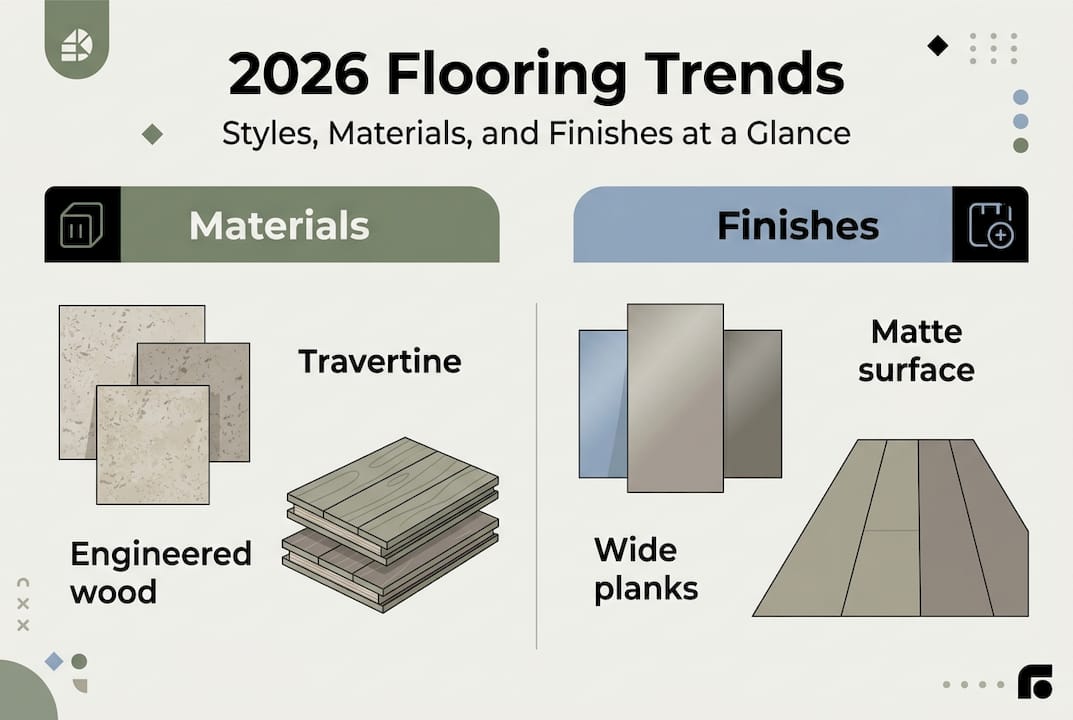
Finishes deserve special attention. Matte finishes are dominating 2026 because they hide everyday wear and feel more casual and relaxed. Hand-scraped and wire-brushed textures add visual interest without requiring a bold color choice. They're also incredibly practical because the texture naturally disguises minor scuffs and pet scratches.
Choosing the right modern flooring for your home
Spotlighting the trends helps inspire, but which of these will actually work best for your family and lifestyle? Here's a practical framework to guide your decision.
Modern flooring choices are as much about day-to-day practicality as they are about style. A floor that looks incredible in a showroom but requires constant upkeep or buckles in humidity is not a good investment, no matter how on-trend it is.
Follow these steps to make a confident choice:
- Set your budget clearly. Material and installation costs vary widely. LVT is generally the most affordable per square foot, while natural stone and engineered hardwood cost more but add resale value.
- Identify your highest-traffic and highest-moisture rooms. Kitchens, bathrooms, and entryways need moisture-resistant, easy-to-clean materials. Living rooms and bedrooms have more flexibility.
- Consider your household. Pets, kids, and heavy foot traffic call for scratch-resistant, low-maintenance finishes. Matte LVT or wire-brushed engineered hardwood are excellent picks.
- Choose a look that lasts. Trends come and go, but neutral palettes and classic patterns like wide-plank or simple grid tile hold their appeal for 10 to 15 years.
- Think about installation complexity. Herringbone and chevron patterns require more labor and material, which increases cost. Factor that into your budget before falling in love with a pattern.
- Get professional input. A local flooring expert who knows South Florida conditions will steer you away from materials that look great on paper but fail in our climate.
For rooms near water, like laundry rooms or bathrooms, the travertine floor benefits of natural texture and slip resistance make it a smart and stylish option when properly sealed.
Pro Tip: Always buy 10% more flooring than your square footage calculation. Cuts, waste, and future repairs will eat into your supply faster than you expect, and dye lots change between production runs.
Why following national flooring trends can backfire in South Florida
We've seen it happen more than once. A homeowner falls in love with a dark, moody espresso hardwood floor they saw in a design magazine. It looks incredible in a Pacific Northwest farmhouse. They install it in their Coral Gables home and within 18 months, the planks are cupping at the edges, the finish looks dull from UV exposure, and the whole floor feels heavier and hotter than the rest of the house.
The problem isn't the floor. It's the mismatch between trend and environment. South Florida buyers should focus on functional, climate-appropriate choices as much as style, and the best local remodelers know this instinctively. Lighter, hardier materials don't just perform better here. They also photograph better, feel better underfoot in the heat, and appeal to buyers if you ever sell.
The real lesson is that the best remodels in South Florida blend design ambition with regional reality. You can absolutely have a stunning, on-trend floor. It just needs to be the right trend for where you actually live. Chasing a national look without local context is one of the most common and costly mistakes we see homeowners make.
Ready to update your floors? Trust the experts
Knowing the trends is one thing. Translating them into a floor that looks great, performs in South Florida's climate, and fits your home's specific layout is a different challenge entirely.
At Floor2You, we work with South Florida homeowners every day to select, source, and install flooring that checks every box: stylish, durable, moisture-resistant, and built for the way you actually live. From wide-plank engineered hardwood to large-format porcelain tile, our team brings real local knowledge to every project. Whether you're remodeling a single room or your entire home, our flooring experts near you are ready to help you make the right call. Reach out today for a consultation and let's build something you'll love for years.
Frequently asked questions
What are the top flooring materials for modern South Florida homes?
Engineered hardwood, porcelain tile, and luxury vinyl tile are the top choices because they offer strong moisture resilience and hold up well in humid, sun-heavy conditions. These materials also come in the neutral, light-toned finishes that work best in coastal interiors.
How do I keep my modern floors looking new in a humid climate?
Choose water-resistant materials from the start, sweep regularly to prevent grit buildup, and clean up moisture spills immediately. For natural stone, reapply sealant every one to two years to maintain protection.
Are lighter or darker floors better for South Florida homes?
Lighter floors are preferred because they reflect natural light, make rooms feel cooler, and pair naturally with the coastal, open aesthetic that defines South Florida interiors. Dark floors can feel heavy and show humidity-related wear faster.
What flooring trends could go out of style soon?
Very dark wood stains and overly ornate patterns are losing ground as lighter, natural palettes continue to rise, especially in warm-climate markets. Minimalist, nature-inspired looks have staying power that bold, high-contrast styles simply don't.