
TL;DR:
- Modern luxury vinyl flooring is highly durable, waterproof, and visually realistic, ideal for humid climates.
- SPC cores outperform WPC in Florida, offering better impact resistance and moisture stability.
- Proper subfloor preparation, moisture testing, and choosing thicker wear layers ensure long-lasting installation.
Vinyl flooring has a reputation problem. Many homeowners still picture the thin, peeling rolls installed in kitchens decades ago and assume all vinyl is the same. That outdated image couldn't be further from what luxury vinyl flooring actually delivers today. Modern luxury vinyl is engineered specifically for performance in tough environments, and in South Florida, where heat, humidity, and afternoon thunderstorms are just part of life, that distinction matters enormously. This guide walks you through everything you need to know about luxury vinyl flooring, from its construction and core types to installation best practices and how it stacks up against tile, hardwood, and laminate.
Table of Contents
- Understanding luxury vinyl flooring
- Benefits of luxury vinyl flooring for South Florida homes
- Comparing luxury vinyl flooring to other flooring types
- Installing luxury vinyl flooring: What homeowners need to know
- A fresh perspective: What most guides miss about luxury vinyl flooring in South Florida
- Where to find luxury vinyl flooring solutions for your renovation
- Frequently asked questions
Key Takeaways
| Point | Details |
|---|---|
| Waterproof performance | Luxury vinyl flooring is 100% waterproof, ideal for humid South Florida homes. |
| SPC vs. WPC core | SPC cores resist dents and moisture better than WPC, especially important for Florida homeowners. |
| Durable and stylish | Luxury vinyl offers resilience and design options that rival hardwood and tile at lower cost. |
| Proper installation matters | Testing subfloor moisture before installation ensures long-term performance and durability. |
Understanding luxury vinyl flooring
Now that we've set the stage, let's explore exactly what luxury vinyl flooring is and what makes it unique.
Luxury vinyl flooring (LVF) is a multi-layer synthetic flooring product designed to replicate the look of natural materials like wood, stone, and tile while far outperforming them in moisture resistance and durability. It is not the same product your grandparents had in their laundry room. The materials, manufacturing processes, and engineering behind modern luxury vinyl represent a completely different category of flooring.
Most luxury vinyl products are built from three core layers:
- The wear layer: A clear protective coating that resists scratches, scuffs, stains, and UV fading. Thicker wear layers mean longer product life.
- The print layer: A high-resolution photographic film that mimics wood grain, stone texture, or tile patterns with remarkable detail.
- The core layer: The structural foundation of the plank or tile, which determines rigidity, sound absorption, and moisture resistance.
There are two main product formats within the luxury vinyl category. LVT (luxury vinyl tile) comes in square or rectangular tiles that simulate ceramic, stone, or marble. LVP (luxury vinyl plank) comes in long, narrow planks that replicate hardwood flooring. Both float or glue down depending on the application, and both deliver the same fundamental advantages over traditional materials.
Standard vinyl sheet flooring, in contrast, is a single-layer or thin two-layer product with no structural core. It dents, tears, and absorbs moisture at the seams. Luxury vinyl is fundamentally different and should not be grouped with it.
One of the most important developments in the luxury vinyl world is the evolution of the core material. Two main types dominate the market today: WPC (wood plastic composite) and SPC (stone plastic composite). WPC cores contain a foamed layer that adds comfort underfoot and sound dampening. SPC cores use calcium carbonate (limestone powder) for an extremely rigid, dense base that resists denting and thermal expansion. In a climate like South Florida's, that distinction is significant.
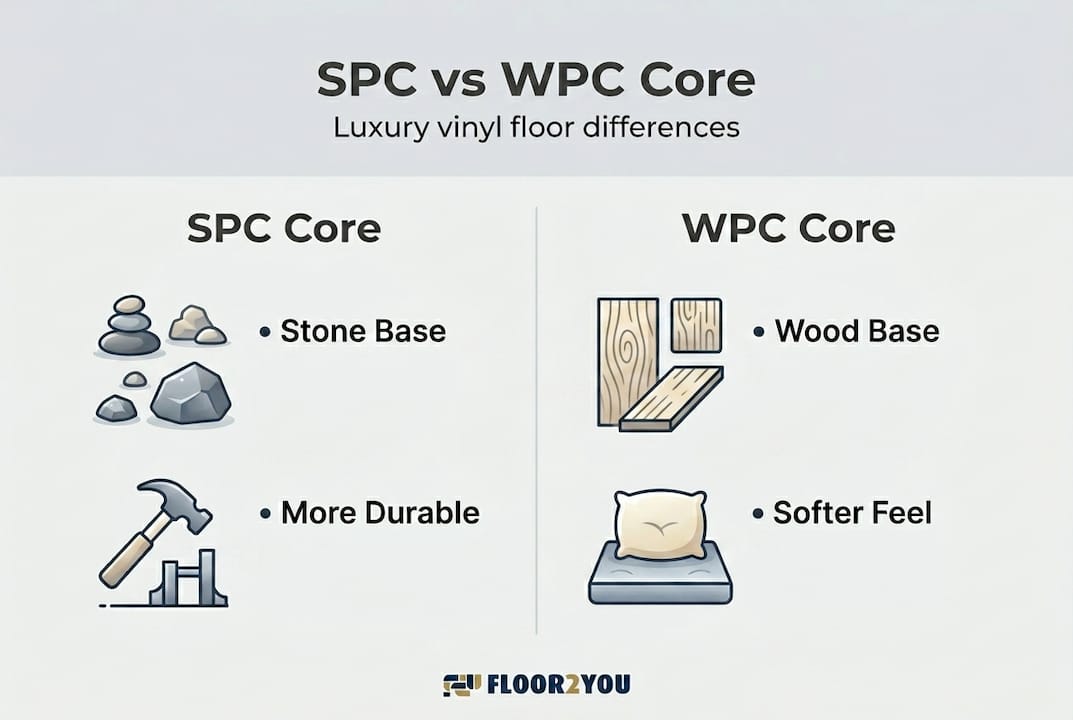
As the market data confirms, luxury vinyl flooring is 100% waterproof and engineered for durability in humid climates, which is precisely why it has surged in popularity across Florida neighborhoods.
If you want a deeper look at the full range of products available, exploring your vinyl flooring options is a great starting point before making any decisions.
Pro Tip: Before installation, always measure your subfloor's moisture emissions rate (MVER). Even waterproof flooring can be affected by unchecked subfloor moisture vapor pushing up through the seams over time.
Benefits of luxury vinyl flooring for South Florida homes
With construction details clear, let's find out why luxury vinyl is so well-suited to South Florida homes.
South Florida is not a gentle environment for flooring. Between the year-round humidity, occasional flooding from heavy rain, and salt air near the coast, the flooring in your home takes a beating that floors in drier climates simply don't experience. Luxury vinyl was practically made for conditions like these. Here are the key performance advantages that matter most for local homeowners:
-
Waterproof through and through. Unlike hardwood, which can warp and cup when wet, or laminate, which swells and delaminates at the edges, luxury vinyl planks and tiles are fully waterproof at every layer. Water spills, pet accidents, and even minor flooding won't destroy them.
-
Superior dent and humidity resistance with SPC cores. SPC outperforms WPC for dent and humidity resistance in Florida conditions. The rigid stone core doesn't expand and contract significantly with temperature changes, which is critical in a region where air conditioning cycles on and off constantly.
-
Realistic style in every aesthetic. Today's luxury vinyl comes in hundreds of wood tones, stone looks, and tile patterns. You can get the visual warmth of white oak hardwood or the crisp, modern look of concrete tile without any of the maintenance or moisture problems. Homeowners no longer have to compromise style for practicality.
-
Minimal upkeep required. Luxury vinyl requires no sealing, refinishing, waxing, or special cleaning products. A damp mop and a mild cleaner are all you need. That's a genuine advantage for busy families or property managers running short-term rentals.
-
Comfort underfoot. Especially with WPC-core products or added underlayment, luxury vinyl offers a softer feel than ceramic tile, which matters a great deal in a home where people walk barefoot most of the year.
Understanding the broader vinyl flooring advantages specific to this region will help you feel confident in your selection, and comparing it against other local favorites is worth exploring through a look at the best flooring types for South Florida homes.
Pro Tip: For high-traffic areas like entryways, kitchens, and living rooms, look for a wear layer of at least 20 mil (0.5 mm). Thinner wear layers under 12 mil are fine for low-traffic bedrooms, but they won't hold up in busy zones over the long term.
Comparing luxury vinyl flooring to other flooring types
To make an informed choice, it's helpful to compare luxury vinyl with other common flooring materials.
Every flooring type comes with tradeoffs. In South Florida, those tradeoffs become clearer because the climate amplifies problems. A flooring material that works fine in Denver might fail within two years in Miami. Here's how luxury vinyl stacks up against the most popular alternatives:
| Flooring type | Moisture resistance | Maintenance | Average cost per sq. ft. | Durability |
|---|---|---|---|---|
| Luxury vinyl (LVP/LVT) | Excellent | Very low | $2 to $7 | High |
| Hardwood | Poor | High | $6 to $12 | Medium |
| Ceramic/porcelain tile | Good | Medium | $4 to $10 | High but brittle |
| Laminate | Fair | Low | $1.50 to $4 | Medium to low |
Hardwood remains beautiful and adds resale appeal, but in South Florida it requires controlled humidity levels to stay stable. Most homeowners run air conditioning to protect their floors as much as themselves, which adds to operating costs. Tile is durable and genuinely water-resistant, but it's cold underfoot, hard on the body when standing for long periods, and the grout lines require ongoing cleaning and sealing.
Laminate looks similar to luxury vinyl on the surface but performs very differently. Laminate has a wood-fiber core that swells when moisture gets underneath it. Despite some water-resistant claims on the label, laminate is not a good match for bathrooms, laundry rooms, or homes with dogs that track in water from a pool.
Luxury vinyl, by contrast, handles all of those situations without issue. It's also the most design-flexible option. Modern printing technology produces finishes so realistic that guests often assume they're looking at actual hardwood or natural stone. For homeowners who want that high-end look without the high-end maintenance bill, luxury vinyl is hard to beat.
"The luxury vinyl tile market is projected to grow at a 5.8% CAGR through 2035, driven largely by homeowner preference for low-maintenance, moisture-resistant flooring in residential renovations."
That growth signals something important: the market is responding to real homeowner demand, not just a passing trend. Staying ahead of these flooring trends for 2026 gives you an advantage when it comes to resale value and long-term satisfaction.
A thorough flooring types comparison will confirm what the numbers already show: luxury vinyl consistently delivers the best overall value for South Florida homeowners when you factor in purchase price, installation cost, and years of use without repairs.
Key reasons homeowners increasingly choose luxury vinyl:
- No need for climate control to protect the floor
- Pet and kid friendly without worrying about scratches or spills
- Works over radiant heat systems
- Can be installed over most existing floors, reducing demo costs
Installing luxury vinyl flooring: What homeowners need to know
After weighing options, homeowners need to understand what's involved in installing luxury vinyl floors.
Luxury vinyl is one of the more forgiving flooring materials to install, but "forgiving" doesn't mean "foolproof." The right preparation makes the difference between floors that last twenty years and floors that start bubbling or clicking within two.
Here is a clear step-by-step overview of how a professional installation typically unfolds:
- Moisture testing. Before anything else, test your subfloor MVER (moisture emissions rate). Even if your concrete slab looks dry, it can emit vapor that affects adhesion and plank stability over time.
- Subfloor inspection and prep. The subfloor must be flat within 3/16 of an inch over a 10-foot span. Any high spots or dips need to be ground down or filled. A level surface prevents clicking, shifting, and uneven wear.
- Acclimation. Let the flooring sit in the room for 24 to 48 hours before installation so the planks adjust to the room's ambient temperature and humidity.
- Underlayment selection. In South Florida, choose an underlayment with a built-in moisture barrier. This is especially important for slab construction, which is common throughout the region. Quality flooring underlayment also adds sound dampening and slight cushioning.
- Layout and cutting. Plan your layout so that you avoid narrow strips at walls. Start from the longest, most visible wall and work outward. Use a utility knife or table saw for clean cuts.
- Installation (click-lock or glue-down). Most modern luxury vinyl uses a click-lock floating system that requires no adhesive. Glue-down is used for commercial applications or specific low-profile situations. Click-lock is faster and easier to repair.
- Final trim and transitions. Install baseboards, quarter-round, and transition strips at doorways to finish the look cleanly.
| Installation phase | Estimated time (average room) |
|---|---|
| Moisture testing and subfloor prep | 2 to 4 hours |
| Acclimation period | 24 to 48 hours |
| Actual flooring installation | 4 to 8 hours |
| Trim and finishing work | 1 to 2 hours |
DIY installation is possible for handy homeowners, but South Florida's concrete slab construction and persistent humidity make professional installation a smart investment. A trained installer knows how to handle moisture barriers, transitions between rooms, and subfloor leveling correctly. For complex layouts or large square footage, the value of professional flooring installation is clear.
Pro Tip: Never install luxury vinyl over an uneven subfloor. Even a 1/4-inch dip can cause planks to flex and the click-lock joints to separate over time. Take the time to level before you lay a single plank.
A fresh perspective: What most guides miss about luxury vinyl flooring in South Florida
Most flooring guides do a decent job covering the basics, but they tend to gloss over the details that actually determine whether your floors perform well five years from now. From years of working with South Florida homeowners, a few things consistently stand out.
First, the choice between SPC and WPC is not a minor detail. It's one of the most consequential decisions you'll make. SPC cores outperform WPC for dent and humidity resistance in Florida homes. In a region where the difference between indoors and outdoors can shift dramatically when doors open during a summer storm, you want a core that doesn't flex or shift with moisture changes.
Second, most homeowners focus too much on appearance and price per square foot, and not enough on wear layer thickness. A gorgeous plank with a 6 mil wear layer will look scratched and dull within a few years in a home with kids or pets. The extra cost of a 20 mil or thicker wear layer pays back many times over in longevity.
Third, MVER testing gets skipped constantly, and it's one of the most common reasons floors fail prematurely. If you're investing in a quality floor, spend the extra time and money to test what's happening beneath it. Visit our vinyl flooring tips resource to understand what to watch for before your project begins.
The bottom line: don't let price drive the whole decision. In South Florida's climate, the wrong product installed cheaply will cost you more in repairs and replacement than the right product installed correctly from the start.
Where to find luxury vinyl flooring solutions for your renovation
Ready to move forward? Here's how to get expert guidance on luxury vinyl flooring for your South Florida home.
Choosing the right luxury vinyl flooring involves more than picking a color from a sample board. The core type, wear layer thickness, underlayment requirements, and subfloor conditions all affect how your floors perform over time. That's where working with experienced local professionals makes a real difference.
At Floor2You, we've helped South Florida homeowners navigate exactly these decisions across hundreds of renovation projects. Whether you're updating a single room or remodeling your entire home, our team handles everything from initial material selection to final installation, with transparent pricing and timelines you can count on. Reach out to the South Florida flooring experts at Floor2You to get a quote and take the guesswork out of your renovation.
Frequently asked questions
Is luxury vinyl flooring really waterproof?
Yes, luxury vinyl flooring is engineered to be 100% waterproof, making it an ideal choice for homes in humid or wet regions like South Florida, where moisture exposure is unavoidable.
What is the difference between SPC and WPC luxury vinyl flooring?
SPC has a stone core that provides better dent and humidity resistance, while WPC is more cushioned underfoot but less resistant to impact and thermal shifts in Florida's climate.
How does luxury vinyl flooring compare to tile or hardwood?
Luxury vinyl is more resistant to moisture, far easier to maintain, and generally more affordable than both tile and hardwood, which is a key reason the LVT market is growing at 5.8% annually through 2035.
Do I need to test my subfloor before installing luxury vinyl?
Yes, checking your subfloor's moisture emissions rate before installation is essential, especially on concrete slabs, to prevent joint separation, bubbling, and long-term flooring failure.