

TL;DR:
- Exterior improvements, especially garage door replacement and stone veneer, provide the highest return on investment. Interior projects like minor kitchen and bathroom remodels also yield strong value increases, but over-improving beyond neighborhood standards can result in losses. Proper documentation of renovations is essential to secure full appraisal credit and maximize property value.
Targeted renovations are the most reliable method homeowners and real estate investors use to increase property value before a sale or appraisal. The industry term for this practice is "value-add renovation," and it covers everything from a $25 can of paint to a full kitchen remodel. Not every project pays off equally. The renovations that consistently deliver the strongest return focus on curb appeal, functional upgrades, and improvements that match what local buyers actually want.
What renovation projects deliver the highest return on investment?
Exterior projects dominate the ROI rankings. Zonda's 38th Annual Cost vs. Value Report confirms that 8 of the top 10 highest-ROI projects are exterior improvements, led by garage door replacement. That finding surprises most homeowners who assume kitchens and bathrooms top the list.
The reason exterior projects outperform is straightforward. Exterior upgrades improve curb appeal and are less discretionary for buyers. A buyer can overlook dated cabinet hardware, but a rusted garage door or crumbling entry creates an immediate negative impression that affects offers.
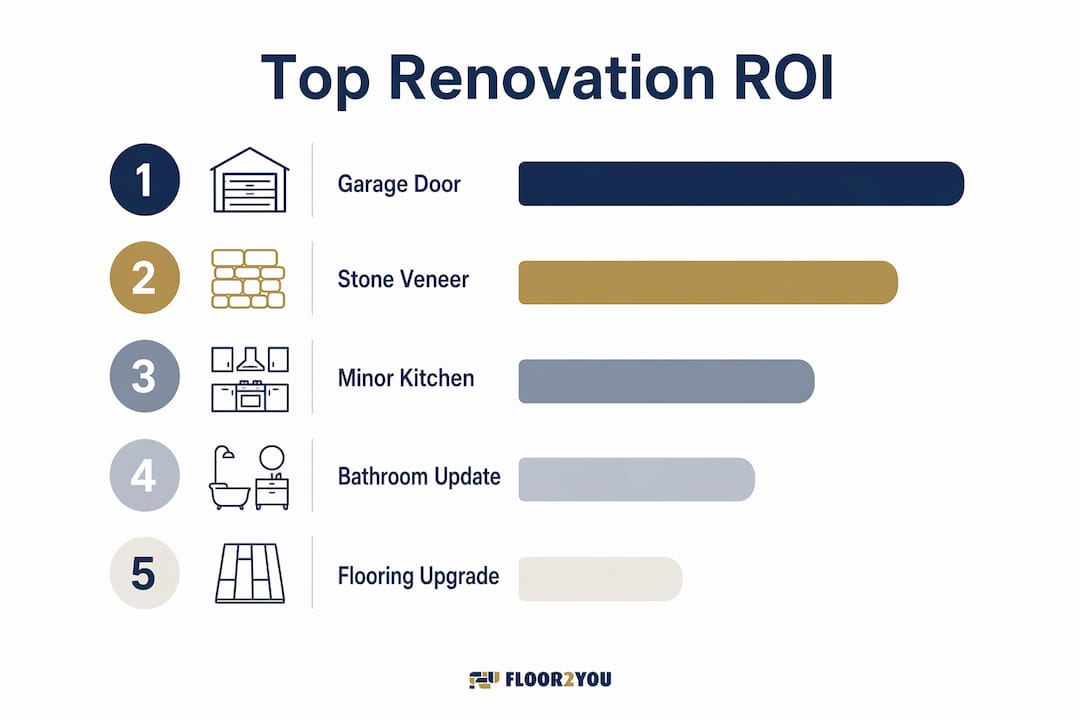
Here are the top renovation categories ranked by typical resale ROI:
- Garage door replacement: Consistently the top performer in Zonda's annual report, often recouping more than its full cost at resale.
- Steel entry door replacement: A relatively low-cost upgrade that signals security and quality to buyers.
- Manufactured stone veneer: Adds an upscale exterior finish that dramatically changes a home's street presence.
- Minor kitchen remodel: HomeLight's 2026 data shows minor kitchen updates recoup roughly 96% of their cost.
- Bathroom remodel: The same HomeLight report shows bathroom remodels return approximately 74% of remodeling costs.
- Energy-efficient upgrades: New windows, insulation, and smart thermostats can boost home value by 2% to 8%.
Pro Tip: Prioritize cohesive, functional improvements over luxury additions. A $5,000 garage door replacement will outperform a $50,000 home theater in nearly every market.
How to plan and budget renovations to maximize property value
A renovation without a budget plan is a renovation that will cost more than expected. Extra Space Storage advises that a complete renovation budget must include materials, labor, permits, contractor fees, and a contingency fund for unexpected costs. Skipping the contingency is the most common mistake homeowners make.
Follow these steps to build a renovation plan that protects your investment:
- Define your goal. Decide whether you are renovating for resale, for an appraisal, or for personal use. Each goal changes which projects deserve the most budget.
- Research local comparables. Pull recent sales data for similar homes in your neighborhood. Your renovations should match or slightly exceed local standards, not exceed them dramatically.
- Get multiple contractor bids. Never accept a single quote. Three bids give you a realistic price range and reveal outliers.
- Allocate a contingency fund. Set aside 10%–20% of your total budget for surprises. Older homes almost always reveal hidden issues once walls open.
- Explore financing options. Cash is simplest. A home equity line of credit (HELOC) offers flexibility. A second mortgage provides a lump sum but adds a fixed payment. Each option carries different risk depending on your timeline.
Over-improving beyond neighborhood standards is one of the most costly mistakes in renovation planning. A $100,000 kitchen in a neighborhood where homes sell for $250,000 will not return its cost. Appraisers and buyers both compare your home to what else is available nearby.
Pro Tip: Before committing to any project, check out this renovation ROI guide to understand exactly how renovations translate into measurable value increases.
How to improve curb appeal and exterior features for appraisal value
First impressions drive appraisal outcomes more than most homeowners realize. HomeLight's appraisal guidance recommends focusing on exterior basics and fresh paint as the highest-priority steps before any appraisal. Appraisers note exterior condition before they ever walk through the front door.
These exterior improvements deliver outsized impact relative to their cost:
- Clean and declutter the yard. Remove dead plants, trim overgrown shrubs, and clear debris. This costs almost nothing and immediately improves perceived condition.
- Fresh exterior paint or siding. A clean, freshly painted facade signals that the home has been maintained. Faded or peeling paint actively lowers appraiser condition ratings.
- Garage door replacement. This single project tops Zonda's ROI rankings year after year. A new door can transform the entire front elevation of a home.
- Steel entry door. Replacing a worn front door with a steel unit adds security appeal and visual impact for a relatively modest investment.
- Manufactured stone veneer. Adding stone veneer to a portion of the facade creates an upscale look that buyers associate with higher-end construction.
- Landscape basics. Fresh mulch, defined bed edges, and a few flowering plants cost under $500 and meaningfully improve street presence.
The role of exterior condition in appraisal outcomes is well documented. Appraisers assign condition ratings that directly affect comparable adjustments. A home in superior exterior condition commands a higher adjusted value than an identical home with visible deferred maintenance.
What interior renovations best increase home value and appraisal outcomes?
Interior renovations work best when they target the rooms buyers scrutinize most: kitchens and bathrooms. A minor kitchen remodel, which typically involves new cabinet fronts, updated hardware, a new countertop, and modern fixtures, recoup roughly 96% of their cost according to HomeLight. That is a stronger return than most full gut renovations.
| Renovation | Typical ROI | Best for |
|---|---|---|
| Minor kitchen remodel | ~96% | Resale and appraisal |
| Bathroom remodel | ~74% | Buyer appeal and appraisal |
| Fresh interior paint | High, low cost | All situations |
| Flooring replacement | Strong | Resale and rental |
| Basement finishing (permitted) | Moderate to strong | Added square footage |
Flooring is one of the most underrated interior upgrades. Worn carpet or cracked tile immediately signals deferred maintenance to buyers and appraisers. Replacing it with hardwood, luxury vinyl plank, or updated tile creates a clean, modern impression throughout the home. Neutral colors matter here too. Fresh interior paint in neutral tones costs around $25 per gallon and is one of the highest-value, lowest-cost updates available.
Permitted additions that add finished livable square footage, such as converting a basement or attic, significantly boost appraised value. Unpermitted work does not receive the same credit. Appraisers value above-grade square footage based on verified, code-compliant space.
Pro Tip: Avoid luxury finishes that outpace your neighborhood. Quartz countertops work in most markets. A $20,000 custom marble kitchen in a starter-home neighborhood will not return its cost at appraisal.
For South Florida homeowners specifically, bathroom upgrade ideas tailored to the local market can help you prioritize the right finishes and features that buyers in the region actually pay a premium for.
How to document and prepare renovations to maximize appraisal value
Documentation is the step most homeowners skip, and it costs them real money at appraisal. Appraisers cannot value improvements they cannot verify. A $30,000 kitchen remodel with no receipts, no permits, and no before-and-after photos may receive little to no credit in the final appraisal report.
Build a renovation file that includes:
- Permits and inspection records for every project that required them.
- Contractor invoices and receipts showing materials, labor costs, and project dates.
- Before-and-after photographs with timestamps to document the scope of work.
- Warranty documents for new systems, appliances, and roofing.
- A written summary listing each upgrade, its cost, and the date completed.
Condition rating improvements often deliver larger appraisal gains than cosmetic updates alone. Replacing an aging HVAC system or repairing a failing roof moves a property from a lower condition tier to a higher one. That tier shift can add thousands to the appraised value, more than a fresh coat of paint ever could.
Appraisers rely on verifiable improvements and condition ratings rather than surface-level aesthetics. Presenting organized documentation at the time of appraisal is one of the most direct ways to prevent undervaluation of your renovations.
Key takeaways
The most effective way to increase property value through renovations is to combine high-ROI exterior upgrades, functional interior improvements, and thorough documentation before any appraisal.
| Point | Details |
|---|---|
| Exterior projects lead ROI | Garage door replacement and stone veneer consistently outperform interior remodels on resale return. |
| Kitchen and bathroom updates pay off | Minor kitchen remodels recoup roughly 96% of cost; bathroom remodels return approximately 74%. |
| Avoid over-improving | Renovations that exceed neighborhood standards rarely return their full cost at appraisal or resale. |
| Documentation is non-negotiable | Appraisers cannot credit improvements without permits, invoices, and inspection records. |
| Condition rating drives appraisal value | Fixing HVAC, plumbing, and deferred maintenance raises condition tiers more than cosmetic work alone. |
What I have learned about renovation spend and real value
After years of watching homeowners pour money into renovations, the pattern is clear. The projects that pay off are almost never the flashiest ones. A homeowner who replaces their garage door and repaints the exterior will typically see a stronger return than one who installs a custom wine cellar or heated bathroom floors.
The mistake I see most often is renovating for personal taste rather than for the buyer pool. Your neighborhood sets the ceiling. If every comparable home in your area has standard granite countertops, upgrading to rare imported marble will not move your appraisal number meaningfully. Appraisers work from comparables, not from your renovation invoice.
The other lesson that rarely gets enough attention is the power of condition over cosmetics. Buyers and appraisers both respond to a home that feels maintained. Fixing the roof, updating the HVAC, and replacing worn flooring signals care. That signal translates directly into higher offers and better appraisal outcomes. A beautifully staged home with a 15-year-old HVAC system will still lose value at inspection.
My honest advice: spend the first portion of your renovation budget on deferred maintenance and exterior presentation. Then address kitchens and bathrooms with targeted, market-appropriate updates. Document everything from day one. That sequence, done consistently, produces the best results I have seen in this market.
— G
Floor2you can help you put these renovations into action
Knowing which renovations add value is one thing. Executing them well is another. Floor2you specializes in exactly the projects that move the needle: flooring installation, kitchen and bathroom remodels, and full residential renovations across South Florida.

Whether you are a homeowner preparing for a sale or an investor looking to maximize returns on a rental property, Floor2you brings the craftsmanship and project management experience to get the job done right. From hardwood and luxury vinyl plank to full kitchen overhauls, the team handles every stage from first contact to final walkthrough. Visit Floor2you's renovation services to request a quote and see what a well-executed renovation can do for your property's value.
FAQ
What renovations add the most value to a home?
Exterior projects deliver the highest ROI according to Zonda's Cost vs. Value Report, with garage door replacement leading the list. Minor kitchen remodels and bathroom updates are the top-performing interior projects.
How much does a minor kitchen remodel return at resale?
HomeLight's 2026 data shows minor kitchen remodels recoup roughly 96% of their cost, making them one of the strongest interior investments for resale value.
Does curb appeal affect a home appraisal?
Yes. Appraisers assess exterior condition before entering the home, and a higher condition rating directly increases appraised value. Fresh paint, clean landscaping, and a new garage door all contribute to a better rating.
Why does renovation documentation matter for appraisals?
Appraisers can only credit improvements they can verify. Without permits, invoices, and inspection records, even expensive renovations may receive little recognition in the final appraisal report.
Is it possible to over-improve a home and lose money?
Yes. Renovations that exceed neighborhood standards rarely return their full cost. Opendoor's appraisal guidance cautions homeowners to match local comparables rather than maximize feature count.