
TL;DR:
- Proper planning and clear communication help ensure a successful flooring project in South Florida.
- Verifying contractor credentials, detailed contracts, and oversight prevent costly mistakes.
- Building a good relationship with a professional contractor leads to better results and post-project support.
Hiring the wrong flooring contractor in South Florida can turn a simple renovation into a months-long nightmare. Homeowners regularly deal with missed deadlines, surprise fees, and floors that start peeling or cracking within a year. The frustration is real, and the financial damage can be significant. This guide walks you through every step of the process, from assessing your needs and finding qualified professionals to signing a solid contract and managing your project from start to finish. Follow this framework and you will avoid the most common traps that catch homeowners off guard.
Table of Contents
- Understanding your flooring needs
- How to find and shortlist qualified flooring contractors
- Interviewing and evaluating flooring contractors
- Signing the contract and managing the project
- What most guides miss about hiring flooring contractors
- Ready for a flawless flooring project?
- Frequently asked questions
Key Takeaways
| Point | Details |
|---|---|
| Assess your needs | Clarify your flooring project requirements before reaching out to contractors. |
| Verify credentials | Always confirm that contractors are licensed, insured, and have positive reviews. |
| Interview smartly | Ask detailed questions and evaluate written estimates for clarity and detail. |
| Protect with a contract | A detailed, signed contract prevents disputes and sets clear expectations. |
| Prioritize communication | Open, ongoing dialog leads to smoother installations and better results. |
Understanding your flooring needs
Before you call a single contractor, you need a clear picture of what your project actually involves. Rushing into quotes without this clarity leads to mismatched proposals and budget surprises. Start by walking through every room you plan to renovate and asking honest questions about how each space is used.
Here are the key factors to assess before reaching out to anyone:
- Room function: Kitchens, bathrooms, and laundry rooms need moisture-resistant materials. Living rooms and bedrooms can support a wider range of options.
- Traffic levels: High-traffic areas need harder, more durable surfaces. Pet owners should prioritize scratch resistance.
- Moisture exposure: South Florida's humidity and occasional flooding make this a critical factor. Tile and vinyl are popular and water-resistant flooring types for South Florida homes.
- Subfloor condition: Older homes may have uneven or damaged subfloors that add to your costs.
- Budget range: Know your ceiling before you start comparing bids.
South Florida's climate is unlike most of the country. High humidity, salt air near the coast, and the risk of water intrusion from storms all affect which materials perform well long-term. A flooring types overview can help you understand the full range of options before narrowing your choices.
For rooms with direct sun exposure, consider fade resistance. For areas near entryways, think about how the floor handles tracked-in moisture and sand.
| Room type | Recommended material | Key concern |
|---|---|---|
| Kitchen | Tile, luxury vinyl | Moisture, spills |
| Bathroom | Tile, vinyl | Water resistance |
| Living room | Hardwood, laminate, vinyl | Durability, aesthetics |
| Bedroom | Hardwood, carpet, laminate | Comfort, noise |
| Entryway | Tile, vinyl | Dirt, moisture |
Once you have assessed each room, create two lists: must-haves and nice-to-haves. Must-haves might include waterproofing or a specific material. Nice-to-haves might include a particular color or texture. This separation keeps negotiations focused. If you are leaning toward tile, review a guide on selecting tile flooring to understand the full decision process. For softer, more flexible options, explore vinyl flooring options to compare costs and performance.
Pro Tip: Gather photos from home design sites and save them to a folder before your first contractor meeting. Visuals communicate faster than descriptions and reduce the chance of misunderstandings.
How to find and shortlist qualified flooring contractors
Once you know your needs, it is time to find professionals who can meet them. The South Florida market has no shortage of contractors, but quality varies widely. A systematic approach to sourcing and screening saves you from costly mistakes later.
Here is a step-by-step approach to building your shortlist:
- Ask for referrals. Talk to neighbors, friends, or your property manager. Word-of-mouth recommendations from people with similar homes carry real weight.
- Search local directories. Google, Houzz, and Yelp all have contractor listings with reviews. Filter for South Florida-specific results.
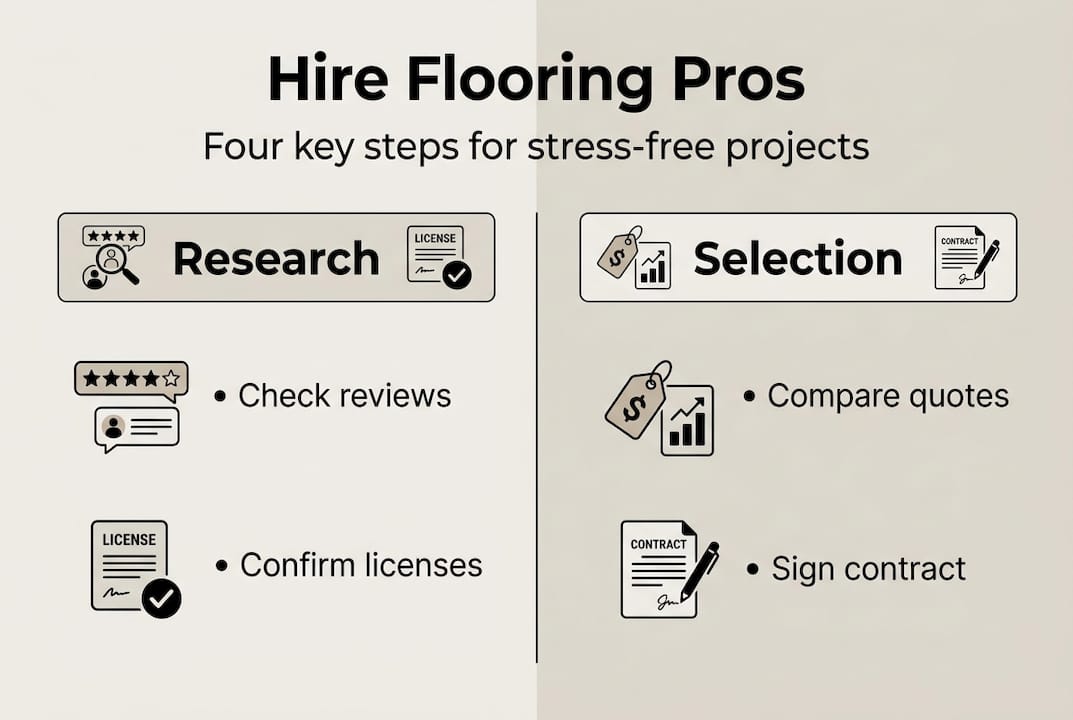
- Check licensing and insurance. Licensing and insurance are non-negotiables for flooring contractors. Florida requires contractors to hold valid state or county licenses.
- Review past projects. Ask for a portfolio or look for project photos on their website and social media.
- Read customer testimonials. Look for patterns in reviews, not just star ratings. Repeated complaints about communication or cleanup are red flags.
Aim to shortlist three to five contractors who meet your basic criteria. Going too narrow limits your ability to compare. Going too wide wastes your time.
| Contractor type | Pros | Cons |
|---|---|---|
| Large company | Structured process, resources | Less personal attention |
| Small local contractor | Flexible, personalized | May have limited capacity |
| Specialty flooring firm | Deep material expertise | May not handle full remodels |
The FTC hiring guidelines recommend verifying credentials before signing anything. Florida's Department of Business and Professional Regulation has an online tool where you can confirm a contractor's license status in minutes.
Understanding the professional flooring benefits of hiring certified installers goes beyond just legal protection. Professionals understand manufacturer requirements, which is critical for keeping your warranty valid. They also know how to handle underlayment tips and subfloor prep, two areas where DIY or unqualified work often causes long-term problems.
Pro Tip: When checking online reviews, pay attention to how the contractor responds to negative feedback. A professional, solution-focused response tells you a lot about how they handle real problems on the job.
Interviewing and evaluating flooring contractors
With your shortlist ready, you need to separate the true professionals from the rest. An interview is not just about getting a price. It is your chance to assess communication style, professionalism, and whether this person is someone you can trust in your home.
Here are the most important things to evaluate:
- Proof of past work: Ask for references from recent residential projects. Call them.
- Timeline clarity: How long will the project take? What could cause delays?
- Crew details: Will the contractor do the work personally, or subcontract it? If subcontracted, who vets those workers?
- Warranty terms: What does the installation warranty cover, and for how long?
- Change order process: How are changes handled and priced once work begins?
"The best contractors are the ones who ask you questions. If they are not asking about your household, your schedule, or your priorities, they are not building a plan for your project. They are recycling a pitch."
Watch for red flags: vague answers about timelines, pressure to sign quickly, requests for large upfront payments, or reluctance to provide references. These are not minor concerns. They are patterns that predict problems.
Contractors should provide clear proposals and itemized estimates. If a quote is a single number with no breakdown, ask for line items. You need to know what you are paying for: materials, labor, subfloor prep, removal of old flooring, and cleanup.

Review a detailed breakdown of installation steps so you understand what proper installation actually involves. When a contractor explains their process, you will know if they are cutting corners. Proper installation steps should be clearly explained by any contractor you consider seriously.
For a full list of smart questions for flooring contractors, review industry resources before your interviews. Going in prepared makes the whole process faster and more productive.
Pro Tip: Ask each contractor what they do when they discover an unexpected subfloor problem mid-project. Their answer reveals how they handle surprises, which is one of the most important things to know before you hire anyone.
Signing the contract and managing the project
After choosing the best candidate, you need to protect your interests during installation. A verbal agreement is not enough. A written contract is your primary protection if anything goes wrong.
Here is what every flooring contract should include:
- Scope of work: Every room, material, and task should be listed explicitly.
- Project schedule: Start date, estimated completion, and key milestones.
- Payment terms: Total cost, deposit amount, progress payments, and final payment trigger.
- Materials list: Brand, model, color, and quantity of every material being installed.
- Warranty details: Both the material warranty and the installation warranty.
- Change order policy: How changes are requested, approved, and priced.
A written contract should fully detail the scope, costs, timeline, and warranty. Do not skip this step even for smaller jobs. A bathroom floor replacement still involves real money and real risk.
"Disputes almost always come down to something that was assumed but never written down. The contract is not about distrust. It is about clarity."
Review contract essentials from industry sources before signing. Once work begins, keep a simple log of every conversation, change request, and site visit. Photos are also useful. If something looks wrong during installation, address it immediately. Waiting until the project is complete makes corrections far more difficult and expensive.
| Payment stage | Typical percentage | Trigger |
|---|---|---|
| Deposit | 10 to 30% | Contract signing |
| Progress payment | 30 to 40% | Work milestone reached |
| Final payment | 30 to 40% | Project completion, inspection |
Schedule brief check-ins at key milestones, especially after subfloor prep and after the first section of flooring is laid. Catching issues early is always cheaper than fixing them after the fact. Reviewing avoiding remodeling pitfalls before your project starts gives you a strong foundation for managing the entire process.
What most guides miss about hiring flooring contractors
Most hiring guides stop at licensing and price comparison. That is useful, but it misses the deeper truth about what makes a flooring project actually go well.
The best projects we have seen share one thing: the homeowner and contractor had a real working relationship built on clear expectations from day one. Price matters, and materials matter, but communication is what separates a smooth project from a stressful one.
Many homeowners treat the hiring process as purely transactional. They get quotes, pick the lowest number, and hope for the best. But a contractor who communicates well, flags problems early, and stands behind their work is worth more than a cheaper bid that comes with silence and excuses.
Post-project support is also underrated. A contractor who responds when you call six months later about a warranty issue is far more valuable than one who disappears after final payment. Ask about this directly during your interview. Their answer tells you everything.
Staying informed about flooring trends in 2026 also helps you have smarter conversations with contractors and make choices you will be happy with for years, not just months.
Ready for a flawless flooring project?
You now have a clear, step-by-step framework for hiring a flooring contractor with confidence. The next step is finding a team that actually lives up to these standards.

Floor2You connects South Florida homeowners and property managers with vetted, experienced flooring professionals who deliver quality work on time. Whether you are renovating a single room or upgrading an entire property, our team handles every detail from material selection to final inspection. Explore trusted flooring solutions or request a quote today. We make the process transparent, efficient, and built around your goals. Your next renovation does not have to be stressful. With the right team, it can actually be enjoyable.
Frequently asked questions
What are the most important qualifications to look for in a flooring contractor?
Licensing and insurance are non-negotiables for any contractor you hire. Beyond that, look for a solid portfolio of residential work in South Florida and verifiable references from recent clients.
How many quotes should I get before choosing a contractor?
Collect at least three detailed quotes so you can compare scope, materials, and pricing side by side. Homeowners should shortlist 3 to 5 contractors before making a final decision.
Is a written contract really necessary for smaller projects?
Yes, always. A written contract should fully detail the scope, costs, timeline, and warranty even for small jobs. It protects both you and the contractor if any disagreement comes up later.
How do I check if a contractor is licensed in Florida?
Verify licensure directly through the Florida Department of Business and Professional Regulation's online database, which is free and updated in real time.