
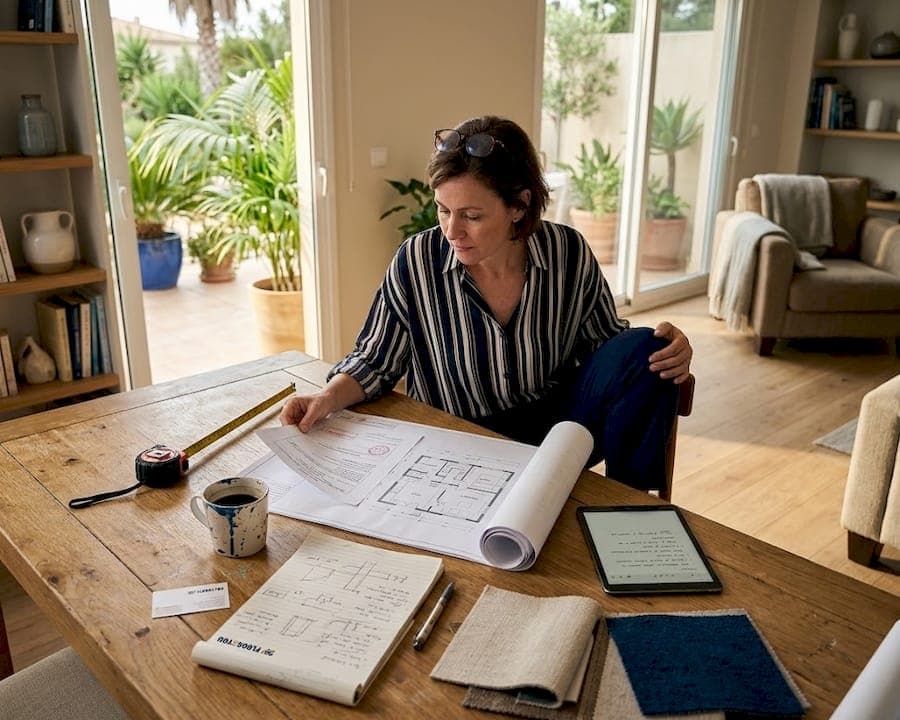
TL;DR:
- Homeowners often confuse remodeling with renovation, risking permits, budget overruns, and lower ROI. Renovations involve cosmetic updates without structural changes, while remodels alter layouts requiring permits and licensed professionals. In South Florida, strict building codes and high humidity demand careful planning, quality materials, and early permit applications to ensure a successful project.
Most homeowners use "remodeling" and "renovation" interchangeably, and that single mix-up can trigger the wrong permits, blow your budget, or leave money on the table when it's time to sell. Renovations are surface-level refreshes like repainting cabinets or swapping light fixtures, while remodels involve structural changes, relocated plumbing, and pulled permits. In South Florida, where hurricane codes, flood zone regulations, and year-round humidity change the rules of the game, knowing exactly what you're signing up for before the first hammer swings can mean the difference between a project that pays off and one that drains your savings.
Table of Contents
- Remodeling vs. renovation: What's the difference?
- South Florida-specific remodeling rules and timelines
- How much does remodeling cost in 2026?
- Maximizing ROI: Where's the smart money in remodeling?
- Expert tips: Avoiding costly pitfalls in your remodel
- What most guides miss: Deep planning and flexibility deliver the best results
- Ready to remodel? Get guidance and the right materials
- Frequently asked questions
Key Takeaways
| Point | Details |
|---|---|
| Remodeling vs. renovation | Remodeling involves major changes, while renovation is for cosmetic updates. |
| South Florida requirements | Projects often need permits, code compliance, and moisture-resistant materials. |
| 2026 cost benchmarks | Kitchen and bathroom remodel costs range widely, with cabinetry being a major expense. |
| Maximizing ROI | Minor remodels tend to yield the highest returns on investment. |
| Expert planning | Preparation, flexibility, and contingency budgeting are crucial for a successful remodel. |
Remodeling vs. renovation: What's the difference?
The distinction is more than semantic. It affects your budget, your contractor selection, your permits, and ultimately your return on investment.
A renovation refreshes what already exists. You're painting walls, refinishing cabinets, replacing faucets, or installing new light fixtures. The underlying structure stays the same. You're not moving walls, rerouting pipes, or touching the electrical panel. Most renovations don't require permits, and many homeowners with basic DIY skills can tackle portions of the work themselves.
A remodel changes how a space functions or is laid out. Knocking out a wall to open a kitchen to a dining room, moving a toilet to a new location, adding a bathroom where none existed, upgrading a 100-amp panel to 200-amp service — these are all remodeling jobs. As major changes like wall removal confirm, remodels require licensed professionals and permits almost every time.
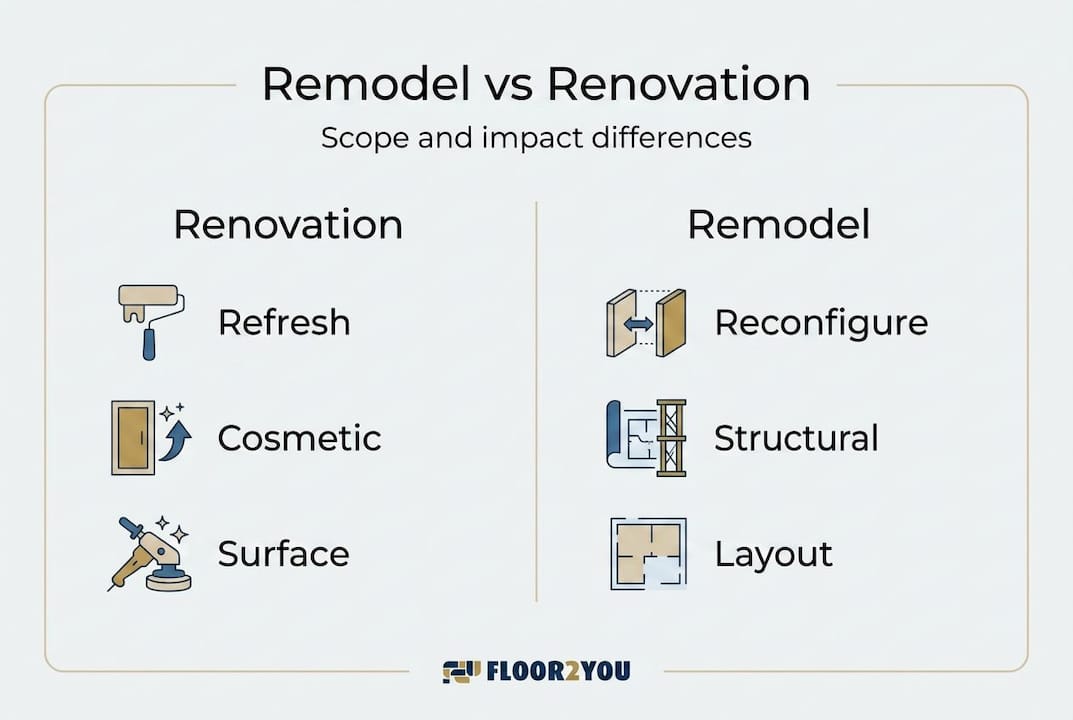
Here's a quick comparison to make this concrete:
| Feature | Renovation | Remodel |
|---|---|---|
| Scope | Surface cosmetic changes | Structural/layout changes |
| Permits required | Usually no | Almost always yes |
| Licensed contractors needed | Sometimes | Always |
| Budget range | $2,000 to $20,000 | $10,000 to $90,000+ |
| Timeline | Days to 2 weeks | Weeks to months |
| Resale impact | Moderate | High (if done right) |
Why does this matter for planning a home remodel in South Florida specifically? Because pulling the wrong permit category or skipping permits entirely can result in stop-work orders, fines, or having to tear out completed work for inspection. Understanding remodeling costs and pitfalls upfront keeps your project on track.
Key differences that affect scope decisions:
- Layout changes require permits and structural assessment
- Plumbing relocations must comply with local plumbing codes
- Electrical upgrades need licensed electricians and panel inspections
- Cosmetic updates rarely need permits but still benefit from professional installation for quality finishes
South Florida-specific remodeling rules and timelines
Here's the reality: remodeling in South Florida is not the same as remodeling in Ohio or Illinois. The climate, the building codes, and the permit process create a completely different environment for anyone managing a renovation project here.
The permits for electrical, plumbing, and structural work are required in virtually every municipality in South Florida, from Miami-Dade to Broward and Palm Beach counties. Building codes here reflect two major risks: hurricane-force winds and coastal flooding. That means any structural opening, roof penetration, or new window installation must meet Miami-Dade Notice of Acceptance (NOA) standards, which are among the most rigorous in the country.
Moisture-resistant materials aren't optional in South Florida. They're code. The region's humidity averages above 70% year-round, which means standard drywall, untreated wood, or porous grout will fail within a few years. Your flooring installation checklist should prioritize materials rated for high-humidity environments, and the same logic applies to cabinetry, subfloor treatments, and wall finishes. Choosing the best flooring for humidity is one of the single most important decisions in a South Florida remodel.
Typical timelines for South Florida remodeling projects:
- Permit application and approval: 2 to 6 weeks depending on the municipality and scope
- Material lead times: 2 to 8 weeks for specialty items like custom cabinetry or imported tile
- Kitchen remodel construction: 4 to 6 weeks of active work on site
- Bathroom remodel construction: 1 to 3 weeks of active work on site
- Final inspection and closeout: 1 to 2 weeks after project completion
Those numbers add up to 6 to 10 weeks for kitchens and 2 to 4 weeks for bathrooms from start to final sign-off. If you're working around tenants, Airbnb bookings, or holiday schedules, this timeline needs to be built into your project plan from day one.
Pro Tip: Submit your permit application before you finalize contractor selections. Permit timelines in South Florida are unpredictable, and starting that clock early means your contractor can mobilize the moment the permit is approved rather than waiting weeks after you've signed a contract.
How much does remodeling cost in 2026?
Budget is where most homeowners get blindsided. The numbers you see online often reflect national averages that don't account for South Florida labor rates, the premium on hurricane-compliant materials, or the added cost of working in a market where skilled tradespeople are in high demand.
Here's a realistic breakdown of 2026 cost benchmarks for kitchen and bathroom remodels:
- Minor kitchen remodel: $25,000 to $40,000 (new cabinet fronts, countertops, appliances, updated flooring, light fixtures)
- Major kitchen remodel: $60,000 to $90,000 or more (full gut renovation, custom cabinetry, structural changes, high-end appliances)
- Mid-range bathroom remodel: $10,000 to $25,000 (new tile, vanity, fixtures, toilet, updated lighting)
- Luxury bathroom remodel: $30,000 to $60,000 (custom tile work, steam shower, heated floors, spa features)
- Cabinetry alone: Accounts for 30 to 40% of your budget in a kitchen remodel
Those cabinetry numbers are critical. Many homeowners dramatically underestimate how quickly cabinet costs climb. Semi-custom cabinets for an average kitchen start around $8,000 installed. Full custom cabinetry can reach $30,000 or more before you've touched a countertop.
Nationally, 54% of homeowners renovated their homes recently, with a median spend around $20,000. But that median masks a wide range. Homeowners tackling full kitchen or bathroom remodeling costs in South Florida routinely spend 20 to 40% above national medians due to local labor and material costs.
Hidden costs that catch homeowners off guard:
- Permit fees: Range from $500 to $3,000+ depending on project scope and municipality
- Asbestos or mold remediation: Older homes (pre-1980) often hide surprises that add $2,000 to $10,000 to the total
- Material upgrades for code compliance: Hurricane-rated windows, moisture-resistant drywall, and treated lumber add 10 to 15% to material costs
- Temporary housing or lost Airbnb income: Often overlooked but very real cost for property managers and hosts
Maximizing ROI: Where's the smart money in remodeling?
Knowing what to spend is only half the equation. Knowing where to spend it is what separates homeowners who see strong returns from those who overspend and recoup little.
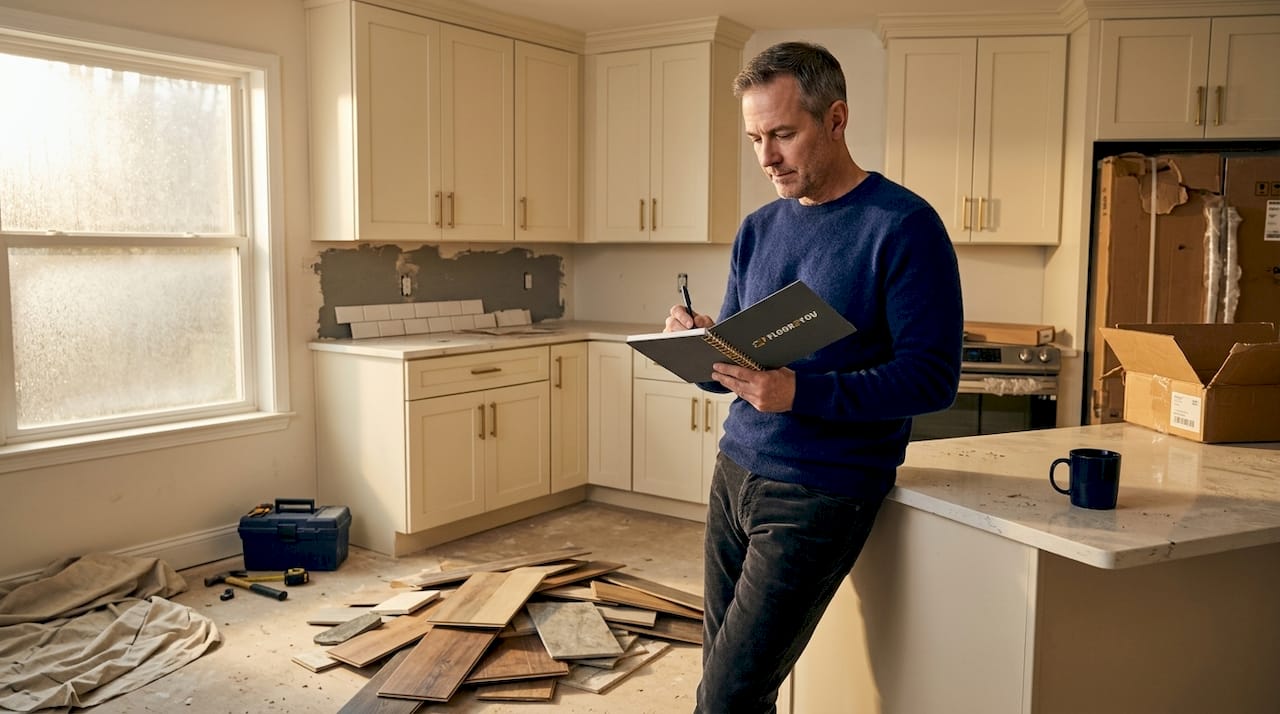
The ROI benchmarks for 2026 are clear:
| Project | Estimated cost | Expected ROI |
|---|---|---|
| Minor kitchen remodel | $25,000 to $40,000 | 72 to 96% |
| Major kitchen remodel | $60,000 to $90,000+ | 55 to 67% |
| Mid-range bathroom remodel | $10,000 to $25,000 | 55 to 72% |
| Luxury bathroom remodel | $30,000 to $60,000 | 45 to 60% |
Notice the pattern. Smaller, targeted remodels consistently outperform luxury overhauls in percentage terms. A $35,000 minor kitchen remodel can return $25,000 to $34,000 of value at resale. A $90,000 full gut renovation might only return $50,000 to $60,000.
The highest-ROI remodels are the ones that bring a space up to market standards without dramatically exceeding them. Buyers pay for quality finishes and functional layouts, not for one-of-a-kind custom features they didn't request.
Pro Tip: Never let your kitchen remodel exceed 15% of your home's total value. If your home is worth $400,000, a kitchen budget above $60,000 is likely to overcapitalize. You'll spend more than buyers will pay for it at resale.
For Airbnb hosts and property managers, the ROI calculus also includes rental income. A modernized kitchen and updated bathrooms can increase nightly rates by 15 to 30% in competitive South Florida markets, making even mid-range remodels pay back faster than straight resale math suggests. Pairing your remodel with flooring choices that transform home design is one of the most effective ways to elevate perceived value without overspending.
Expert tips: Avoiding costly pitfalls in your remodel
Even a well-planned remodel can go sideways. The difference between a smooth project and a money pit usually comes down to a handful of avoidable mistakes.
The biggest hidden costs come from changes that seem straightforward but aren't. Moving a load-bearing wall requires a structural engineer, new steel or LVL beams, and significant labor. Plumbing and electrical relocations are consistently the line items that blow budgets. What looks like a two-hour job to the untrained eye often reveals old cast iron pipes that must be replaced, or aluminum wiring that needs a full upgrade to copper.
Older South Florida homes carry additional risks. Properties built before 1980 may contain asbestos in floor tiles, pipe insulation, or textured ceilings. Homes from the same era sometimes have PCBs in electrical components. Disturbing these materials without proper containment and HEPA filtration isn't just expensive — it's a health and legal liability.
Common pitfalls to avoid during your remodel:
- Over-customizing layouts: Custom angles, unusual cabinet configurations, and non-standard dimensions are hard to modify later and can hurt resale
- Choosing materials for looks alone: Beautiful marble countertops require sealing and maintenance that's impractical for rentals or high-traffic family kitchens
- Skipping the contingency budget: Always reserve 15 to 20% of your total budget for surprises
- Ignoring material compatibility: Mixing flooring materials without expansion gaps in a humidity-heavy climate leads to buckling and warping
- Underestimating lead times: Professional flooring for remodels and specialty tile can take 4 to 8 weeks to arrive, which means ordering before construction begins
Pro Tip: Before finalizing any tile, flooring, or paint, bring samples home and live with them for 48 hours in your actual space. South Florida's bright natural light and indoor LED lighting create very different appearances than showroom lighting. What looks warm and neutral in a showroom can appear stark white or yellowish in your actual home.
For properties near the coast or with ground-floor installations, waterproof flooring options should be non-negotiable, not an upgrade. Luxury vinyl plank rated for wet areas and large-format porcelain tile are the two most practical choices for South Florida remodels where moisture intrusion is a real risk.
What most guides miss: Deep planning and flexibility deliver the best results
Most remodeling articles focus on design trends, material options, and color palettes. Those things matter, but they're not what separates a successful project from an expensive disappointment. In our experience working on South Florida homes, the biggest variable is almost always the quality of the planning process itself.
The way cost estimates are classified matters significantly. Industry methodology distinguishes five levels of estimates, from Class 5 (rough ballpark, 50% margin of error) to Class 1 (definitive, under 5% margin of error). Most homeowners make final decisions based on Class 5 estimates from a single contractor. That's a formula for budget overruns. Getting three estimates and asking each contractor to specify what's included and what isn't turns a vague number into a real plan.
Contingency budgets are another area where homeowners consistently underestimate. A 5% contingency is appropriate for a simple cosmetic renovation. A full kitchen or bathroom remodel in an older home should carry 15 to 25% contingency. In South Florida, where permit timelines are unpredictable and material shipping delays are common, that buffer is your insurance policy.
There's also an underappreciated value in energy-efficient, code-certified improvements. Certifications like HERS (Home Energy Rating System) or Passive House standards add measurable value to a home's resale appeal and can qualify you for insurance discounts in Florida's competitive homeowner insurance market. These aren't just feel-good upgrades. They're documented performance improvements that buyers, appraisers, and insurers recognize.
Our honest take after years of working on South Florida homes: the remodels that go smoothly aren't the ones with the most ambitious designs. They're the ones where the homeowner invested time in detailed South Florida remodeling steps before the first subcontractor was called. Process management consistently saves more money than choosing one tile over another. Get the process right first.
Ready to remodel? Get guidance and the right materials
South Florida remodeling rewards homeowners who combine local knowledge with quality materials and proven craftsmanship. The education matters, but the right team matters even more.

At Floor2You, we specialize in exactly this kind of work: kitchen and bathroom remodels built for South Florida's climate, codes, and lifestyle. From selecting humidity-resistant flooring and moisture-proof finishes to managing permits and timelines, our team handles the details that trip up even experienced homeowners. Whether you're updating a primary residence, refreshing a rental property, or maximizing your Airbnb's nightly rate with a modern makeover, we offer the local expertise and material selection to get it done right. Reach out for a consultation, and let's build a plan that fits your budget, your timeline, and your goals.
Frequently asked questions
Do I need a permit for home remodeling in South Florida?
Yes, permits are required for most electrical, plumbing, and structural remodels in South Florida. Skipping permits can result in fines, stop-work orders, or being required to undo completed work.
How long does a typical kitchen or bathroom remodel take in South Florida?
Kitchens typically take 6 to 10 weeks from permit approval to final inspection, while small bathrooms take 2 to 4 weeks, depending on scope and material lead times.
What is the average cost of a kitchen or bathroom remodel in 2026?
Minor kitchen remodels run $25,000 to $40,000, major kitchens $60,000 to $90,000 or more, mid-range baths $10,000 to $25,000, and luxury baths $30,000 to $60,000 in 2026.
How much value does remodeling add to my home?
Minor kitchen remodels recoup 72 to 96% of cost at resale, major kitchens recoup 55 to 67%, and mid-range bath remodels typically recoup 55 to 72% of costs.
What should I watch out for during a remodel?
Budget for hidden costs like load-bearing walls and plumbing relocations, test all finishes in your home's actual lighting, and avoid over-customizing layouts that limit future flexibility.