
TL;DR:
- Proper moisture testing and acclimation are essential to prevent hardwood floor failure in South Florida.
- Hardwood flooring offers timeless beauty, increased resale value, and a lifespan of over 50 years with proper care.
- In humid climates like Florida, professional installation following NWFA and ASTM standards is crucial for durability.
Choosing the right flooring in South Florida is one of the most consequential decisions you will make during a home renovation. The humidity, the heat, the tropical rain cycles, and the concrete slab construction common throughout Miami-Dade, Broward, and Palm Beach counties all conspire against homeowners who pick the wrong material. Hardwood flooring, when properly selected and installed, cuts through that challenge and delivers something the alternatives struggle to match: a floor that looks beautiful on day one and still looks beautiful decades later, while quietly adding measurable resale value to your property every single year.
Table of Contents
- What makes hardwood flooring appealing in South Florida?
- Top 6 advantages of hardwood flooring
- Hardwood vs. alternative flooring options
- Critical installation tips: maximizing benefits in Florida homes
- Why going beyond the basics makes all the difference
- Ready to transform your South Florida home with hardwood?
- Frequently asked questions
Key Takeaways
| Point | Details |
|---|---|
| Enhances home value | Hardwood floors are highly sought after and boost resale value in South Florida homes. |
| Lasts decades with care | When installed and maintained properly, hardwood flooring remains beautiful for over 50 years. |
| Installation matters most | Following humidity and slab standards is essential to prevent costly problems and maximize hardwood’s advantages. |
| Refinishing extends life | Unlike most floors, hardwood can be restored multiple times for a fresh look. |
What makes hardwood flooring appealing in South Florida?
Now that you know why flooring selection matters so much here, let's explore what makes hardwood so consistently popular with South Florida homeowners, even given the climate demands.
The most immediate draw is aesthetics. Hardwood suits virtually every interior style, from the clean lines of modern coastal design to the warmth of traditional or Mediterranean-influenced décor that is so common throughout Coral Gables and Weston. Unlike tile, which can feel clinical, or vinyl, which still carries some stigma in luxury markets, hardwood signals quality the moment a buyer or guest walks through the door.
Beyond looks, hardwood delivers on durability in a way that surprises many homeowners. The key phrase here is "if installed to industry standards," because a poorly installed hardwood floor in a humid environment will buckle and cup within months. Done right, though, the same floor can outlast the mortgage.
Here is what local homeowners consistently cite as the top draws:
- Timeless visual appeal that works across design styles and does not go out of fashion
- Refinishing capability that lets you sand and re-coat the surface multiple times, essentially resetting the clock on wear
- Resale value uplift that resonates strongly in competitive South Florida real estate markets
- Hypoallergenic surface that does not trap dust, pet dander, or mold spores the way carpet does
- Long lifespan that, with proper care, stretches 50 years or more
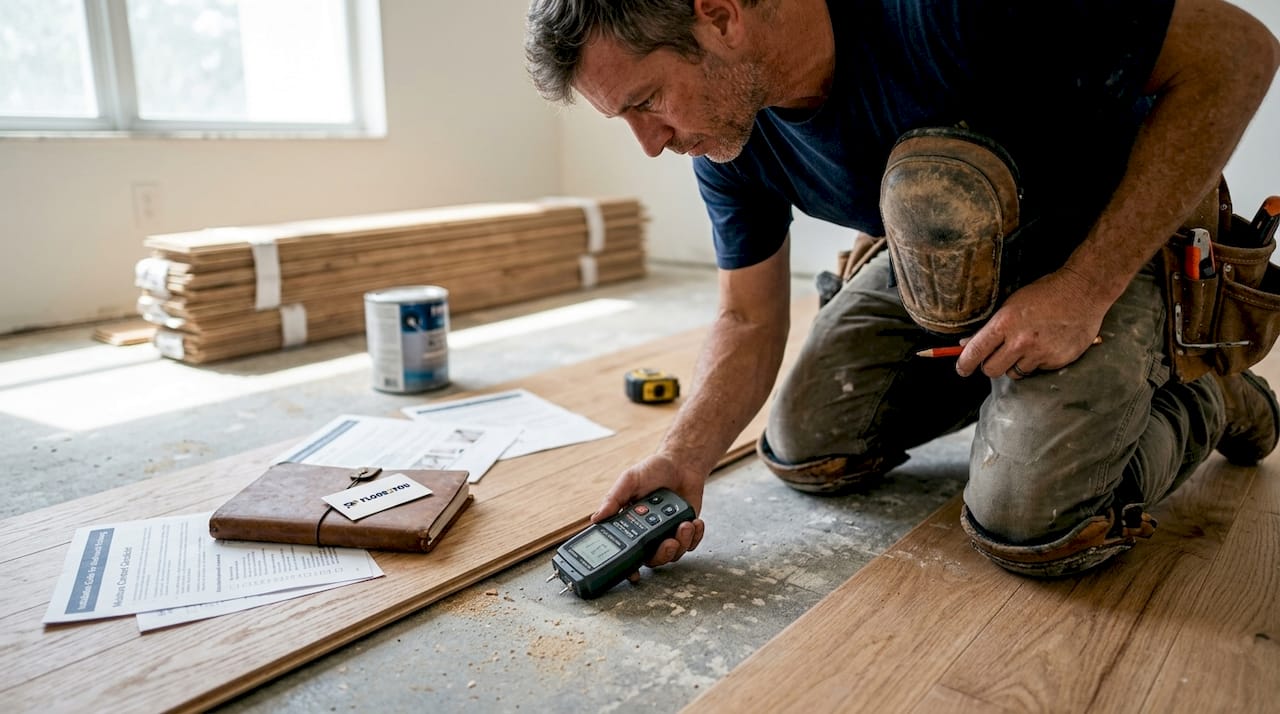
"The single biggest mistake we see is homeowners skipping moisture testing before installation. In South Florida, this step is not optional." Acclimation and moisture testing are non-negotiable for South Florida, a position firmly backed by NWFA and ASTM standards that govern professional flooring installation.
Pro Tip: Before your contractor finalizes the flooring plan, insist on documented moisture readings from the concrete slab. Any installer who skips this step is setting you up for an expensive problem down the road. You can also read about the best flooring types for South Florida homes to compare options at a higher level.
Top 6 advantages of hardwood flooring
With hardwood's general appeal established, let's get specific about the advantages that matter most to South Florida homeowners making a real investment decision.
-
Timeless beauty that elevates any space. Hardwood brings a warmth and richness that no synthetic material has fully replicated. Grain patterns, natural color variation, and the way light plays across a finished plank create a visual depth that photographs beautifully and impresses in person.
-
Increases home value in a competitive market. South Florida real estate is among the most competitive in the country. Hardwood floors are a known value driver, and buyers in this market expect them in higher-end listings. A well-maintained hardwood floor can be a meaningful differentiator when your home goes on the market.
-
Lasts for decades with proper care. This is where hardwood truly separates itself from most alternatives. A properly installed solid hardwood floor can realistically last 50 years or more. That lifespan means the cost per year of ownership is often lower than cheaper materials that need full replacement every 10 to 15 years.
-
Easy to clean and hypoallergenic. South Florida's allergy season is essentially year-round, and carpet is a terrible choice for anyone sensitive to dust or pollen. Hardwood's solid surface does not harbor allergens and cleans up with a dry mop or a slightly damp cloth, making it a practical choice for families.
-
Refinishing extends the life of your investment. Unlike tile or vinyl, hardwood can be sanded down and refinished multiple times. Most solid hardwood floors can handle three to five complete refinishes over their lifetime. This means a floor installed today can be refreshed to look brand new in 15 years without a full replacement.
-
Environmentally responsible options are available. If sustainability matters to you, responsibly sourced hardwood from FSC-certified forests is a genuine option. Hardwood also has a lower embodied energy footprint than some synthetic flooring materials when you factor in its extended lifespan.
Studies show that proper installation following ASTM and NWFA standards prevents approximately 90% of moisture-related flooring failures, which is the dominant failure mode in Florida's climate.
The value of professional flooring installation cannot be overstated here. The difference between a floor that lasts 50 years and one that fails in two years is almost always traced back to the quality of the installation process, not the quality of the wood itself.
Hardwood vs. alternative flooring options
Knowing the main benefits, it is wise to see how hardwood compares to the alternatives widely used throughout South Florida homes.
| Feature | Hardwood | Luxury vinyl plank | Porcelain tile |
|---|---|---|---|
| Appearance | Warm, natural, premium | Realistic but synthetic | Clean, polished, cool |
| Durability | 50+ years with care | 15 to 25 years | 20 to 30+ years |
| Moisture resistance | Moderate (installation dependent) | Excellent | Excellent |
| Refinishing | Yes, multiple times | No | No |
| Resale value impact | High | Moderate | Moderate |
| Comfort underfoot | Warm, firm | Softer, warmer | Hard, cool |
| Climate suitability (FL) | High with proper install | Very high | Very high |
| Maintenance | Low | Very low | Low to moderate (grout) |
A few things stand out from this comparison. Luxury vinyl plank (LVP) has become enormously popular in South Florida precisely because it handles moisture with almost no concern. If you are flooring a room that regularly sees wet feet, spills, or humidity spikes, the advantages of vinyl flooring are real and worth understanding. Tile is the perennial workhorse of Florida homes, especially in kitchens and bathrooms, and it performs extremely well in the climate.
Where hardwood wins convincingly is in the combination of refinishing potential, resale value, and long-term ownership economics. No other material lets you reset the clock on its appearance the way hardwood does.
Pro Tip: Always confirm the moisture emission rate of your concrete slab before committing to hardwood. South Florida slabs frequently retain moisture well above safe thresholds, especially in homes near water or in low-lying areas. This single check can save you thousands of dollars in repairs.
Here are the critical questions to ask when weighing your options:
- How long do I plan to stay in this home? Longer timelines favor hardwood's economics.
- What is the primary use of the space? High-moisture rooms push toward tile or vinyl.
- What is my resale strategy? If premium buyers are the target, hardwood is a clear choice.
- What does the rest of my renovation look like? Hardwood fits certain styles better than others.
You can also explore modern flooring trends to see how designers are combining materials across different rooms for a layered, sophisticated result.
Critical installation tips: maximizing benefits in Florida homes
To secure the full benefits and avoid costly mistakes, follow these essential steps when installing hardwood in a South Florida home. This is where most DIY projects and even some professional installations fall short.
Step 1: Test the concrete slab for moisture. Florida's concrete slabs are notorious for high moisture vapor emission. You need two readings: relative humidity (RH) and moisture vapor emission rate (MVER). The accepted standards require RH at or below 75%, MVER at or below 3 lbs per 1,000 square feet per 24 hours, acclimation from 48 to 168 hours, a proper vapor retarder installed, and subfloor flatness within 3/16 inch per 10 feet.
Step 2: Acclimate the wood before installation. Hardwood planks need time to adjust to the temperature and humidity of your home before they are installed. In South Florida, this typically means leaving the wood in the space for a minimum of 48 hours, and often closer to a week. Skipping this step is the fastest path to a warped, buckled floor.
Step 3: Install a vapor retarder. This layer sits between the slab and the wood, blocking moisture from migrating upward. Choosing the right vapor retarder for your specific slab conditions matters. Not all products perform equally, and your installer should be able to specify exactly what they are using and why.
Step 4: Ensure subfloor flatness. High spots and low spots in the slab create stress points in the wood over time. Grinding high spots and filling low spots before installation is not optional; it is a baseline requirement for a lasting result.
Step 5: Choose the right installation method. For concrete slabs, the two primary options are glue-down and floating installation. Each has trade-offs in South Florida conditions, and the right choice depends on your specific slab readings and the wood species you have selected.
| Installation metric | Required standard |
|---|---|
| Relative humidity (RH) | 75% or below |
| MVER | 3 lbs / 1,000 sqft / 24 hrs or below |
| Acclimation period | 48 to 168 hours |
| Subfloor flatness | Within 3/16 in. per 10 ft |
| Vapor retarder | Required for concrete slabs |
A detailed hardwood installation guide can walk you through each of these steps in greater depth. And if you are still deciding whether to manage the project yourself or bring in professionals, the guide on hiring flooring contractors lays out exactly what to look for and what questions to ask.
Why going beyond the basics makes all the difference
Here is what most guides on hardwood flooring in Florida will not tell you, and what years of real-world installs in South Florida have taught us at Floor2You.
Most of the advice you will find online is written for a generic American climate. It mentions moisture control as a best practice, the same way a recipe might mention "season to taste." In South Florida, moisture control is not a best practice. It is the whole game. A beautiful plank of white oak or Brazilian cherry installed without proper moisture testing and vapor management in a Miami home will fail. Full stop. It will cup, buckle, or separate at the seams within months, and the wood itself will not be the problem. The installation process will be the problem.
We have seen homeowners spend significant money on premium wood species and then watch the floor fail because a contractor skipped the acclimation window or used the wrong vapor retarder product. The floor was gorgeous for about six months. Then South Florida did what South Florida does, and the investment evaporated.
The NWFA and ASTM standards exist precisely because these problems are predictable and preventable. Following them eliminates approximately 90% of the failure risk. The standards are not bureaucratic red tape. They are field-tested protocols built around real failure data.
The biggest value in any hardwood flooring project is not the wood species you choose or the stain color you pick. It is the quality of the pre-installation process. Understanding the right flooring underlayment choices for your specific slab conditions is a perfect example of the kind of detail that separates a floor that lasts from one that does not. Smart homeowners ask about underlayment before they ask about finish colors.
Invest in the process first. The aesthetic decisions are the easy part.
Ready to transform your South Florida home with hardwood?
Having weighed the evidence and expert insight, here is how to take the next step with confidence.
At Floor2You, we have been installing hardwood floors across South Florida for years, and we understand exactly what it takes to get a lasting result in this climate. We do not cut corners on moisture testing, acclimation, or vapor barrier selection because we have seen firsthand what happens when those steps get skipped.
Whether you are renovating a primary residence in Boca Raton, upgrading a rental property in Fort Lauderdale, or refreshing a condo in Miami, our team brings the local knowledge and technical rigor your project deserves. We walk you through material selection, handle the full installation process, and back our work with the kind of craftsmanship that holds up for decades. Reach out to Floor2You today for a consultation and a custom quote tailored to your home's specific conditions.
Frequently asked questions
Is hardwood a good investment for humid Florida homes?
With proper installation and moisture control, hardwood is a top-value choice that lasts for decades, even in Florida's humid climate, because NWFA and ASTM standards specifically address the moisture challenges common to concrete slab construction.
How long does hardwood flooring really last?
High-quality hardwood floors can last 50 years or more with proper care, and refinishing every 10 to 20 years essentially resets the surface appearance without requiring a full replacement.
What is the number one cause of hardwood failure in Florida?
Moisture problems from improper acclimation or missing vapor barriers cause most hardwood floor failures in Florida homes, and following NWFA and ASTM protocols eliminates roughly 90% of that failure risk.
Can hardwood be installed over concrete slabs?
Yes, but the slab must pass both relative humidity and moisture vapor emission tests, and a proper vapor retarder must be installed between the concrete and the wood before any planks go down.