
TL;DR:
- Proper underlayment with vapor barriers is crucial for preventing moisture and mold in South Florida floors.
- Correct installation, including moisture testing and seam sealing, ensures long-lasting, compliant flooring performance.
- Regional climate considerations demand specialized underlayment choices for durability and warranty preservation.
Most South Florida homeowners spend hours choosing the perfect floor but give almost no thought to what goes beneath it. That's a costly mistake. Underlayment is the hidden layer that determines whether your new floors stay beautiful for decades or start buckling, squeaking, and growing mold within a few years. In a climate where humidity rarely lets up and concrete slabs are everywhere, skipping or skimping on underlayment is one of the most common reasons flooring projects fail. This guide covers everything you need to know, from what underlayment actually is to which type belongs under your specific floor in a South Florida home.
Table of Contents
- What is flooring underlayment?
- Key functions and benefits of underlayment
- Types of flooring underlayment materials
- How underlayment is installed: Key steps and gotchas
- Common mistakes and expert solutions for South Florida homes
- A flooring expert's take: What most guides miss about underlayment in humid regions
- Get expert-approved floors with the perfect underlayment
- Frequently asked questions
Key Takeaways
| Point | Details |
|---|---|
| Underlayment role | It smooths and cushions your floor while providing crucial moisture and sound protection. |
| Material matters | Choose underlayment type based on your flooring, humidity, and building codes. |
| Proper installation | Testing moisture and following correct layering steps prevents flooring failures in South Florida. |
| Avoid shortcuts | Skipping recommended underlayment or vapor barriers can void warranties and damage your floors. |
What is flooring underlayment?
Flooring underlayment is a thin layer of material installed between the subfloor and the finished flooring surface. Think of it as the quiet workhorse of your flooring system. You never see it, but it affects almost everything you feel and hear when you walk across a room.
To understand where underlayment fits, picture your floor as a three-layer sandwich. The bottom layer is the subfloor, which is typically plywood or a concrete slab. It carries structural load and is attached to the framing of your home. The top layer is your finished flooring, whether that's hardwood, luxury vinyl plank (LVP), laminate, or tile. Underlayment sits in between, bridging the gap and compensating for what neither the subfloor nor the finished floor can do alone.
Here are the most common underlayment materials you'll encounter:
- Foam: Lightweight, affordable, and widely used under laminate and LVP
- Cork: Natural, eco-friendly, and excellent for sound absorption
- Rubber: Dense and durable, great for high-traffic areas and noise control
- Felt: Thick and heavy, often used under hardwood for cushion and stability
- Combination (foam + poly film): Includes a built-in vapor barrier, ideal for Florida slabs
- Plywood: Used as a structural underlayment under tile or hardwood on wood subfloors
Most modern floating floors, including laminate and LVP, require underlayment to perform as designed. Without it, the floor has no buffer against subfloor irregularities, moisture, or sound transmission. Some manufacturers actually void the warranty if the correct underlayment is not installed. In South Florida, where concrete slabs are the standard foundation, the right underlayment is not optional. It's essential.
"Flooring underlayment is a thin layer of material installed between the subfloor and the finished flooring surface, serving as the critical interface that makes modern flooring systems perform correctly."
Key functions and benefits of underlayment
Underlayment does more than just sit there. It performs several specific jobs at once, and in South Florida's climate, each one matters more than you might expect.
Here's a breakdown of the primary functions underlayment provides:
- Smoothing subfloor imperfections: Minor dips and humps in a concrete slab or plywood subfloor transfer directly to your finished floor without underlayment, causing cracking, clicking, and uneven wear
- Cushioning and comfort: Underlayment adds a soft, forgiving layer underfoot, which reduces fatigue when standing for long periods
- Sound dampening: Measured by IIC (Impact Insulation Class) and STC (Sound Transmission Class) ratings, good underlayment significantly reduces footstep noise and airborne sound
- Moisture protection: Vapor barriers within underlayment reduce MVER (Moisture Vapor Emission Rate), which is the rate at which moisture moves up through a slab
- Thermal insulation: Adds a modest R-value that keeps floors from feeling cold, even though South Florida winters are mild
| Benefit | Measurement | Typical requirement |
|---|---|---|
| Sound control | IIC / STC rating | IIC ≥ 50, STC ≥ 50 (multi-family) |
| Moisture protection | MVER | < 3 lbs per 1,000 sq ft per 24 hrs |
| Subfloor flatness | Tolerance | ≤ 3/16" in 10 ft |
| Vapor barrier thickness | Poly film | ≥ 6-mil polyethylene |
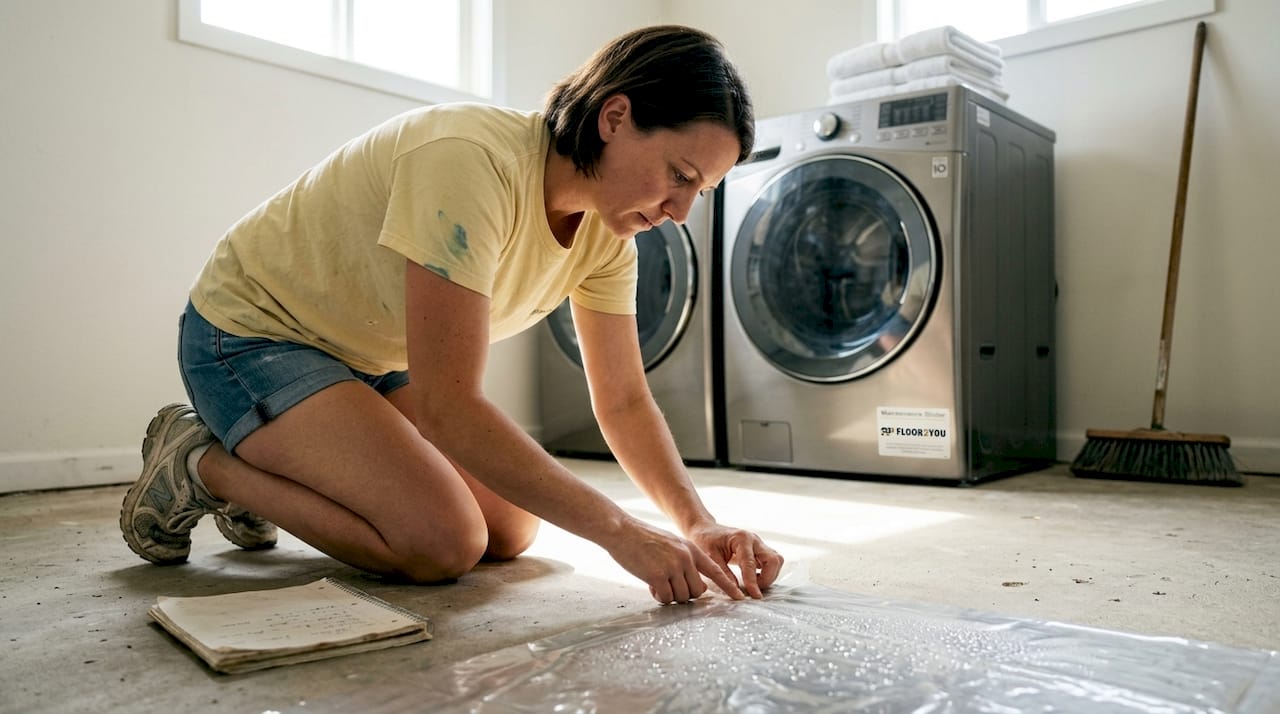
In South Florida, moisture is the biggest threat. Concrete slabs here sit close to the water table and absorb ground moisture constantly. Without a proper vapor barrier in your underlayment, that moisture travels upward into your flooring, creating the perfect conditions for mold, warping, and adhesive failure.
Noise is another real concern, especially in condos and multi-family buildings. Many South Florida HOA rules and building codes require IIC and STC ratings of at least 50 for any new flooring installation. Choosing underlayment that meets these ratings keeps you compliant and keeps your neighbors happy.
Pro Tip: Before installing any underlayment over a concrete slab in South Florida, perform a calcium chloride test or use an electronic moisture meter to measure MVER. If readings exceed 3 lbs per 1,000 sq ft per 24 hours, you need a high-performance vapor barrier, not just a standard foam underlayment.
Types of flooring underlayment materials
Choosing the right underlayment material is not a one-size-fits-all decision. The best choice depends on your flooring type, your subfloor, and the specific demands of your home environment.
For South Florida homeowners, the top recommendation is to select underlayment with an integrated vapor barrier, such as foam combined with a 6-mil poly film, for any floating floor like LVP or laminate installed over a concrete slab. Always test slab moisture before committing to a product.
Here's how the main materials compare:
| Material | Compatible flooring | Moisture resistance | Unique feature |
|---|---|---|---|
| Foam | LVP, laminate | Low (unless combo) | Lightweight, budget-friendly |
| Cork | Hardwood, laminate | Moderate | Best natural sound absorption |
| Rubber | Tile, hardwood | High | Excellent durability and IIC |
| Felt | Hardwood | Moderate | Dense cushion, reduces squeaks |
| Foam + poly combo | LVP, laminate | High | Built-in vapor barrier |
| Plywood | Tile, hardwood | Low | Structural support |
A few important notes for South Florida specifically:
- Foam alone is not enough over slabs. Always choose a combination product with poly film.
- Cork is a great acoustic choice for second-floor installations where noise travels to units below.
- Rubber underlayment is worth the extra cost in high-traffic areas like vacation rentals and Airbnb properties.
- For specialty natural stone floors, such as travertine flooring, a rigid or semi-rigid underlayment like plywood or cement board is typically required to prevent cracking from flex.
Pro Tip: Always check that your chosen underlayment product has been independently tested and carries ratings that satisfy your flooring manufacturer's warranty requirements. A product that claims good performance but lacks certified IIC and STC numbers can cost you your warranty coverage.
How underlayment is installed: Key steps and gotchas
Getting the installation right is just as important as choosing the right material. Even the best underlayment fails if it's put down incorrectly.
Here are the key steps for a proper installation:
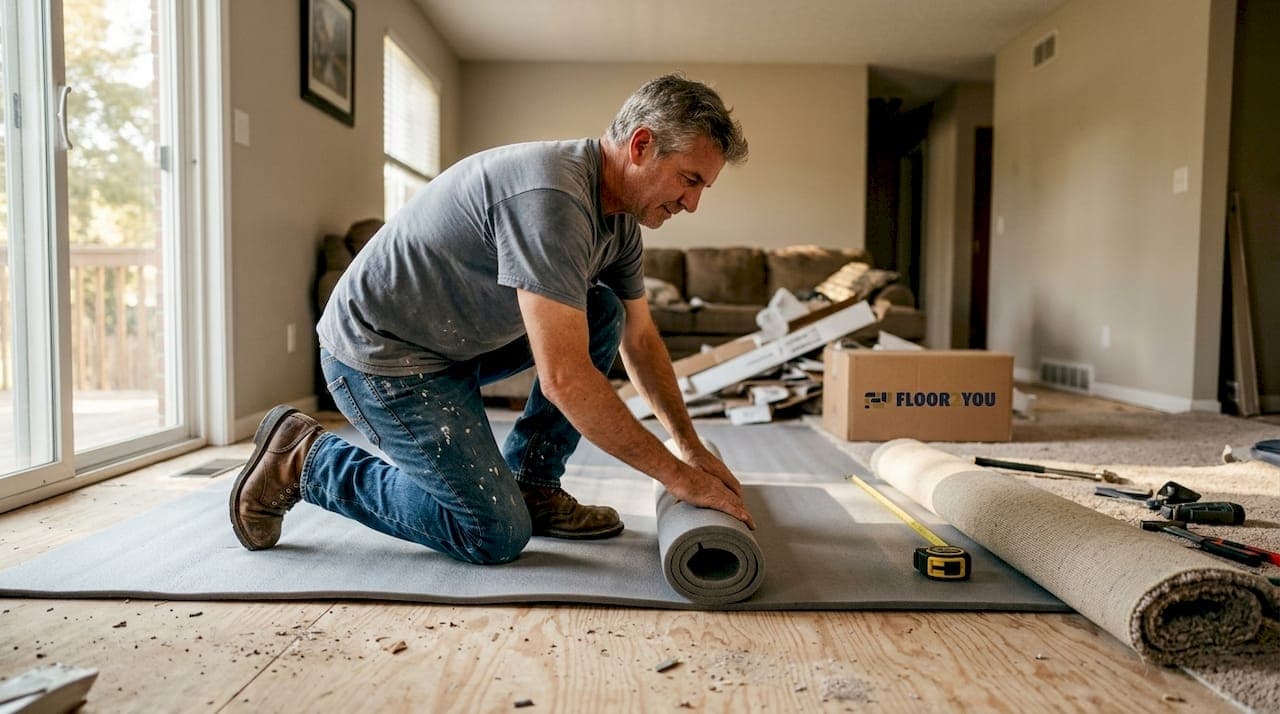
- Prepare the subfloor. Sand down high spots and fill low spots so the surface is flat within ≤ 3/16" in 10 ft. Any deviation beyond this will telegraph through your finished floor.
- Test for moisture. On concrete slabs, use ASTM F1869 calcium chloride testing or ASTM F2170 relative humidity probes. MVER must be below 3 lbs per 1,000 sq ft per 24 hours per NWFA standards before any floating floor goes down.
- Install the vapor barrier first (if separate from underlayment). Use ≥ 6-mil polyethylene film, overlap seams by at least 6 inches, and run it 2 to 3 inches up the wall.
- Roll out underlayment perpendicular to the flooring direction. This staggering pattern prevents seams from aligning with flooring joints, which reduces the risk of movement and noise.
- Tape all seams. Use at least 2-inch tape to seal every seam tightly. Gaps in the underlayment allow moisture to sneak through and reduce acoustic performance.
- Trim edges cleanly along walls and transitions before laying the finished floor on top.
The most overlooked step by far is moisture testing. South Florida's slab moisture levels can vary dramatically between properties, even on the same street. Skipping the test and assuming the slab is dry is how floors get destroyed within a year.
Pro Tip: Let both the underlayment and the finished flooring acclimate in the room for at least 48 to 72 hours before installation. Florida's humidity affects material dimensions, and installing cold materials into a warm, humid space causes expansion issues after the fact.
Common mistakes and expert solutions for South Florida homes
Even experienced DIYers make underlayment mistakes. Here are the most common ones we see in South Florida homes, along with the real consequences and how to avoid them.
- Skipping the vapor barrier over concrete: This is the single biggest mistake. Ground moisture migrates up through slabs constantly in Florida. Without a barrier, mold growth and floor warping are almost guaranteed within one to two years.
- Ignoring moisture testing: Assuming a slab is dry because it looks dry is wrong. Moisture moves invisibly. A slab can feel bone dry on the surface and still fail a moisture test.
- Using the wrong underlayment for the flooring type: Foam under tile, for example, creates flex that cracks grout lines. Always match the underlayment to the specific flooring system.
- Misaligned or untaped seams: Gaps in underlayment seams allow moisture infiltration and reduce sound performance. This is an easy fix that many installers rush past.
- Doubling up underlayment: Some homeowners add extra underlayment thinking more is better. Too much thickness under floating floors actually causes the locking joints to flex and fail.
The consequences of these mistakes are serious. Mold remediation in South Florida can cost thousands of dollars. Flooring manufacturers routinely deny warranty claims when underlayment standards are not followed. The International Building Code (IBC) also requires IIC and STC ratings of at least 50 for multi-family residential buildings, so non-compliant installations can create legal liability.
Pro Tip: When in doubt, call a flooring professional before you start, not after something goes wrong. A quick slab moisture test and a professional product recommendation can save you from a very expensive redo.
A flooring expert's take: What most guides miss about underlayment in humid regions
Most underlayment guides focus on specs, ratings, and product comparisons. Those things matter, but they miss the bigger picture for South Florida homeowners.
The real issue is that generic advice is written for generic climates. A guide written for a home in Denver or Chicago does not account for what happens when you install flooring over a slab that sits 18 inches above the water table in August. Salt air near the coast accelerates material degradation. Ground moisture levels here are not seasonal; they're constant.
We've seen perfectly spec-compliant installations fail within 18 months because the installer followed the instructions on the box but skipped professional slab moisture testing. Cutting costs on underlayment in this climate is a false economy. A $30 savings on underlayment can easily become a $3,000 floor replacement.
Our advice: treat underlayment as a regional decision, not just a product decision. Get the slab tested by someone who knows South Florida conditions. Choose products built for high-humidity environments. And give your materials time to acclimate. The floors that last here are the ones installed with local knowledge, not just manufacturer specs.
Get expert-approved floors with the perfect underlayment
Now that you understand how much underlayment affects the performance and longevity of your floors, the next step is making sure you get it right from the start. South Florida's climate demands more than a standard approach, and the difference between a floor that lasts 20 years and one that fails in two often comes down to what's underneath.

At Floor2You, we help South Florida homeowners choose and install the right quality underlayment options for every flooring type, from LVP and laminate to hardwood and tile. Our team handles moisture testing, product selection, and professional installation so you get floors that look great and hold up in this climate. Reach out today for a consultation and let's build something that lasts.
Frequently asked questions
Do I really need underlayment for all flooring types?
Most floor types benefit from underlayment for comfort, durability, and warranty compliance, especially in humid climates like South Florida. Some floors like tile use a rigid underlayment rather than a cushioned one, but the principle still applies.
How do I know if I need a vapor barrier in South Florida?
If you're installing over concrete or in any area with high humidity, an integrated vapor barrier is strongly recommended. In South Florida, this applies to virtually every ground-level installation.
What are IIC and STC and why do they matter for underlayment?
IIC (Impact Insulation Class) and STC (Sound Transmission Class) are sound rating measurements for flooring systems. Higher numbers mean better noise control, which is especially important in condos and multi-family buildings where IIC and STC of at least 50 are often required by code.
How thick should underlayment be for laminate or vinyl plank floors?
Most laminate and LVP manufacturers recommend 2 to 3mm of underlayment with an integrated vapor barrier for Florida installations. Always check the specific flooring warranty before choosing a thickness.
Can I install underlayment myself, or do I need a professional?
DIY installation is possible for most homeowners, but professional installation ensures that subfloor prep and moisture testing are handled correctly. In South Florida, the moisture testing step alone makes professional involvement worth considering.