
TL;DR:
- Engineered wood is designed for stability and durability in South Florida’s humid climate.
- It performs well over concrete slabs and resists expansion, contraction, and moisture damage.
- Proper installation, moisture testing, and humidity control are essential for lasting results.
Most South Florida homeowners assume engineered wood flooring is just "cheaper hardwood." That assumption costs them thousands of dollars in warped floors, failed installations, and premature replacements. The reality is that engineered wood is a fundamentally different product, engineered specifically to handle the challenges that make solid hardwood struggle in humid, slab-built homes across Miami, Fort Lauderdale, and Boca Raton. This guide cuts through the confusion, explains what engineered wood actually is, how it compares to competing options, what installation looks like, and how to keep your floors performing beautifully for decades in South Florida's demanding climate.
Table of Contents
- Engineered wood flooring explained
- How engineered wood compares to other flooring types
- Installation: What homeowners should know
- Care and maintenance for lasting performance
- Why engineered wood beats old flooring rules in South Florida
- Start your engineered wood project with expert support
- Frequently asked questions
Key Takeaways
| Point | Details |
|---|---|
| Ideal for humid climates | Engineered wood adapts well to South Florida’s moisture and concrete slab subfloors. |
| Easy comparison | You can weigh engineered wood against solid hardwood, vinyl, or tile with clear facts. |
| Professional installation matters | Expert installers ensure longevity and beauty for your investment. |
| Simple care tips | Regular cleaning and humidity control keep engineered floors looking new. |
Engineered wood flooring explained
Engineered wood flooring is not a single piece of wood. It is a layered product, typically three to twelve layers of wood bonded together under high pressure. The top layer, called the wear layer or veneer, is real hardwood. Underneath that sits a core made from high-density fiberboard (HDF), plywood, or hardwood cross-ply layers, depending on the manufacturer. Each layer runs perpendicular to the one above it, which creates structural stability that solid hardwood simply cannot match.
That cross-ply construction is the key to why engineered wood works so well in South Florida. When humidity rises, wood expands. When it drops, wood contracts. Solid planks do this as a single unit, which leads to gaps, cupping (where the edges of a plank curl upward), and buckling over time. Engineered wood resists this movement because each layer pulls against the others, keeping the plank flat and stable even when your AC cycles on and off or a summer storm drives moisture into the air.
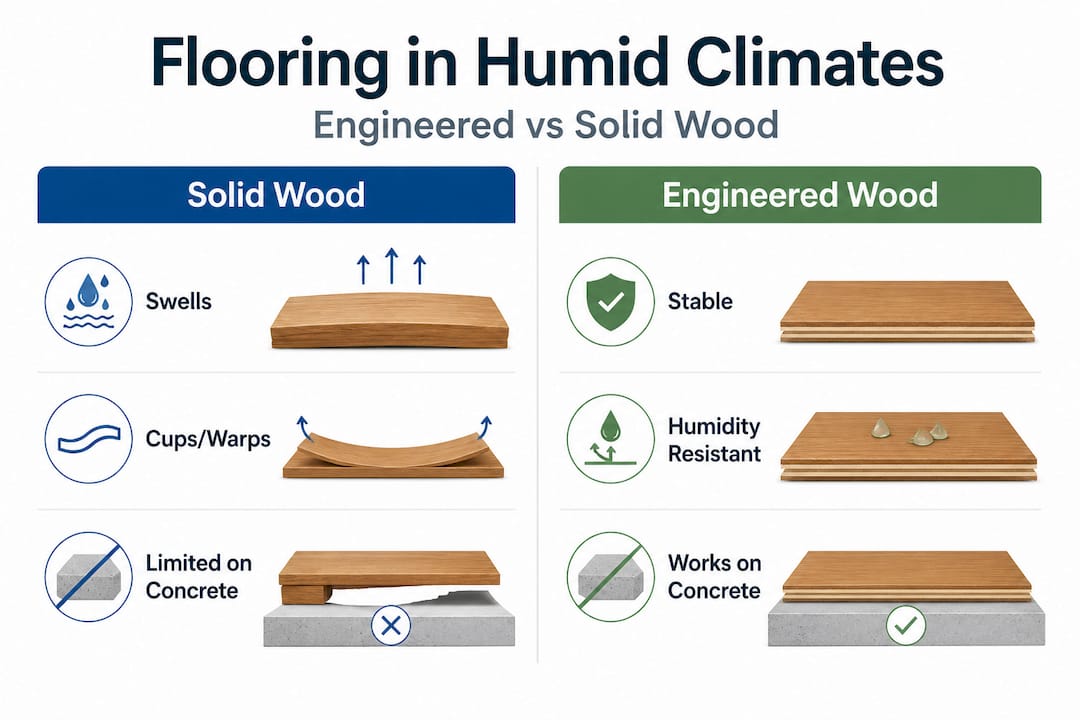
The engineered flooring benefits go beyond stability. Engineered wood installs successfully over concrete slabs, which is the most common subfloor type in South Florida construction. According to solid hardwood comparisons, engineered wood is often selected when subfloor type and humidity make solid hardwood's refinishing and longevity advantages harder to realize. In other words, what looks like a compromise is actually the smarter call for most homes here.
Key advantages of engineered wood for South Florida homes:
- Works directly over concrete slab subfloors without extensive prep
- Resists expansion and contraction from humidity swings far better than solid wood
- Available in a wide range of species, stains, and plank widths
- Can be floated, glued, or stapled depending on your subfloor situation
- Often less expensive per square foot than comparable solid hardwood grades
Pro Tip: When shopping for engineered wood, check the wear layer thickness. A wear layer of at least 2mm gives you a floor that can be lightly sanded and refinished once. A 4mm or thicker wear layer opens up more refinishing options down the road.
How engineered wood compares to other flooring types
Choosing flooring for a South Florida home is not just about looks. It is about picking a product that will hold up against salt air, high humidity, afternoon downpours, and heavily air-conditioned interiors. Here is how engineered wood stacks up against the most popular alternatives.
| Flooring type | Durability | Humidity resistance | Cost per sq. ft. | Refinishable | Works on concrete slab |
|---|---|---|---|---|---|
| Engineered wood | High | High | $4 to $14 | Limited (1-2x) | Yes |
| Solid hardwood | High | Low | $6 to $18 | Yes (multiple) | No |
| Luxury vinyl plank | Very high | Excellent | $2 to $8 | No | Yes |
| Porcelain tile | Excellent | Excellent | $3 to $12 | No | Yes |
Solid hardwood still wins on refinishing potential. Solid hardwood refinishing advantages are real, but in South Florida, most homes sit on concrete slabs where solid hardwood cannot be nailed down properly and where moisture migrating up through the slab causes irreversible damage over time. That beautiful oak floor you dream about becomes a maintenance headache within a few years if the subfloor and humidity conditions are not right.
Luxury vinyl plank (LVP) is fully waterproof and extremely durable, making it a strong option for bathrooms, laundry rooms, and rental properties where durability matters more than appearance. But most homeowners agree it does not replicate the warmth and natural variation of real wood. If you want the feel and look of hardwood without the vulnerability, engineered wood is the sweet spot.
Porcelain tile is bulletproof in terms of moisture resistance, but it is cold underfoot, hard on joints if you stand for long periods, and loud when shoes click across it. It works beautifully in kitchens and bathrooms, but living rooms and bedrooms tend to feel more inviting with wood underfoot.
A useful breakdown of the flooring type comparison for South Florida homes confirms what most experienced contractors already know: there is no single perfect floor for every room, but engineered wood covers the widest range of spaces successfully.
Where engineered wood makes the most sense:
- Open-concept living and dining areas
- Bedrooms over concrete slabs
- Home offices and home gyms with controlled humidity
- Rental properties where appearance matters but so does durability
If you are still weighing your options, a detailed look at vinyl vs engineered wood can help you decide based on your specific priorities, whether that is budget, aesthetics, or long-term performance.
Installation: What homeowners should know
Installation is where engineered wood flooring projects succeed or fail. The product itself can be excellent, but a rushed or uninformed installation in South Florida's conditions will undermine it within months.
The main phases of engineered wood installation:
- Moisture testing. Before anything else, your installer should test the concrete slab for moisture vapor emissions. Concrete in South Florida releases moisture, especially in older construction. If moisture vapor levels are too high, a vapor barrier or moisture-retardant underlayment must be added before the floor goes down.
- Acclimation. Engineered wood needs to acclimate to your home's temperature and humidity before installation. This typically means leaving the flooring boxes in the room for 48 to 72 hours. Skipping this step is one of the most common mistakes, and it leads to expansion problems after installation.
- Subfloor preparation. The subfloor must be flat, clean, and dry. Engineered wood manufacturers typically require no more than 3/16 of an inch variation over a 10-foot span. Any high spots get ground down; low spots get filled. A flat subfloor means no hollow-sounding spots, no rocking planks, and no stress on the joints over time.
- Underlayment selection. The right underlayment cushions the floor, adds sound insulation, and provides a moisture barrier. In South Florida, a combination underlayment that handles both sound and moisture is usually the smart call.
- Installation method. Engineered wood can be floated (planks click together and rest on the underlayment), glue-down (planks are bonded directly to the slab), or staple-down (over a wood subfloor). Over concrete slabs, floating and glue-down are the most common methods, and the best choice depends on the specific product and room size.
- Finishing details. Proper expansion gaps around the perimeter of the room (typically 1/2 inch) allow the floor to breathe. Trim pieces, transitions, and thresholds complete the installation and protect the edges.
The engineered wood installation steps follow a logical sequence, but every phase requires attention to detail that experienced installers catch and DIYers often miss.
"Engineered wood is preferred for concrete slab subfloors and homes with humidity variability, which describes the vast majority of South Florida residences."
Professional installation matters more than most homeowners realize. An experienced installer spots moisture problems before they become structural failures, selects the right underlayment for your specific slab, and ensures the floor is flat and level before the first plank goes down. Knowing how to hire flooring professionals you can trust is just as important as choosing the right product.
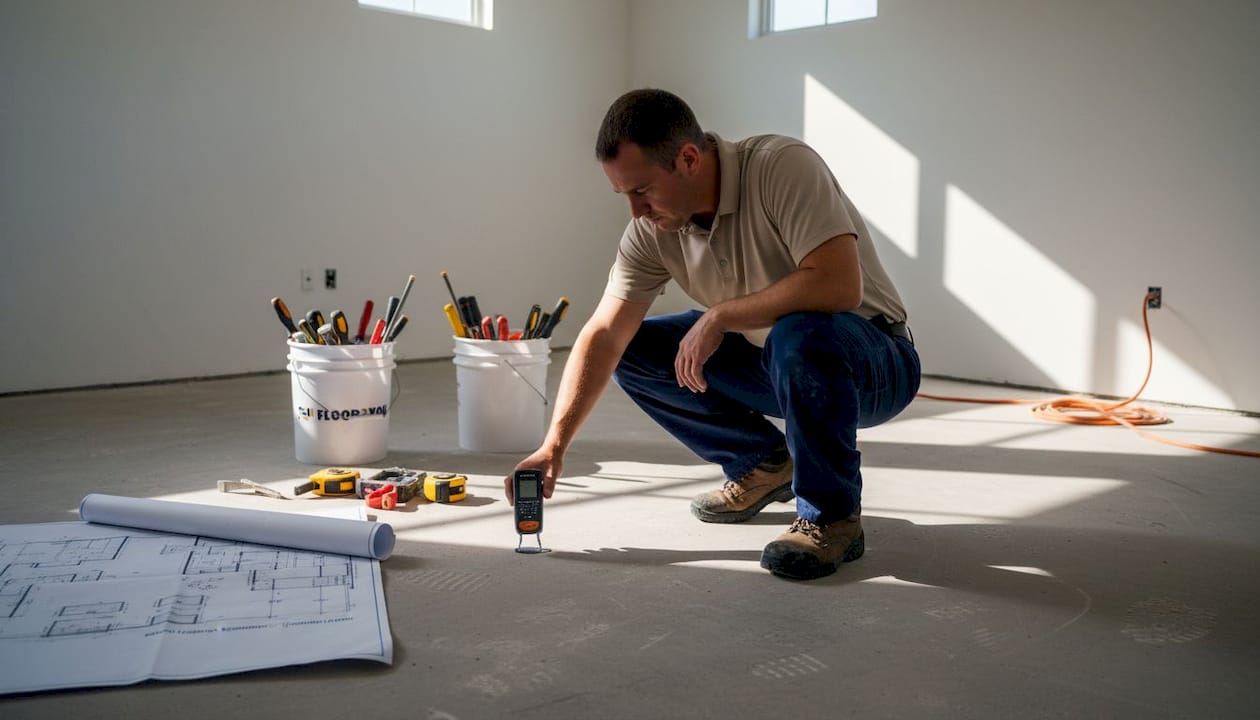
Pro Tip: Ask your installer to show you the moisture test results before installation begins. A reputable contractor will always test first and document the findings. If someone skips this step, that is a red flag worth taking seriously.
Care and maintenance for lasting performance
Getting a beautiful engineered wood floor installed is step one. Keeping it that way over 20 or 30 years in South Florida's climate requires consistent, informed care.
Engineered wood stability in areas with fluctuating humidity depends heavily on how you manage your indoor environment day to day. Here is what to prioritize.
Essential cleaning and maintenance habits:
- Sweep or dust-mop daily in high-traffic areas to prevent grit from scratching the finish
- Use a damp (not wet) mop with a pH-neutral hardwood floor cleaner weekly
- Clean spills immediately, especially near dishwashers, sinks, and sliding glass doors
- Place felt pads under all furniture legs and replace them every six months
- Use area rugs in entryways and high-traffic paths to reduce wear on the finish
- Avoid steam mops entirely: the heat and moisture penetrate the finish and damage the wood layers
Humidity management is your floor's best friend:
| Indoor humidity level | Effect on engineered wood | Action required |
|---|---|---|
| Below 35% | Gaps between planks, possible cracking | Add a humidifier |
| 35% to 55% | Ideal range, floor stays stable | Maintain with AC and ventilation |
| Above 60% | Possible swelling, cupping, or squeaking | Run AC or a dehumidifier |
| Above 70% | Serious risk of moisture damage | Immediate dehumidification needed |
South Florida homes regularly hit 80 to 90 percent outdoor humidity in summer. Your air conditioning does most of the work keeping indoor levels in check, but if the AC is off for extended periods (during vacation or a power outage), moisture can build up quickly. Smart thermostats that maintain temperature and humidity settings even when you are away are worth every penny for a home with wood floors.
Detailed engineered wood care tips also include attention to underlayment and humidity tips that protect from below, not just from above. A quality moisture barrier underlayment combined with consistent indoor humidity management is the combination that makes engineered wood last a generation.
Common mistakes that shorten floor lifespan:
- Wet-mopping or using water-based cleaning products not designed for wood
- Letting sunlight bleach sections of the floor without UV-filtering window treatments
- Placing heavy appliances directly on the floor without proper protection
- Ignoring small gaps or squeaks that signal moisture fluctuation happening under the surface
Why engineered wood beats old flooring rules in South Florida
Here is something the flooring industry does not always say out loud: the romance around solid hardwood, the idea that it is the gold standard every home should aspire to, was built around homes in the Northeast and Midwest. Homes with basements, wood subfloors, and dry winter air. It was never the right benchmark for South Florida.
We have worked on enough South Florida renovations to know what happens when homeowners insist on solid hardwood over a concrete slab because it "feels more luxurious." Within two or three rainy seasons, the floor starts to move. Planks cup. Gaps open and close with the seasons. Refinishing becomes difficult because the subfloor movement keeps stressing the floor. The dream floor becomes a problem floor.
Engineered wood is not a consolation prize. It is the product that was actually designed for the conditions you live in. Modern flooring trends confirm that wider planks, richer stains, and longer board lengths are all available in engineered formats now, achieving the high-end look homeowners want without the structural compromises.
The uncomfortable truth is that engineered flooring on concrete slabs often outperforms solid hardwood over a 20-year horizon in South Florida, even for homeowners who could easily afford solid wood. It is not about budget. It is about picking the right tool for the actual environment. Practical wisdom from real renovation experience beats outdated luxury assumptions every time.
Start your engineered wood project with expert support
You now know more about engineered wood flooring than most homeowners who have already had it installed. The next step is putting that knowledge to work in your specific home, with your specific subfloor conditions, room layout, and style goals.

Choosing the right product, installing it correctly over South Florida's concrete slabs, and maintaining it through humid summers requires hands-on experience and local know-how. That is exactly what Floor2You brings to every project. As South Florida's trusted flooring and renovation specialists, the Floor2You engineered wood specialists team guides you from product selection through final installation, ensuring your floors look stunning and perform reliably for years to come. Reach out today for a personalized consultation and see how straightforward a great flooring project can be.
Frequently asked questions
Can engineered wood flooring be used over a concrete slab?
Yes, engineered wood is specifically designed for installation over concrete slabs, which makes it ideal for the vast majority of South Florida homes built on slab foundations. Proper moisture testing and a quality vapor barrier underlayment are key to successful slab installation.
How long does engineered wood flooring last?
Quality engineered wood lasts 20 to 30 years or more when properly installed and maintained, particularly in climate-controlled South Florida homes. Its durability in humid climates makes it a smart long-term investment for living spaces.
Can engineered wood flooring be refinished?
Most engineered wood floors can be lightly sanded and refinished once or twice, depending on the wear layer thickness, which is less refinishing potential than solid hardwood offers. A thicker veneer layer gives you more refinishing options when the time comes.
Is engineered wood water-resistant?
Engineered wood handles humidity variability far better than solid hardwood, but it is not fully waterproof. Standing water and prolonged moisture exposure will still cause damage, so immediate spill cleanup and consistent humidity management remain essential in South Florida homes.