
TL;DR:
- Genuine eco-friendly flooring considers entire lifecycle, including responsible sourcing and low-impact manufacturing.
- Certifications like FSC, GREENGUARD, and FloorScore ensure responsible and low-emission flooring choices.
- Durability, climate suitability, and certification are key factors for sustainable flooring in South Florida.
Your flooring does more than set the visual tone of a room. It directly affects your home's air quality, your family's health, and the local environment around you. Eco-friendly flooring is defined as flooring made from renewable, recycled, or low-carbon materials with a low environmental impact. Yet most homeowners in South Florida pick materials based on looks and price alone, never questioning what's off-gassing into the air they breathe every day. This guide breaks down what genuine sustainability looks like in flooring, which materials work best in our climate, and how to separate smart purchases from slick green marketing.
Table of Contents
- What makes flooring eco-friendly?
- Eco-friendly flooring materials and their benefits
- Certifications, health impacts, and avoiding greenwashing
- Costs, durability, and choosing the right flooring for your renovation
- Our perspective: What actually matters when choosing eco-friendly flooring
- Ready for an eco-friendly flooring upgrade?
- Frequently asked questions
Key Takeaways
| Point | Details |
|---|---|
| True eco-friendly definition | Eco-friendly flooring comes from sustainable, certified materials with low lifecycle impact. |
| Material choices matter | Bamboo, cork, linoleum, and reclaimed wood offer durability and environmental benefits. |
| Certifications protect health | Labels such as FSC, GREENGUARD, and FloorScore ensure low emissions and safer homes. |
| Durability saves money | Long-lasting floors cost less over time, even if they require higher upfront investment. |
| Climate-fit is crucial | Choose flooring designed for humidity and heat to maximize sustainability and longevity. |
What makes flooring eco-friendly?
Not every floor labeled "natural" or "green" earns that title. Real eco-friendly flooring is evaluated across its entire lifecycle: where the raw materials come from, how they're manufactured, what happens during installation, how the floor performs over decades, and where the material ends up when it's replaced. A product that's harvested responsibly but manufactured with toxic chemicals is not genuinely sustainable.
Eco-friendly flooring comes from renewable, recycled, or low-carbon materials with low environmental impact across its lifecycle. That lifecycle thinking is what separates real sustainability from a catchy marketing claim. You need to evaluate the whole picture.
Here's what truly sustainable flooring should demonstrate:
- Responsible sourcing: Materials harvested from managed forests, rapidly renewable plants, or post-consumer recycled content
- Low-impact manufacturing: Processes that minimize water use, carbon emissions, and chemical waste
- Low-VOC content: Minimal volatile organic compound emissions during and after installation
- Durability: Longer lifespan means fewer replacements and less total waste
- End-of-life planning: Materials that are biodegradable, recyclable, or repurposable
Certifications like FSC, GREENGUARD, and FloorScore verify responsible sourcing and low-VOC emissions. The Forest Stewardship Council (FSC) confirms that wood or bamboo came from a responsibly managed forest. PEFC is a similar international program. GREENGUARD Gold certification means the product has been independently tested and meets strict chemical emission limits. FloorScore, managed by the Resilient Floor Covering Institute, specifically tests hard surface flooring for indoor air quality compliance.
Greenwashing is rampant in the flooring industry. Watch out for vague terms like "eco-conscious," "natural," or "earth-friendly" without any third-party certification to back them up. Some manufacturers use a small percentage of recycled content and market the entire product as green. That's not the same thing.
When browsing South Florida flooring choices, always tie your selection to certified products rather than brand claims alone. The same applies when reviewing flooring trends for 2026, where sustainability language is being used more liberally than ever.
Pro Tip: Before buying, ask your supplier to show you the physical certification label or a downloadable certificate from the certifying body. Legitimate products always have documentation.
Eco-friendly flooring materials and their benefits
With clear criteria in hand, let's look at the leading materials South Florida homeowners are choosing for sustainable renovations.
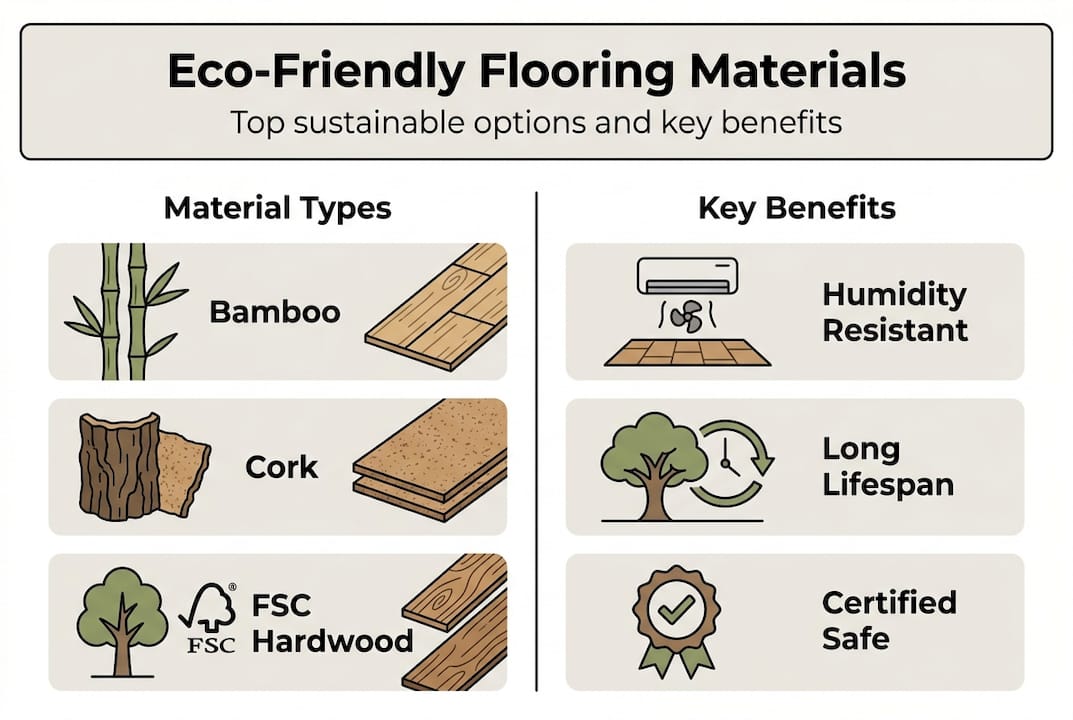
Key eco-friendly materials include FSC-certified hardwood, bamboo, cork, natural linoleum, and recycled rubber. Each material has a different environmental story, a different feel underfoot, and a different relationship with South Florida's notoriously humid, hot climate.
Here's a quick comparison:
| Material | Renewability | Humidity resistance | Avg. lifespan | Best use |
|---|---|---|---|---|
| FSC hardwood | Moderate | Low to moderate | 50+ years | Living rooms, bedrooms |
| Bamboo | High | Moderate | 20-30 years | Most rooms |
| Cork | High | Moderate | 20-30 years | Bedrooms, offices |
| Natural linoleum | High | Good | 25-40 years | Kitchens, baths |
| Recycled rubber | High | Excellent | 20+ years | Gyms, garages |
| Eco-vinyl (LVP) | Moderate | Excellent | 15-25 years | Whole home |
Bamboo is one of the most exciting options. It grows to harvest maturity in just 3-5 years compared to decades for oak or maple. Bamboo's Janka rating is 1,300-5,000, with strand-woven types harder than oak. That's not a small advantage; it means bamboo can take serious foot traffic without denting or wearing down quickly.
Cork is harvested by stripping the bark from cork oak trees, which then regrows over about 9 years without harming the tree. It's naturally antimicrobial, which matters in South Florida where mold is a real concern. Cork also has a natural cushion underfoot that reduces joint fatigue.
Natural linoleum is made from linseed oil, limestone, cork dust, and wood flour. It's fully biodegradable and has been used in homes for over 150 years. Do not confuse it with vinyl flooring; they are completely different materials with very different environmental profiles.
For humid areas of South Florida, consider the vinyl advantages that come with eco-formulated LVP products, especially in bathrooms and laundry rooms where moisture is constant. Also, pay attention to flooring underlayment choices, since some underlayment products contain toxic adhesives that undermine the sustainability of an otherwise green floor.
"Strand-woven bamboo is one of the hardest natural flooring materials available, outperforming many traditional hardwoods in durability while growing back in a fraction of the time."
Certifications, health impacts, and avoiding greenwashing
Certifications protect more than the planet. They protect the air inside your home. Indoor air is 2-5x more polluted than outdoor air according to the EPA, making low-VOC flooring one of the most impactful health decisions you can make during a renovation.
VOCs, or volatile organic compounds, are chemicals that evaporate at room temperature and accumulate indoors. Many traditional flooring adhesives, finishes, and synthetic materials release VOCs for months or even years after installation. In a sealed, air-conditioned South Florida home, those compounds have nowhere to go.
Here's how to protect your family using a clear certification checklist:
- GREENGUARD Gold: Strictest chemical emission standard, required for schools and healthcare facilities. A very strong indicator of indoor air safety.
- FloorScore: Specifically for hard surface flooring. Tests for over 100 VOCs and particulates.
- Cradle to Cradle (C2C): Evaluates a product's full environmental impact, including material health, recyclability, and manufacturing ethics.
- FSC or PEFC: Confirms responsible forest management for any wood-based products.
- GreenLabel Plus: Carpet-specific certification for low chemical emissions.
Avoid vague "recycled content" claims and prioritize credible certifications from recognized third-party bodies. Some manufacturers list a certification that expired two years ago. Others display certification logos without having earned them for the specific product line being sold.
When working with a professional flooring selection advisor, ask them to walk you through the documentation for every product they recommend. And if you're managing contractors independently, the guide on stress-free flooring installation covers exactly what to ask before signing any contract.
Pro Tip: Search the GREENGUARD database at ul.com/certifications to verify that a specific product holds a current, active certification before purchasing.
Costs, durability, and choosing the right flooring for your renovation
Sustainability and budget are not opposites. They're actually aligned over a long enough timeline.
Eco-friendly flooring costs $3-15 per square foot, with bamboo running $4-8, cork and linoleum at $3-6, and reclaimed wood reaching $10-15 or more. Compare that to standard laminate at $2-5 per square foot, and you'll see the gap is smaller than most expect, especially when you factor in what you get in return.
| Material | Cost per sq ft | Can be refinished? | Moisture resistance | Lifespan |
|---|---|---|---|---|
| FSC hardwood | $8-15 | Yes, up to 7-10 times | Low | 50+ years |
| Bamboo | $4-8 | Some types, yes | Moderate | 20-30 years |
| Cork | $3-6 | Yes | Moderate | 20-30 years |
| Linoleum | $3-6 | Yes | Good | 25-40 years |
| Recycled rubber | $4-10 | No | Excellent | 20+ years |
Lifecycle savings from durability and refinishing hardwood up to 7-10 times mean that one hardwood installation can outlast four or five laminate replacements. That's a dramatically different financial equation when you look past the sticker price.
For South Florida homeowners, here's what to prioritize when matching materials to renovation needs:
- High-moisture areas (bathrooms, laundry rooms): Recycled rubber or eco-vinyl LVP
- Main living areas: Strand-woven bamboo or FSC-certified hardwood
- Bedrooms and offices: Cork for comfort and acoustic insulation
- Kitchens: Natural linoleum or high-quality LVP with FloorScore certification
If you're planning a full renovation and want to understand the installation side, the step-by-step guide on hardwood installation gives a clear picture of what the process looks like. For budget planning, comparing vinyl flooring costs and reviewing tile flooring selection will round out your options.
Pro Tip: Calculate cost per year of use, not just upfront price. A $12/sq ft hardwood floor lasting 50 years costs $0.24/year per square foot. A $4/sq ft laminate replaced every 10 years costs $0.40/year. The "cheaper" option often isn't.
Our perspective: What actually matters when choosing eco-friendly flooring
We see a lot of homeowners get caught up in the material label and miss the bigger picture. Someone buys bamboo flooring marketed as eco-friendly, but without GREENGUARD certification, and it off-gasses formaldehyde for the first two years. That's not a green outcome. It's a health risk wrapped in green branding.
The real measure of eco-friendly flooring is durability in your specific climate, certified low emissions, and a realistic lifespan. In South Florida, humidity and heat eliminate a lot of otherwise good options. Cork that isn't properly sealed in a waterfront home will degrade fast. Hardwood without moisture-resistant finishing will cup and warp.
Durability trumps initial green claims; materials like bamboo offer superior carbon sequestration when properly certified. What we've seen consistently is that homeowners who invest in certified, durable materials for their specific room conditions always end up more satisfied than those chasing the trendiest eco label.
Start with your climate demands, verify certifications, and choose a South Florida flooring solution built to last decades in this environment. That's what actually makes a floor sustainable.
Ready for an eco-friendly flooring upgrade?
Knowing what to look for is only half the work. Finding certified materials, understanding installation requirements, and managing a renovation in South Florida's climate takes real local expertise. That's exactly where professional guidance makes the difference.
At Floor2You, our team helps South Florida homeowners select and install flooring that meets both sustainability standards and the demands of our local climate. We work with certified materials, guide you through every product choice, and manage the project from start to finish. Whether you're renovating one room or the entire home, our eco-friendly flooring experts are ready to help. Connect with our South Florida flooring professionals today and get a clear plan for your renovation.
Frequently asked questions
How can I verify that a flooring option is genuinely eco-friendly?
Look for certifications like FSC, GREENGUARD, and FloorScore on product labels, and always ask your supplier for the actual certification documentation from the issuing body.
Which eco-friendly flooring materials are best for humid climates like South Florida?
Bamboo, cork, and recycled rubber are durable and resistant to moisture, making them strong choices for South Florida's heat and humidity when properly installed and sealed.
Does eco-friendly flooring cost more than traditional flooring?
Eco-friendly flooring ranges from $3-15 per square foot, and its durability and refinishing potential typically deliver better long-term value than cheaper conventional options that need frequent replacement.
How long do eco-friendly floors typically last?
Linoleum lasts 25-40 years and strand-woven bamboo outperforms oak in hardness, meaning many eco-friendly floors outlast traditional flooring by years when properly maintained.