
TL;DR:
- Proper flooring in South Florida must withstand humidity, heat, water, and foot traffic.
- Tile, LVP, waterproof laminate, and natural stone are ideal based on durability and moisture resistance.
- Matching flooring to each room’s use and climate needs ensures longevity and value.
Choosing the right flooring in South Florida is genuinely harder than it sounds. You're not just picking a color or a texture. You're making a decision that has to survive brutal humidity, intense heat, the occasional tropical storm, and years of foot traffic. Get it wrong and you're looking at warped boards, mold under the surface, or a floor that needs replacing in five years. Get it right and your home looks great, holds its value, and practically takes care of itself. This guide walks you through how to evaluate your options, what each flooring type actually delivers in our climate, and how to match the right floor to the right room.
Table of Contents
- How to evaluate flooring for South Florida homes
- Overview of top flooring options for South Florida
- Flooring comparison: Cost, durability, and moisture resistance
- Making the right choice: Best floors by room and use case
- Expert perspective: Why there's no one-size-fits-all answer in Florida flooring
- Ready to upgrade your South Florida floors?
- Frequently asked questions
Key Takeaways
| Point | Details |
|---|---|
| Durability matters most | Choose moisture-resistant and long-lasting materials to withstand South Florida’s unique climate. |
| Match flooring to each room | Select the best type for kitchens, bedrooms, or high-traffic areas to optimize performance and comfort. |
| Compare true costs | Consider both installation price and lifetime value when budgeting for new floors. |
| Trends meet tradition | Modern options like LVP rival classic tile—evaluate what suits your style and property needs. |
How to evaluate flooring for South Florida homes
Before you fall in love with a sample at the showroom, you need a clear set of criteria built around South Florida's specific conditions. This isn't Minnesota. Our climate punishes the wrong materials fast.
Start with climate resilience. Moisture is the biggest threat to flooring here. Between the humidity, afternoon rainstorms, and the occasional flooding risk, your floor needs to handle water without warping, swelling, or growing mold underneath. Heat is a close second. Floors that expand and contract with temperature swings will develop gaps and buckling over time.
Next, think about lifetime value, not just upfront cost. A cheaper floor that needs replacing in eight years may cost you more than a pricier option that lasts thirty. Factor in installation, maintenance, and potential repair costs when comparing.
Here are the key criteria to run every option through before deciding:
- Moisture and mold resistance: Can it handle humidity and occasional water exposure?
- Heat tolerance: Will it expand, fade, or warp under Florida sun?
- Durability: How does it hold up under daily foot traffic for your household size?
- Room function: A kitchen needs different flooring than a bedroom or a rental unit.
- Maintenance: How easy is it to clean, and how often does it need resealing or refinishing?
- Installation complexity: Some floors require specific subfloor conditions or acclimation time.
- Resale and rental appeal: Neutral, durable floors attract buyers and tenants.
Pro Tip: Prioritize waterproof and easy-to-clean materials for any room that sees moisture, including laundry rooms, entryways, and open-plan living areas near the kitchen.
Flooring types suitable for South Florida include porcelain and ceramic tile, luxury vinyl plank (LVP), waterproof laminate, engineered hardwood, carpet, natural stone, and concrete. Each one has a different profile when measured against these criteria.
Overview of top flooring options for South Florida
With those criteria in mind, here's how each major flooring type actually performs in our climate.
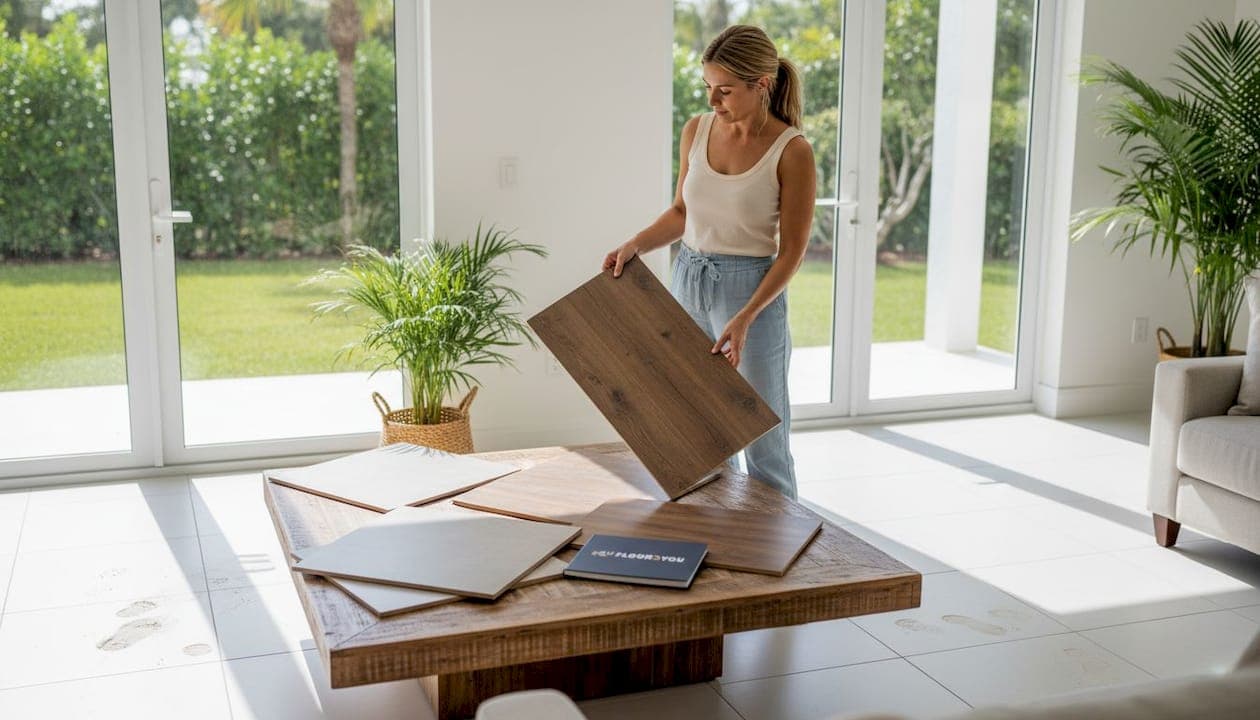
Porcelain and ceramic tile are the traditional South Florida standard for good reason. They're waterproof, cool underfoot, and nearly impervious to humidity. Porcelain is denser and harder than ceramic, making it better for high-traffic areas. Both are easy to clean and can last decades.
Luxury vinyl plank (LVP) has become the most popular alternative to tile in recent years. It's 100% waterproof, softer underfoot, warmer-feeling than tile, and comes in realistic wood and stone looks. It installs quickly and handles Florida humidity well.
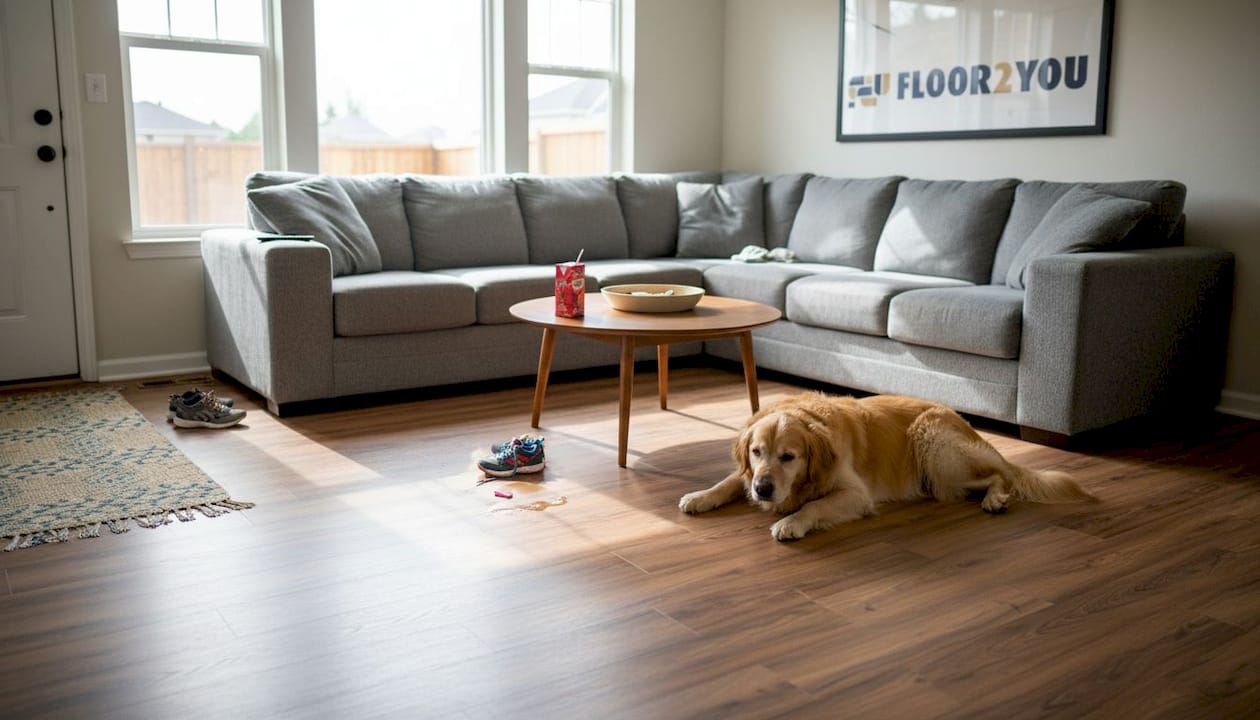
Waterproof laminate is an affordable option that resists humidity and swelling. Modern waterproof laminate runs $4 to $10 per square foot and works well over concrete slabs, though it's less durable than LVP or tile under heavy use.
Engineered hardwood gives you the look of real wood with better moisture tolerance than solid hardwood. It still requires careful installation and isn't ideal for rooms with frequent water exposure.
Carpet is comfortable and quiet but struggles in Florida's humidity. It traps moisture and can harbor mold if not properly maintained.
Natural stone like marble or travertine is stunning and long-lasting. Natural stone runs $15 to $32 per square foot installed and needs regular sealing to prevent staining.
Concrete is durable, moisture-resistant, and increasingly popular in modern South Florida homes. Polished or stained concrete is easy to maintain and handles heat well.
"There is no single best floor for every South Florida home. The right choice depends on how the space is used, who lives there, and what trade-offs you're willing to make between budget, comfort, and maintenance."
Pro Tip: Always ask for product warranties and verify that your installer is experienced with the specific material. A great floor installed poorly will fail faster than a budget floor installed correctly.
Flooring comparison: Cost, durability, and moisture resistance
To make the decision clearer, here's a side-by-side look at how the top flooring types compare on the factors that matter most in South Florida.
| Flooring type | Installed cost (per sq ft) | Lifespan | Moisture resistance | Best for |
|---|---|---|---|---|
| Porcelain/ceramic tile | $6 to $50 (avg $15 to $35) | 30 to 50+ years | Excellent | Kitchens, baths, living areas |
| Luxury vinyl plank | $3 to $12 | 15 to 25 years | Excellent | Whole home, rentals |
| Waterproof laminate | $4 to $10 | 10 to 20 years | Good | Living rooms, bedrooms |
| Engineered hardwood | $6 to $22 | 20 to 30 years | Moderate | Bedrooms, low-moisture areas |
| Natural stone | $15 to $32 | 50+ years | Good (with sealing) | Luxury kitchens, entryways |
| Carpet | $2 to $16 | 8 to 20 years | Poor | Low-traffic bedrooms only |
| Concrete | $2 to $15 | 50+ years | Excellent | Modern open-plan homes |
When you break down lifetime cost per year, ceramic tile comes in around $0.33 per year while vinyl ranges from $0.44 to $1.26 per year depending on quality. That gap widens significantly over a 30-year period, which is why tile remains the long-term value leader even with higher upfront costs.
For wet areas, tile, LVP, and concrete are the clear winners. Stone is durable but requires ongoing maintenance to stay moisture-resistant. Laminate and engineered hardwood need careful placement away from direct water exposure. Carpet is the weakest performer in any humid environment.
If you're managing a rental property, LVP offers the best balance of cost, durability, and ease of replacement. For a high-end primary residence, natural stone or top-tier tile adds lasting value and visual impact.
Making the right choice: Best floors by room and use case
Once you've seen the comparisons, the next step is matching the right floor to the right space.
Kitchens and bathrooms need waterproof, easy-to-clean surfaces. Tile and LVP are the top choices here. Stone works beautifully in high-end kitchens but requires sealing. Avoid laminate and engineered hardwood near sinks or dishwashers.
Bedrooms offer more flexibility. LVP is a smart, low-maintenance choice. Carpet works in low-traffic bedrooms, but keep in mind that carpet traps moisture and mold in humid climates and lasts only 8 to 20 years. If you want carpet, use it sparingly and keep the room well-ventilated.
High-traffic areas like entryways, hallways, and open living spaces need the toughest options. Tile, stone, and waterproof laminate all hold up well here.
Rental properties and Airbnb units benefit most from durable, neutral, easy-to-replace flooring. LVP is the go-to choice for most property managers because it's affordable, looks great, and can be replaced section by section if damaged.
Here are the key recommendations by category:
- Best for kitchens and baths: Porcelain tile, LVP, natural stone
- Best for bedrooms: LVP, carpet (low-traffic only), engineered hardwood
- Best for high-traffic zones: Tile, stone, waterproof laminate
- Best budget options: Laminate, entry-level LVP
- Best premium upgrades: Natural stone, top-tier engineered hardwood, large-format porcelain
- Best for rentals: Mid-grade LVP, ceramic tile
To narrow your options, follow these steps:
- Define the room's function and moisture exposure level.
- Set a realistic budget including installation costs.
- Identify your maintenance tolerance (daily mopping vs. occasional sweep).
- Check subfloor conditions, since some materials require specific prep.
- Get samples and live with them in the space for a few days before committing.
Expert perspective: Why there's no one-size-fits-all answer in Florida flooring
After working on hundreds of South Florida homes, one thing becomes obvious fast: the homeowners who regret their flooring choice are almost always the ones who picked based on trend rather than fit.
Tile has dominated Florida homes for decades, and for good reason. It's cool, durable, and genuinely timeless. But we've watched clients install tile throughout an entire home and then feel like they're living in a cold, hard space that doesn't match how they actually live. That's a real trade-off.
LVP has changed the game. It's warmer underfoot, easier on joints, quieter, and it looks surprisingly close to real wood. Traditionalists favor tile for durability and resale while modern homeowners lean toward LVP for comfort in open-plan living. Both camps have valid points.
The mistake is treating flooring as a one-decision-fits-all-rooms problem. A tile kitchen and an LVP living room with a carpeted master bedroom can all coexist beautifully in the same home. The goal is to match the floor to the space's demands, not to pick one material and force it everywhere.
"Match the floor to the home's demands, not the other way around."
Budget matters too, but don't let it be the only driver. Spending a little more on the right material for a high-use area will always beat saving money on something that fails in two years.
Ready to upgrade your South Florida floors?
You now have a solid framework for evaluating, comparing, and choosing flooring that fits your home and your climate. But knowing your options is only half the job. The other half is working with an installer who understands South Florida's specific conditions and can guide you through material selection, subfloor prep, and long-term care.
At Floor2You, we specialize in flooring installation and full home renovations across South Florida. Whether you're updating a single room or renovating an entire property, our team brings local expertise, quality craftsmanship, and transparent project management to every job. Reach out today for a consultation and let's find the floor that works hardest for your home.
Frequently asked questions
What flooring holds up best in hot, humid South Florida climates?
Porcelain tile and LVP are the top choices, combining moisture resistance and long-term durability for Florida's demanding climate.
Is carpet a good idea for Florida bedrooms?
Carpet can work in low-traffic bedrooms, but it traps moisture and mold in humid conditions, so it should be avoided in any area with regular water exposure.
How does laminate compare to other flooring types in cost and performance?
Waterproof laminate costs $4 to $10 per square foot and handles moisture well, but it's less durable than LVP or tile under heavy daily use.
Which flooring type is best for kitchens and bathrooms?
Tile and luxury vinyl plank offer the strongest combination of moisture resistance and durability, making them the top picks for kitchens and bathrooms in South Florida homes.