
TL;DR:
- Having a clear, step-by-step workflow is essential to prevent delays, costly errors, and increased budgets in South Florida bathroom remodels.
- Proper pre-construction planning, communication, and material management help ensure the project runs smoothly amid local climatic and regulatory challenges.
- A collaborative partnership with trusted professionals and realistic expectations ultimately leads to a successful, stress-free renovation.
Starting a bathroom remodel without a clear workflow is like driving across South Florida without a map during rush hour. You might eventually get there, but you will waste time, money, and patience along the way. Bathroom remodels consistently rank among the most disruptive and expensive home projects homeowners take on, and the difference between a smooth renovation and a stressful disaster almost always comes down to process. This guide gives you a proven, step-by-step workflow built for South Florida homeowners, covering everything from the first planning decisions to the final walk-through.
Table of Contents
- Why a defined workflow matters in bathroom remodeling
- Preparations: What to do before demolition begins
- Step-by-step bathroom remodeling workflow
- Avoiding delays and mistakes: Real-world troubleshooting strategies
- Our take: What really makes a bathroom remodel successful in South Florida
- Ready for a seamless bathroom remodel? Connect with local experts
- Frequently asked questions
Key Takeaways
| Point | Details |
|---|---|
| Plan every detail | Careful preparation before demolition prevents headaches and expensive mistakes. |
| Follow proven steps | A defined workflow keeps your project on time and on budget. |
| Anticipate problems | Expect delays and have backup plans for supplies, schedules, and contractors. |
| Quality over speed | Investing in quality materials and work pays off in long-term satisfaction. |
Why a defined workflow matters in bathroom remodeling
Most homeowners approach a bathroom remodel with excitement and a vision, but without a defined process, that excitement quickly turns into frustration. Lack of workflow leads to delays and unexpected costs that can push a $15,000 project well past $25,000 before the tile is even set. The remodeling market is full of stories about contractors showing up out of sequence, inspections failing because rough work was covered too early, or homeowners discovering mid-project that the vanity they ordered is backordered for eight weeks.
Here in South Florida, the stakes are even higher. Our climate introduces challenges that homeowners in cooler, drier regions simply don't face:
- Humidity and moisture infiltration can compromise walls, subfloors, and cabinetry if waterproofing steps are skipped or rushed
- Local building codes in Miami-Dade, Broward, and Palm Beach counties include specific requirements around hurricane-resistant materials and ventilation standards
- Seasonal contractor demand spikes during winter months when snowbirds arrive, making scheduling trickier
- Mold risk is significantly higher in Florida bathrooms, meaning moisture barriers and proper sequencing are not optional extras, they are necessities
When steps get skipped or done out of order, the results compound quickly. Electrical work done before the plumber moves rough pipes means tearing open walls twice. Tile set before the waterproof membrane cures leads to cracking and leakage. Getting expert remodeling advice early in the process helps you understand exactly where those costly missteps happen.
"A bathroom remodel without a defined workflow is not just inconvenient. It is a reliable way to double your budget and triple your timeline."
The good news is that a defined workflow solves virtually all of these problems before they start. When every step has a clear owner, a sequence, and a milestone, your project runs like a well-managed construction site rather than a guessing game.
Preparations: What to do before demolition begins
Pre-construction planning is the number one way to reduce stress during renovation. That is not an opinion, it is the consistent lesson from thousands of completed remodels. The homeowners who feel calm and confident throughout their projects are almost always the ones who did the hard thinking before the first hammer swung.
Here is the preparation checklist that every South Florida homeowner should complete before demolition begins:
- Finalize your design and scope. Decide on every fixture, tile, vanity, and layout change before hiring contractors. Changing your mind mid-project is the number one cause of cost overruns. Pin down your vision using inspiration boards, 3D design tools, or consultations with a designer.
- Set a realistic budget with a contingency fund. For remodel budgeting tips, plan for at least 15 to 20 percent above your baseline estimate to cover surprises like rotted subfloor, outdated wiring, or plumbing surprises behind walls.
- Pull all required permits. In South Florida, most structural, plumbing, and electrical work requires a city or county permit. Skipping this step can result in fines, forced demolition of finished work, and problems when you sell your home.
- Hire your contractor before ordering materials. Your contractor needs to verify measurements, confirm load-bearing walls, and approve the scope before you commit to specific products.
- Order all materials early. Tiles, vanities, specialty fixtures, and custom glass can take four to twelve weeks to arrive. Order everything before demolition starts so there is no dead time waiting on a shipment.
- Prepare a temporary bathroom plan. If this is your only bathroom, arrange a temporary solution or schedule the project in phases to maintain functionality.
| Preparation task | Recommended timing | Who is responsible |
|---|---|---|
| Finalize design and scope | 6 to 8 weeks before start | Homeowner and designer |
| Pull permits | 4 to 6 weeks before start | Contractor or homeowner |
| Hire and contract professionals | 4 to 6 weeks before start | Homeowner |
| Order all materials | 4 to 8 weeks before start | Homeowner with contractor input |
| Confirm subcontractor schedule | 2 weeks before start | General contractor |
| Set up temporary bathroom | 1 week before start | Homeowner |
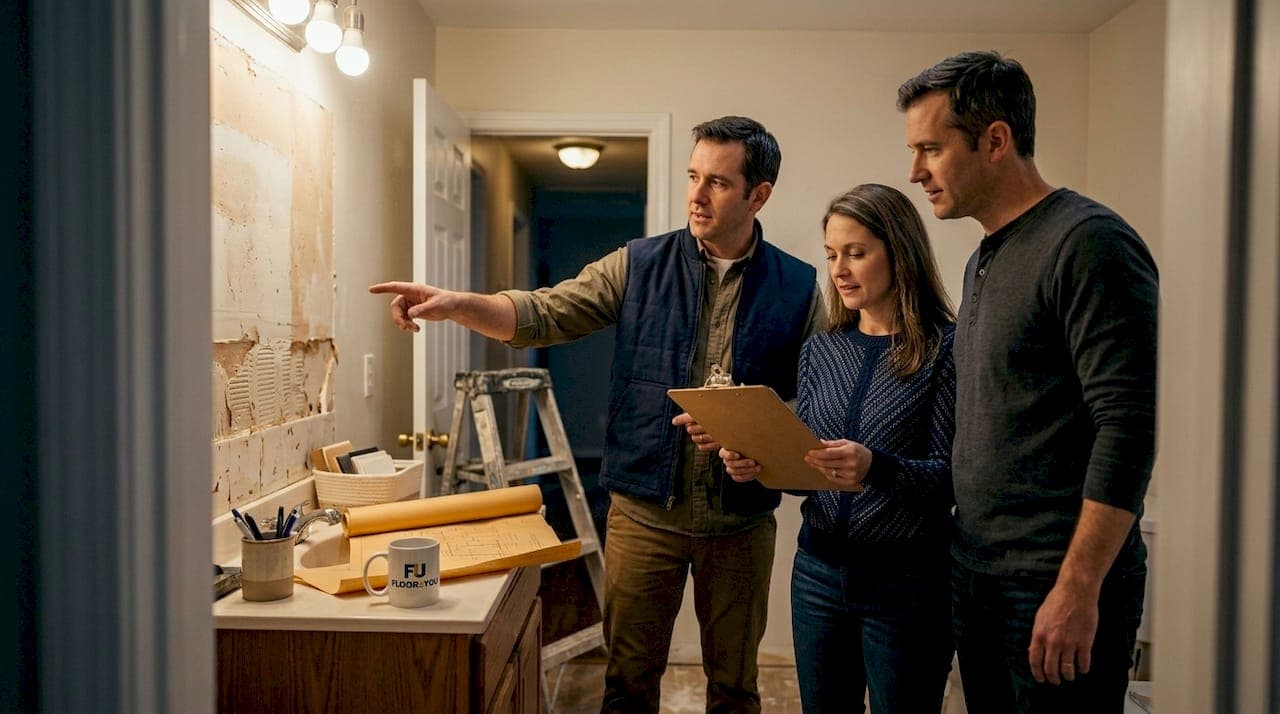
Pro Tip: Walk through your bathroom with your contractor before signing any contract. Point out every concern, ask about potential hidden problems, and get all agreed-upon specs in writing. Verbal agreements evaporate quickly once work begins.
Step-by-step bathroom remodeling workflow
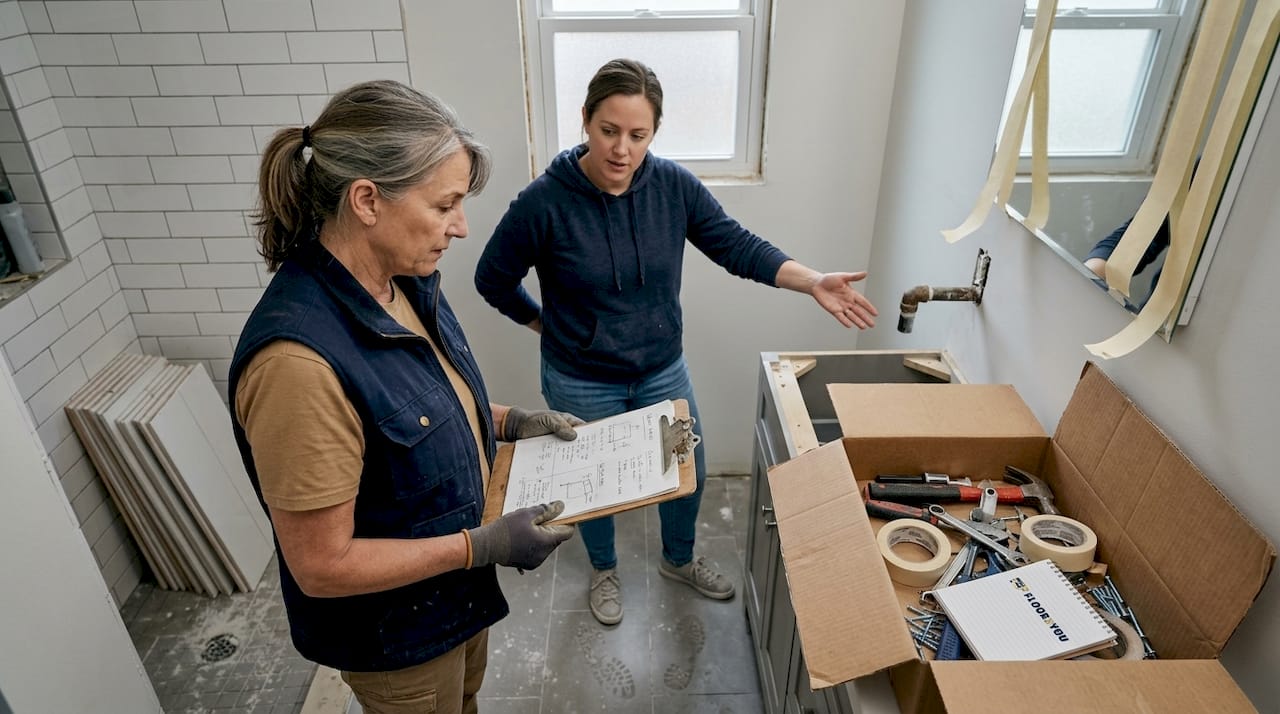
With your preparation complete, you are ready to execute. Following a strict work sequence prevents rework and costly errors, especially in a bathroom where every trade depends on the previous one finishing correctly.
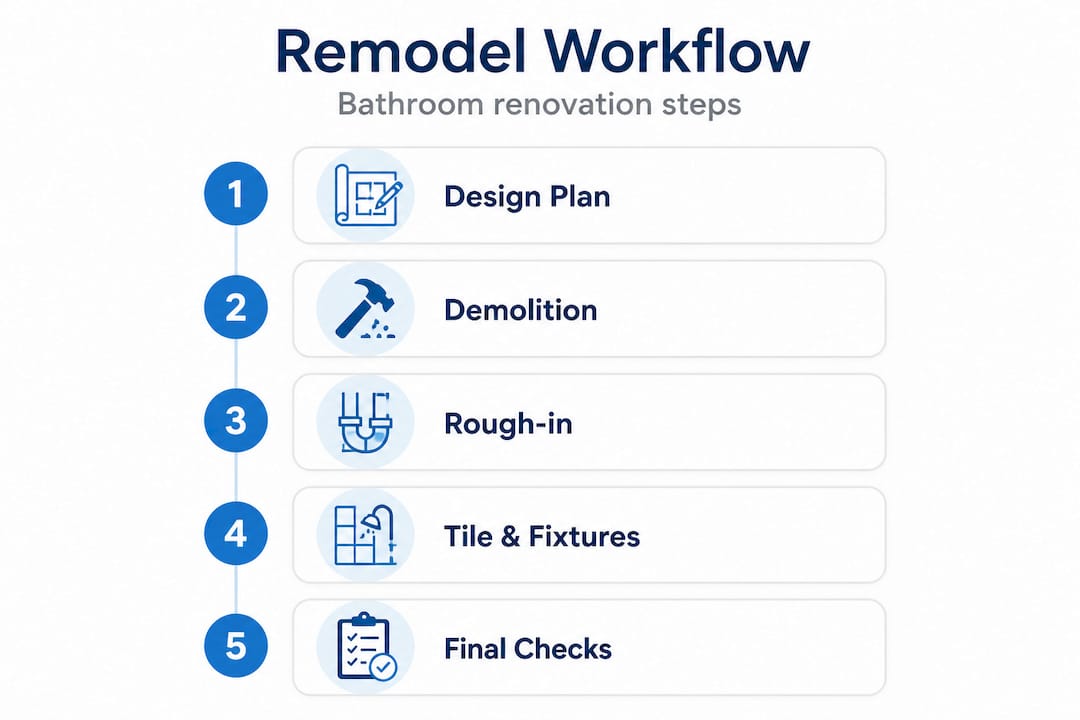
Here is the standard workflow for a full bathroom remodel in South Florida:
- Demolition. Remove existing fixtures, vanity, toilet, tub or shower enclosure, drywall, and flooring down to the subfloor. Proper demolition protects what stays and reveals what needs fixing. This stage often uncovers hidden moisture damage or outdated plumbing.
- Rough plumbing. Move or extend supply lines, drain lines, and vent stacks to match your new layout. This is the time to upgrade pipe materials if your home has old galvanized or polybutylene plumbing.
- Rough electrical. Run new circuits for GFCI outlets, exhaust fans, heated floors, or lighting upgrades. All electrical work must meet local code and South Florida's hurricane preparedness standards.
- Rough inspection. Before covering any walls or floors, a city or county inspector must approve all rough plumbing and electrical work. Do not skip this step. Covering uninspected work can mean tearing everything open again.
- Waterproofing. Apply a membrane or waterproof board system to the shower walls and floor. In Florida's climate, this step is non-negotiable. Let it cure fully according to the manufacturer's timeline, typically 24 to 72 hours.
- Cement board and substrate installation. Install backer board on shower walls and floors, then address drywall in the rest of the space using moisture-resistant panels.
- Tile installation. Set floor tiles first, then wall tiles, then shower tiles. Finding the right flooring contractor matters here because tile work done out of sequence or by someone without precision experience leads to grout cracking, lippage, and water intrusion.
- Vanity and cabinetry installation. Once tile is cured, set the vanity, medicine cabinet, and any built-in storage.
- Finish plumbing. Install the toilet, shower valve, tub faucet, and sink connections. This is when all those rough plumbing lines get connected to real fixtures.
- Finish electrical. Install outlets, light fixtures, switches, and the exhaust fan.
- Painting and trim. Prime and paint walls, then install baseboards and door casing after all wet work is complete.
- Final inspection and punch list. Request a final inspection and walk the project with your contractor to identify anything that needs correction before you sign off.
| Phase | Typical duration | Key trade involved |
|---|---|---|
| Demolition | 1 to 2 days | Demo crew or GC |
| Rough plumbing and electrical | 2 to 4 days | Licensed plumber and electrician |
| Rough inspection | 1 to 3 days waiting | City or county inspector |
| Waterproofing and substrate | 2 to 3 days | Tile setter or waterproofing specialist |
| Tile installation | 3 to 6 days | Tile contractor |
| Vanity, cabinets, fixtures | 1 to 2 days | Carpenter or GC |
| Finish plumbing and electrical | 1 to 2 days | Plumber and electrician |
| Paint and trim | 1 to 2 days | Painter |
| Final inspection | 1 to 2 days waiting | Inspector |
Pro Tip: Build at least three to five buffer days into your timeline for inspector scheduling delays. In Miami-Dade and Broward counties, inspection wait times can stretch unexpectedly during busy seasons, and the last thing you want is your tile setter sitting idle because the rough inspection has not been cleared yet.
Avoiding delays and mistakes: Real-world troubleshooting strategies
No matter how well you plan, problems can arise. Here is how to stay ahead and keep your project on track when things do not go perfectly.
Contractor schedule slip and inspection delays are the leading sources of cost increases in bathroom remodels. Knowing this ahead of time lets you build strategies to minimize both.
Strategies to prevent and manage delays:
- Lock in your contractor schedule in writing. Include start dates, milestone dates, and consequences for schedule slippage in your contract. A vague "we'll start soon" is not a schedule.
- Track material deliveries personally. Do not assume your contractor is monitoring your tile or vanity order. Call vendors directly, track shipments, and flag potential delays early so you can make alternate choices if needed.
- Schedule inspections proactively. Request inspections as soon as a phase is complete rather than waiting a day or two. In South Florida's busy construction market, inspection appointments fill up fast.
- Have backup subcontractors on call. If your tile setter goes dark or a plumber gets pulled to another job, having a short list of vetted alternates can save days or even weeks. Consulting expert flooring advice sources before you need them keeps your options open.
- Address moisture issues immediately. If demo reveals wet, damaged, or moldy substrate, stop and assess before proceeding. Tiling over a compromised surface guarantees a future failure.
South Florida-specific issues to watch for:
- Ventilation gaps. Many older South Florida bathrooms were built with undersized or missing exhaust fans. This is your chance to upgrade to a properly rated fan. Without it, humidity accumulates and causes ongoing mold problems regardless of how good your new tile looks.
- Code requirements for showers. Miami-Dade and Broward counties have specific requirements for shower pan slope, drain sizing, and waterproofing membrane type. Confirm with your inspector before your contractor makes assumptions.
- Supply chain alternatives. If your preferred tile is delayed, research remodeling service alternatives and comparable product options before the project starts. Having a Plan B ready prevents paralysis when a supplier falls through.
"The homeowners who navigate remodeling challenges best are not the ones who never face problems. They are the ones who expected problems and planned around them."
Pro Tip: Keep a running project log. Write down every conversation with your contractor, every decision made, every change order requested, and every delivery confirmed. This document becomes your insurance policy if disputes arise.
Our take: What really makes a bathroom remodel successful in South Florida
Here is the honest truth that most remodeling guides skip: checklists and workflows are necessary but not sufficient. The homeowners who end up genuinely satisfied with their finished bathrooms share a mindset that goes beyond following steps.
They treat their contractor as a partner, not a vendor. The homeowners who hover, second-guess every decision, and change their minds weekly create an adversarial dynamic that costs everyone time and money. The ones who communicate clearly, trust the experts they hired, and make decisions confidently get better results. It is that simple.
There is also a tendency among homeowners to prioritize speed over quality, especially when the project drags or a vacation rental needs to go back online. Rushing the tile cure time, skipping the final waterproofing inspection, or accepting "good enough" grouting to save a day will create problems within twelve to eighteen months. South Florida's humidity is relentless, and any shortcut in moisture management shows up eventually.
We have also seen that the most satisfied clients are the ones who made thoughtful choices about materials and impact of flooring in their remodel. The floor anchors the entire visual experience of a bathroom. Choosing tile that is purely budget-driven or trendy without considering durability, slip resistance, and maintenance requirements leads to regret. Spend time on that decision.
Finally, flexible planning separates successful projects from frustrating ones. Having a defined workflow does not mean every step will go exactly as scheduled. It means you have a framework to return to when things shift. Rigid expectations combined with real-world construction create stress. Realistic expectations combined with a solid process create great bathrooms.
Ready for a seamless bathroom remodel? Connect with local experts
Putting a plan like this into action is far easier when you have a knowledgeable local team behind you.

Floor2You connects South Florida homeowners with trusted remodeling specialists who manage the entire workflow from first consultation through final inspection. Whether you need expert tile and flooring installation, full bathroom renovation management, or guidance on materials and design choices that work in our climate, the Floor2You team brings local knowledge and hands-on experience to every project. Reach out today to get a quote and start your project with the right support in place.
Frequently asked questions
What is the most important first step in bathroom remodeling?
Careful planning and preparation are the most important first steps, including finalizing your design, securing permits, and selecting a qualified contractor before any physical work begins. Skipping or rushing this phase causes the majority of mid-project delays and budget overruns.
How long does a typical bathroom remodel take in South Florida?
A typical bathroom remodel takes three to six weeks, but timelines extend when inspection delays and contractor scheduling conflicts arise, which are especially common in South Florida's busy construction market. Building buffer time into your schedule from the start keeps you realistic and reduces stress.
What are the most common delays during a bathroom renovation?
The most common delays are contractor scheduling conflicts, waiting on city or county inspections, and late material deliveries. As noted in detailed remodeling cost breakdowns, schedule slip and inspection delays consistently drive the largest cost increases in bathroom projects.
Can I live in my home during a bathroom remodel?
Yes, most homeowners stay in their home throughout the project, but you should set up a functioning alternate bathroom and prepare for daily dust, noise, and limited access. Planning around this disruption early makes the experience significantly more manageable.