
TL;DR:
- Vinyl flooring is moisture-resistant, stable, and comfortable, ideal for South Florida's humid climate.
- It offers durability with wear layers lasting up to 25 years and is cost-effective to install.
- Proper professional installation on moisture-managed slabs ensures long-term performance and reliability.
South Florida is one of the toughest climates in the country for flooring. Between the relentless humidity, afternoon rainstorms, and the constant cycle of air conditioning and heat, most floors take a beating within just a few years. Homeowners here need something that won't warp, buckle, or crack under pressure, and they need it at a price that makes sense. Vinyl flooring has become a go-to solution for exactly these reasons, and once you understand the full picture, it's easy to see why so many South Florida families are making the switch.
Table of Contents
- Why vinyl flooring fits South Florida homes
- Durability and longevity: Standing up to life
- Cost-effectiveness: Renovation on a smarter budget
- Real-life performance: Water, comfort, and style
- What most homeowners overlook about vinyl flooring
- Ready to upgrade your floors?
- Frequently asked questions
Key Takeaways
| Point | Details |
|---|---|
| Humidity proof | Vinyl resists warping and moisture, making it ideal for South Florida’s damp climate. |
| Budget friendly | You save on materials and installation versus hardwood or tile, without sacrificing quality. |
| Built to last | Modern vinyl planks withstand heavy traffic, pets, and kids for 10-25 years. |
| Stylish variety | Choose from designs that mimic wood, stone, or modern looks to fit any home aesthetic. |
Why vinyl flooring fits South Florida homes
Living in South Florida means dealing with moisture every single day. It seeps through slabs, rises with the humidity, and sneaks in through doors and windows after a summer storm. That reality eliminates a lot of flooring options right away. Hardwood, for example, absorbs moisture and expands, leading to warping, cupping, and costly repairs. Tile is technically moisture-resistant, but it's cold, hard, and unforgiving underfoot, especially in homes with kids or elderly family members.
Vinyl sits in a sweet spot that most other materials can't reach. It's engineered to handle the conditions that define South Florida living. As one remodeling resource confirms, vinyl is cost-effective and resists warping unlike hardwood, while still providing comfort in high-traffic, humid homes. That combination is rare, and it's exactly what this market demands.
Modern luxury vinyl plank (LVP) and luxury vinyl tile (LVT) have also closed the gap on aesthetics. Today's options realistically mimic the look of hardwood, travertine, slate, and even hand-scraped wood finishes. You get the visual appeal of premium materials without the maintenance headaches.
Here's a quick look at what makes vinyl stand out for South Florida homes:
- Moisture resistance: Vinyl won't absorb water, making it safe for kitchens, bathrooms, and laundry rooms
- Dimensional stability: It doesn't expand and contract as dramatically as hardwood in humid conditions
- Comfort underfoot: Softer than tile, which matters during long hours in the kitchen or playroom
- Pet and family friendly: Scratch-resistant surfaces hold up to claws, toys, and heavy foot traffic
- Design variety: Dozens of wood and stone looks to match any interior style
If you want to explore which material truly works best for your specific home, check out this guide on the best flooring for South Florida to compare your options side by side.
"The right flooring for South Florida isn't just about looks. It's about choosing a material that performs when the climate pushes back."
A detailed vinyl vs laminate comparison also shows that vinyl edges out laminate specifically because laminate can swell when moisture gets beneath it, a real risk in Florida's slab-on-grade construction.
Durability and longevity: Standing up to life
Beyond fit, vinyl brings impressive durability and longevity you'll appreciate every day. The secret is in its construction. Vinyl flooring is built in multiple layers: a backing layer for stability, a core layer for rigidity, a printed design layer for looks, and a wear layer on top that protects everything beneath it.
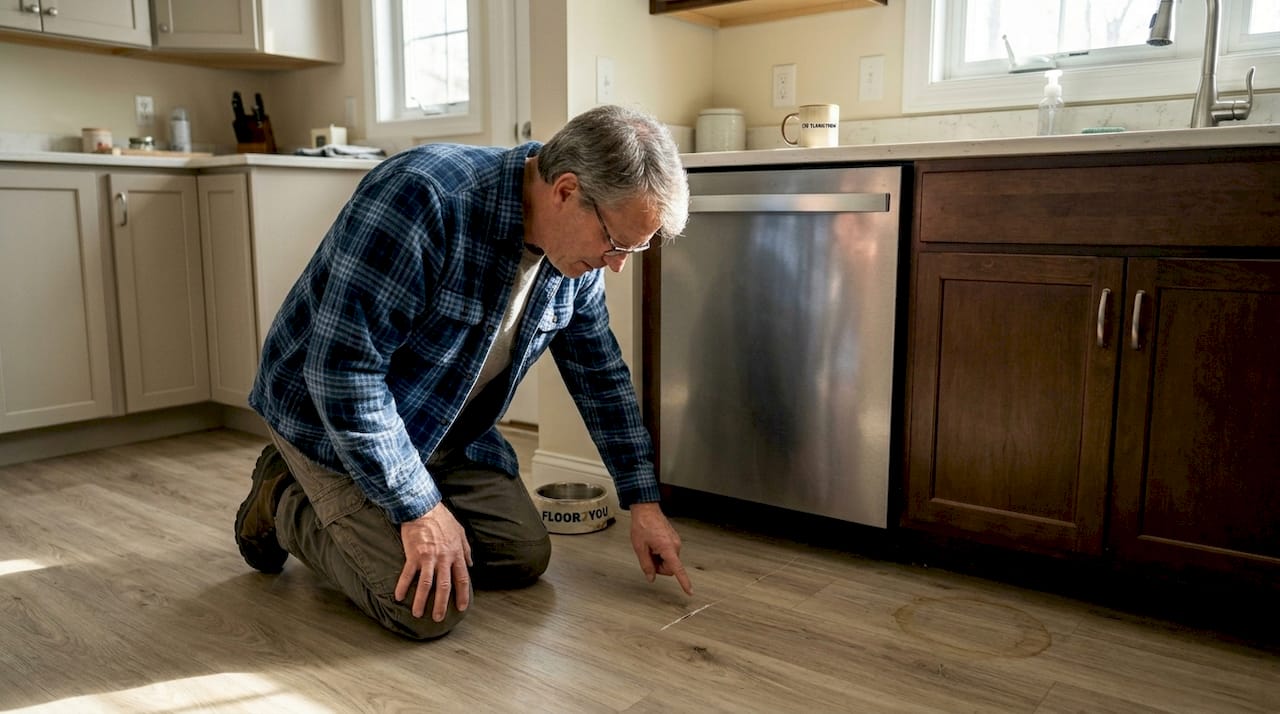
That wear layer is the number you should pay attention to. It's measured in mils (one mil equals one thousandth of an inch). A 6-mil wear layer is fine for a low-traffic bedroom. But for South Florida households with pets, kids, and frequent guests, you want 20 mils or higher. According to vinyl flooring lifespans research, vinyl can last 10 to 25 years with wear layers of 12 to 20-plus mils and warranties reaching up to 30 years.
| Wear layer thickness | Best use case | Expected lifespan |
|---|---|---|
| 6 mil | Low-traffic bedrooms | 5 to 10 years |
| 12 mil | Moderate household traffic | 10 to 15 years |
| 20 mil+ | Pets, kids, heavy foot traffic | 15 to 25+ years |
Here's what vinyl resists on a daily basis:
- Scratches from furniture legs and pet nails
- Stains from spills, juice, and cleaning products
- Dents from dropped items
- Moisture from mopping and humidity
Pro Tip: Place felt furniture pads under all chair and table legs before installation day. It takes five minutes and can add years to your floor's appearance.
To get the most out of your investment, follow these simple habits:
- Sweep or vacuum regularly to remove abrasive grit
- Mop with a damp (not soaking wet) mop and a pH-neutral cleaner
- Avoid steam mops, which can damage the wear layer over time
- Use area rugs in the highest-traffic zones
For a deeper look at how wear layers affect your purchase decision, the understanding wear layers guide breaks it down in plain language.
Cost-effectiveness: Renovation on a smarter budget
For most, cost is key, and here's how vinyl maximizes every dollar. When you compare flooring materials by total installed cost, vinyl consistently comes out ahead. Vinyl installed costs range from $4 to $12 per square foot, which is significantly lower than hardwood at $8 to $18 per square foot or tile at $7 to $14 per square foot.
| Flooring type | Installed cost per sq ft | Average lifespan |
|---|---|---|
| Vinyl (LVP/LVT) | $4 to $12 | 10 to 25 years |
| Hardwood | $8 to $18 | 25 to 100 years |
| Ceramic tile | $7 to $14 | 20 to 50 years |
| Laminate | $3 to $8 | 10 to 15 years |
Vinyl's installation process also saves you money on labor. Many LVP products use a click-lock system that floats over the existing subfloor, meaning installers don't need to glue, nail, or grout anything. That speeds up the job considerably.
Here's how to calculate your total project cost before you call a contractor:
- Measure your square footage and add 10% for cuts and waste
- Choose your product tier based on your household's traffic level and desired wear layer
- Factor in subfloor prep, especially moisture mitigation if you're on a concrete slab
- Request itemized quotes so you can see labor versus material costs separately
- Ask about removal costs for your existing flooring, which can add $1 to $2 per square foot
Budget-friendly doesn't mean low quality here. A mid-range vinyl at $6 to $8 per square foot with a 20-mil wear layer will outperform a cheap tile installation in both comfort and long-term cost. For a full breakdown of what to expect, exploring costs and installation gives you a clear picture of what drives pricing.
Real-life performance: Water, comfort, and style
Specs are great on paper, but here's how vinyl proves itself day to day. In South Florida, water is not a hypothetical risk. It's a daily reality. Whether it's a wet bathing suit dragged across the floor, a bathroom that never fully dries out, or a kitchen where spills happen constantly, your flooring needs to handle it without complaint.
Vinyl is more water-resistant than laminate and more comfortable and impact-absorbing than tile, which matters significantly for kitchens, bathrooms, and playrooms. Laminate, by contrast, can swell and separate at the seams when moisture gets underneath. Tile won't swell, but it's cold and hard, and a fall on tile hurts more than a fall on vinyl.
Here's where vinyl shines in real South Florida households:
- Bathrooms: Fully waterproof surface handles splashes, steam, and standing water
- Kitchens: Easy to clean, comfortable for long cooking sessions, stain-resistant
- Laundry rooms: Handles appliance leaks without damage
- Kids' playrooms: Softer impact absorption reduces injury risk during falls
- Living areas: Realistic wood looks without the maintenance of real hardwood
Stat to know: Vinyl flooring accounts for a growing share of residential flooring installations in humid-climate states, precisely because of its waterproof performance and lower cost compared to alternatives.
Pro Tip: If your home has concrete subfloors, ask your installer about underlayment tips before you commit to a product. The right underlayment adds cushion, reduces noise, and provides an extra moisture barrier.
On the style side, today's vinyl options are genuinely impressive. You can find wide-plank wood looks, large-format stone tiles, herringbone patterns, and even custom color options. For a look at what's trending right now, the 2026 flooring trends guide shows how homeowners are using vinyl to create high-end looks on realistic budgets. A detailed laminate vs vinyl details breakdown also helps clarify which option suits different rooms and lifestyles.
What most homeowners overlook about vinyl flooring
Most buyers walk into a flooring showroom focused on two things: how it looks and what it costs per square foot. Both matter, but they're not the whole story. What actually determines whether your floor holds up for 20 years or starts showing wear in five is the core construction and the quality of the installation beneath it.
In South Florida specifically, the slab is the wildcard. Concrete slabs trap and emit moisture, and if that moisture isn't properly managed before installation, even a premium vinyl product can fail prematurely. As research on SPC cores and wear layers confirms, thicker stone-plastic composite (SPC) cores and 20-mil wear layers are best for hot climates, and professional installation is critical for slab moisture control.
We've seen homeowners save $500 on installation by going with a less experienced crew, only to spend $3,000 fixing moisture-related failures two years later. The in-depth vinyl guide walks through exactly what to ask your installer before the project starts. Don't skip that conversation.
Ready to upgrade your floors?
If vinyl sounds right for your home, here's where you can take action next. At Floor2You, we work with South Florida homeowners every day to find flooring solutions that actually perform in this climate. We carry a curated selection of vinyl products specifically chosen for humidity resistance, wear layer quality, and design appeal.
When you explore vinyl floor options with our team, you get more than a product recommendation. You get a full assessment of your subfloor conditions, moisture levels, and traffic patterns so the right floor goes in the right way. Want to go deeper before you decide? Learn more about vinyl benefits and come to your consultation with the right questions ready.
Frequently asked questions
How long does vinyl flooring last in South Florida homes?
High-quality vinyl lasts 10 to 25 years, especially when installed with proper moisture mitigation and wear layers suited to humid climates. Choosing a 20-mil or higher wear layer makes a significant difference in longevity.
Is vinyl flooring truly waterproof?
Yes. Vinyl flooring is fully waterproof, making it one of the safest choices for bathrooms, kitchens, and laundry rooms in humid regions like South Florida.
Does vinyl flooring need special installation in Florida's climate?
Professional installation with moisture mitigation beneath concrete slabs is strongly recommended. Pro installation on slabs ensures the floor stays stable and doesn't fail due to trapped moisture over time.
Is vinyl flooring noisy?
Vinyl is quieter than tile and roughly equivalent to laminate in sound, but adding a quality underlayment reduces noise and impact sound even further, which is especially useful in multi-story homes.